Skip to content

Monday Post ~ June 18, 2012

“Not only should you believe in what you are doing,
but you should know what you are doing.”

— Mason Williams


This is the moment to deepen, or commit to, your regular creativity practice. Regularity — a daily practice, if at all possible — is key.

So what are your plans for creative practice this week? Given the specifics of your schedule, decide on a realistic intention, goal, or a milestone to reach for — and plan that time in your calendar. An intention as simple as “I will be creative for 10 minutes every day” or “I will gesso three canvases on Wednesday” is what it’s all about.

Share your intentions or goals as a comment to this post, and let us know how things went with your creative plans for last week, if you posted to last week’s Monday Post.

Universal Canvas: Your Creative Community

Creativity is about using your self—your hands, your body, your mind, your heart—to make something that wouldn’t otherwise exist. The thing you create is in some small way an expression of your deepest experience. At its best, this expression speaks to others on the universal plane of human understanding. And when your work resonates with someone else, that spark gives birth to community. Since you’re reading this post, I need hardly point out that building community is one of the internet’s most powerful capabilities: connecting us as we stumble toward enlightenment, becoming more intentional in our work and more compassionate with each other.

The Creative Flock
Relationships are part of how we define ourselves and understand what we’re doing. We know that infants and children who are deprived of social and physical contact fail to thrive and can even die. People really do need people. As artists, writers, and other creative practitioners, community is vital to inspiration and validation. Sharing ideas, talking shop, and simply rubbing elbows with other creative souls goes a very long way in keeping your artful self at the forefront. Increasing your creative social connectivity is one of the easiest ways to develop and maintain your creative identity—especially when you’re struggling with self-doubt and the logistics of making art happen. (And who among us doesn’t struggle with those things at least on occasion?)

The people you’re involved with, in person or online, inspire you. They’re doing things. You want to do things too. They’re enjoying successes, large and small. You want those things as well. Your creative social network reminds you of who you are when you’re so adrift in domestic/work life that your artist self is only a shadowy glimmer. When you can barely recall the feeling of clay under your fingernails, surround yourself with other creative people wherever possible. Immerse yourself in the world of your art. It’s not unlike the suggestion that when you want to lose weight, you should imagine yourself as a thin person and act like a thin person might act. Playing the part helps turn it into reality. Fake it till you make it.

Building Your Creative Community
Assess your resources. What and whom do you currently rely on for creative energy? Which online resources, in addition to this one, do you regularly enjoy? What else could you do to participate in your creative network more regularly—or what could you do to create one? Make a list. A few ideas for starters:

  • Reach out. Send e-mails or make phone calls to creative friends and associates from the past and find out what they’re up to. Facebook stalk them if necessary. (In the nice way, not the creeper way.) If anything resonates, develop the relationship.
  • Even if your home base isn’t an urban area, don’t prematurely decide that your networking options are limited. Many smaller towns have a local gallery or an artisans’ gift shop. Stop in and find out if there’s a consortium of artists you can join.
  • The Sun Magazine’s website offers connections to local readers’ and writers’ groups across the country: http://www.thesunmagazine.org/get_involved/discussion_and_writing_groups.
  • Pick up a few of those freebie arts publications that are often stacked by the door at stores and restaurants. Peruse to see if there’s anything going on nearby that you’d like to attend.
  • Yahoo Groups (http://groups.yahoo.com) and Google Groups (http://groups.google.com) exist on nearly any topic imaginable. Some are highly populated and post dozens of messages every day; others are quieter. Visit and search for your area of creative interest.
  • One of my favorite Yahoo Groups is an homage to Danny Gregory’s book Everyday Matters: http:// groups.yahoo.com/group/everydaymatters. With a focus on art (drawing in particular) this Yahoo Group is extremely active—and inspiring to visual artists as well as those who are not.
  • Craig’s List offers discussion groups on writing and the arts. Visit www.craigslist.org to find the Craig’s List website closest to you. Many locals use their local discussion list to form groups that meet in person.
  • If you have a favorite artist, writer, movement—or even a phrase!—that you’d like to keep tabs on, create a Google alert for that name or sequence of words. Whenever a new web page or blog is created with that string, you’ll receive an e-mail alert. This is a great way to explore the blogosphere. Visit www.google.com/alerts for details.
  • Join the Monday Post right here at Studio Mothers for accountability and support!

What else works for you in connecting with creative community?

::::

A version of the piece above originally appeared as a guest post at the fabulous Bliss Habits.

Monday Post ~ June 11, 2012

“When you’re bringing your whole self to the party, you’re practicing your art form. Be it in conversation, on the canvas, or on the court, when you’re creating something from your soul, you’re making poetry happen.”
— Danielle LaPorte


This is the moment to deepen, or commit to, your regular creativity practice. Regularity — a daily practice, if at all possible — is key.

So what are your plans for creative practice this week? Given the specifics of your schedule, decide on a realistic intention, goal, or a milestone to reach for — and plan that time in your calendar. An intention as simple as “I will be creative for 10 minutes every day” or “I will gesso three canvases on Wednesday” is what it’s all about.

Share your intentions or goals as a comment to this post, and let us know how things went with your creative plans for last week, if you posted to last week’s Monday Post.

Four Simple Ways to Create More and Worry Less

Sometimes creative angst gets the better of us. How often do you find yourself thinking “I don’t have enough time,” or “My work’s not good enough,” or “I’ll never reach my creative goals”? Here are four simple ways to avoid those minefields and stay focused on what really matters: your creative work.

1. Turn rejection into affirmation. With practice, you can reframe rejection so that it actually affirms your creativity, rather than causes injury. Here’s how. Simply put, you can’t get rejected if you haven’t had the courage to send your work out into the world. And you can’t send your work out into the world if you haven’t reached a level of completion and polish that makes you believe your work has legs. And your work can’t have legs if you haven’t put yourself at your desk or easel or studio bench and actually done the work, for however many hours it took. So at its most basic level, each rejection is evidence that you have done your work and sent it out into the world. This is something to celebrate. Rejections simply mean: Yes! I’m doing my work. I was brave enough to send it out into the world, and this “rejection” is simply an affirmation that I am a working artist. I celebrate that fact, and now I turn back to my work in progress.

If this sounds like a tall order, just try it. Over time, you’ll be amazed by how easy it becomes — to the point that you accept rejection as simply part of the process.

2. Move the goalpost into your sphere of influence. Shift your focus away from things you can’t control and onto the things you can. You might decide that you’re going to get your novel published next year. But instead of putting your focus entirely on something that you can’t ultimately control, move the goalposts into a domain that is solidly within your circle of influence. For example: Instead of deciding that you will get your novel accepted for publication next year (which may or may not happen, regardless of your best work, killer query letter, and an introduction to your cousin’s agent), decide that your goal will be to query 50 agents and 30 publishers from the pool of publishers who accept unagented manuscripts. You might start with those who accept simultaneous submissions so that it doesn’t take five years to hit your quota. Keep careful track of your submissions — via your own spreadsheet system or an online submission tracking tool — and when you hit your quotas, celebrate. The only two things you can really control are:

a)   Creating your best work.

b)   Playing the numbers game to get your work in front of as many sets of eyes as it takes.

If you feel discouraged by this process, go back and read #1 above.

3. Establish a regular creative practice. If you’re not already doing your creative work every day, or nearly every day, now’s the time to start. Think it’s impossible to find at least 30 minutes for your creative work on a regular basis? If that’s true—unless you’ve just had a baby or are dealing with a major illness or life event—consider keeping a time log for a few days in order to see where your time is really going. It’s more than likely that there’s something you can pare down on (TV, Facebook, sleep) in order to fit in a regular practice window. If your schedule is so hairy that you can’t commit to a set time every day (which would be ideal, as schedule creates habit and habit breeds productivity) at least commit to a set amount of time every day. When “life happens” and you have to skip practice, don’t beat yourself up about it—just show up tomorrow.

Working regularly may be the most beneficial thing you can do for your creative bandwidth. When you work every day, you learn to show up for creative practice even when you don’t feel like it—even when the muse is off in Bermuda, the house is a mess, the bills need to be paid, and your best friend wants to take you out to lunch. Just show up at your appointed time and do the work. Creative practice is a sacred commitment for those who make meaning through art. If something brilliant comes out along the way, so much the better. But brilliance isn’t the point; showing up is the point. Making meaning through your creative practice is the point. A regular creative practice helps you stay focused on process, rather than outcome.

4. Get comfy with crotchety Aunt Zelda. Our anxiety about creative fear is often more paralyzing than the fear itself. If you can accept that fear and self-doubt are inevitable parts of the process—and are things that even wildly successful writers, artists, and performers grapple with—you will diminish the negative power of insecurity. Try to develop a mantra to use when doubts arise. “Oh, it’s you again, Aunt Zelda. I see you’ve come back for another visit. Sit down and have a cup of tea over here while I carry on with my creative practice.” By acknowledging the fearsome inner critic of Aunt Zelda, and not resisting her arrival, you are free to move ahead. You might even be able to summon up a bit of empathy for Aunt Zelda, who has nothing better to do than drive all over town in her ancient Oldsmobile, just looking for the next person she can inject with fear, doubt, and perhaps even a wholesale existential crisis. Just say, “Thanks, but no,” to Aunt Zelda and stay focused on your creative process. Remember: Just because Aunt Zelda shows up doesn’t mean you have to get into her aging Oldsmobile and go for a ride.

The piece above originally appeared as a guest post at the fabulous Bliss Habits.

::::
Studio Mothers: Live on the interwebs with Creative Mojo!

I’m delighted to let you know that I’ll be interviewed by Mark Lipinski for his live internet radio show, Creative Mojo — this Wednesday afternoon!

Creative Mojo with Mark Lipinski was chosen  by Digg.com as one of the Internet’s five most motivational webcasts and was a featured podcast on iTunes.com. The premise of the show is to spotlight creativity and the creative process and has a following of roughly 40,000-plus listeners. “Infused with Mark’s off-the-cuff  and no-holds-barred humor and love of the creative spirit, the show boldly encourages listeners to discover and harness their own creative spirit by living creatively everyday.”

We’ll be discussing Studio Mothers and a few other things related to creativity and awesomeness, this Wednesday, June 6. The show runs from 3:00 to 5:00 pm eastern time. I’ll be on just after 4:00 for about 25 minutes.

Visit http://toginet.com/shows/creativemojo to listen live and/or subscribe to the Creative Mojo podcast at iTunes. I look forward to hearing your feedback!

:::::

Monday Post ~ June 4, 2012

“If not now, when?”
— Mark Nepo


This is the moment to deepen, or commit to, your regular creativity practice. Regularity — a daily practice, if at all possible — is key.

So what are your plans for creative practice this week? Given the specifics of your schedule, decide on a realistic intention, goal, or a milestone to reach for — and plan that time in your calendar. An intention as simple as “I will be creative for 10 minutes every day” or “I will gesso three canvases on Wednesday” is what it’s all about.

Share your intentions or goals as a comment to this post, and let us know how things went with your creative plans for last week, if you posted to last week’s Monday Post.

Monday Post ~ May 28, 2012

“Start before you’re ready.”
— Steven Pressfield


This is the moment to deepen, or commit to, your regular creativity practice. Regularity — a daily practice, if at all possible — is key.

So what are your plans for creative practice this week? Given the specifics of your schedule, decide on a realistic intention, goal, or a milestone to reach for — and plan that time in your calendar. An intention as simple as “I will be creative for 10 minutes every day” or “I will gesso three canvases on Wednesday” is what it’s all about.

Share your intentions or goals as a comment to this post, and let us know how things went with your creative plans for last week, if you posted to last week’s Monday Post.

Giveaway: Simplicity Parenting e-course

Oh, this one’s hard to resist. Have you been feeling like there must be a way for parenting can be more fun, peaceful, and less overwhelming?

Simplicity Parenting

Are you wishing for simpler times as the world seems to speed up and encourage us to cram more stuff into our lives? Wanting to find time to connect with loved ones competing with an influx of activities, screen time, and outside commitments? Daydreaming about having the support to implement simple but effective changes to your family’s rhythm and flow?

These are the reasons why Kathy Stowell decided to get certified as a Simplicity Parenting Workshop Leader. Kathy writes: “After reading the book Simplicity Parenting by Kim John Payne, I realized that my desire for a slower childhood for my kids is a normal, healthy mama-bear instinct reaction to the hectic, materialistic culture we find ourselves raising our children in today.”

Kathy is excited to offer this four week e-course centered on the principles behind Simplicity Parenting. With much support, she walks you through simplifying your home life by touching upon these realms throughout the month of June; environment (clutter), rhythm and scheduling (activities, pauses), adult content (media), and tending to soul fever (meltdowns).

The class will be held via videos and blog posts in a password protected blog with discussions held in a private forum as well as an optional weekly conference call that will be recorded for later listening at your convenience. And with this held space, small steps will be taken toward your vision of a peaceful family flow in attune with your consciously crafted values and ideals.

The course runs from June 1 through June 29, 2012. To learn more, click here.

To enter our giveaway, leave a comment on this post with a note about any steps toward simplification you’ve recently taken or would like to take! How would you like to see your family life simplified? The drawing will be held on Wednesday, May 30, at 8:00 pm eastern time. Good luck!

:::::

Kelly: The 101010 Project

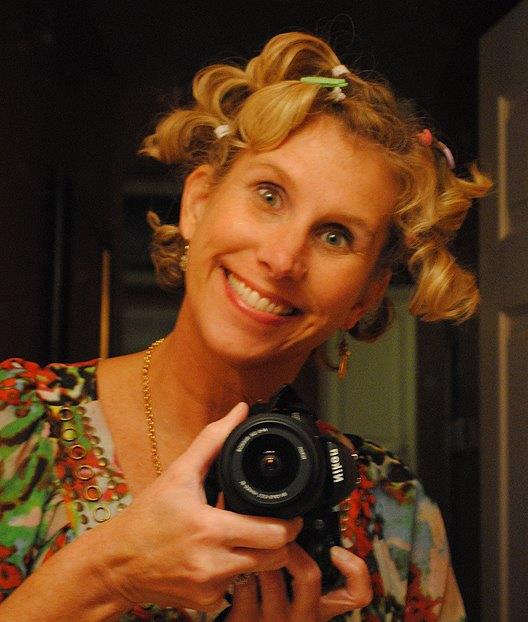
For the past two weeks, I’ve been participating in a Collaborative project called 101010 Project: 10 Women, 10 Businesses, 10 Questions. Ten women who own creative businesses each tackled 10 questions regarding our businesses, and each of us hosted a specific question. We had to include a headshot to be included with each post, so I stuck with the goofy one you see here. I’ve had a great time participating and getting to know the other women involved in the project. The questions were very thought-provoking, and our fearless leader, Robin Norgren (who is also a part of our Studio Mothers crew), did a great job pulling all this together. I wanted to share my responses with you, and give you the opportunity to hop around to all the other blogs to see other participant responses (yes, long post, but I hope you’ll read it!). And guess what? There will be two more rounds of this project coming up this summer! Check out the video here and hop on over to the Project 101010 website for all the details.

Collaborations: A good idea ?…My experience with collaborations has been fairly limited, and I’m not sure the experience I did have would be considered a true collaboration, but I’ll share it and let you decide! In 2008, I did a large Fat Book Swap. There were ten women involved and ten themes. The idea was to create 10 cards of each theme (basically the same 4 x 4 card 10 times), meaning we each created 100 total 4 x 4 cards. We then sent everything to the person doing the organizing, the wonderful Roni. I was amazed at how quickly Roni gathered each participant’s work and sent us back out a 100-card package of wonderfulness! I had a special box custom crafted to keep my full set in and enjoy looking back through them often. This collaboration was a challenge for me as I’d just gotten started in mixed media, but it really pushed me to try new things and I found that I really enjoyed the 4 x 4 format. The deadlines pushed me a little bit, but only having to come up with one design for each theme (even though I had to create 10 of each design) helped some. Would I do it again? Absolutely. I learned tons of new techniques, made some great blog friends, and have a beautiful box chock full of 100 pieces of original art to show for it! You can see my entries in the collaboration here. {hosted by Stephanie Samos}

Success in business is defined as… I think this is a very interesting topic, and I think it all depends on your goals and your outlook. For me, my art business is not my main source of income. I have a pretty demanding full-time career in higher education on top of my art. So for me, success in my art business is simply finding the time to put a little bit of me out into the world for others to enjoy. Would I love to be able to “quit the day job” and devote more time to my art? Absolutely, but I know that’s simply not a possible reality at this point in my life. So maybe for me, success in business is defined as knowing what my limitations are (time!) and embracing them rather than fighting them. Fighting them takes an awful lot of energy that could be better spent on enjoying the process instead. {hosted by Nolwenn Petitbois}

The hardest part about pursuing a dream is…I think the hardest part about pursuing a dream, first and foremost, is taking that first step and putting it out there! And then the second hardest part about pursuing that dream is remaining realistic about your situation and what’s doable at whatever point you are in your life. Read more

Monday Post ~ May 21, 2012

“There is a divine blueprint for your week ahead, in which the most creative possibilities unfold out of infinite thoughts of love. Imagine.”
— Marianne Williamson


This is the moment to deepen, or commit to, your regular creativity practice. Regularity — a daily practice, if at all possible — is key.

So what are your plans for creative practice this week? Given the specifics of your schedule, decide on a realistic intention, goal, or a milestone to reach for — and plan that time in your calendar. An intention as simple as “I will be creative for 10 minutes every day” or “I will gesso three canvases on Wednesday” is what it’s all about.

Share your intentions or goals as a comment to this post, and let us know how things went with your creative plans for last week, if you posted to last week’s Monday Post.

What are we doing, anyway?

Inspired beauty from Suzi Banks Baum of Laundry Line Divine. Thank you, Suzi!

::::

Monday Post ~ May 14, 2012

“Suspending self-judgement doesn’t just mean blowing off the ‘You suck’ voice in our heads. It also means liberating ourselves from conventional expectations — from what we think our work ‘ought’ to be or ‘should’ look like. Stay stupid. Follow your unconventional, crazy heart.”
— Steven Pressfield


This is the moment to deepen, or commit to, your regular creativity practice. Regularity — a daily practice, if at all possible — is key.

So what are your plans for creative practice this week? Given the specifics of your schedule, decide on a realistic intention, goal, or a milestone to reach for — and plan that time in your calendar. An intention as simple as “I will be creative for 10 minutes every day” or “I will gesso three canvases on Wednesday” is what it’s all about.

Share your intentions or goals as a comment to this post, and let us know how things went with your creative plans for last week, if you posted to last week’s Monday Post.