Skip to content

Posts tagged ‘painting’

Your Creative Intentions: The Monday Post ~ July 29, 2013

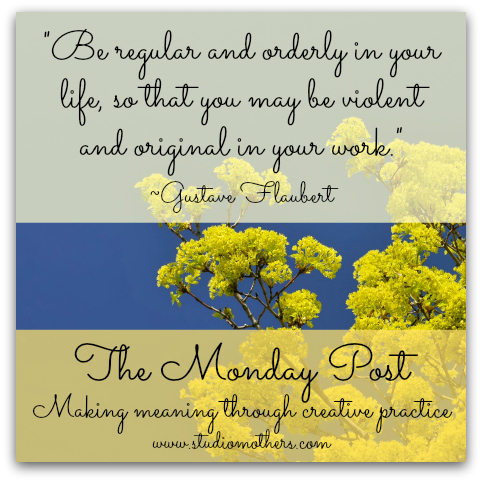
Flaubert quote

Commit to a regular creativity practice. Regularity — a daily practice, if possible — is key to staying in touch with how you make meaning.

What are your plans for creative practice this week? Given the specifics of your schedule, decide on a realistic intention or practice plan — and ink that time in your calendar. The scheduling part is important, because as you know, if you try to “fit it in” around the edges, it generally won’t happen. An intention as simple as “I will write for 20 minutes every morning after breakfast” or “I will sketch a new still life on Wednesday evening” is what it’s all about. If appropriate, use time estimates to containerize your task, which can make a daunting project feel more accessible.

Share your intentions or goals as a comment to this post, and let us know how things went with your creative plans for last week, if you posted to last week’s Monday Post. We use a broad brush in defining creativity, so don’t be shy. We also often include well-being practices that support creativity, such as exercise and journaling.

Putting your intentions on “paper” helps you get clear on what you want to do — and sharing those intentions with this community leverages the motivation of an accountability group. Join us!

:::::::

If you’re an artist or writer with little ones, The Creative Mother’s Guide: Six Creative Practices for the Early Years is the essential survival guide written just for you. Concrete strategies for becoming more creative without adding stress and guilt. Filled with the wisdom of 13 insightful creative mothers; written by a certified creativity coach and mother of five. “Highly recommended.” ~Eric Maisel. 35 pages/$11.98. Available for download here.

Your Creative Intentions: The Monday Post ~ July 22, 2013

Friedrich Nietzsche quote

Commit to a regular creativity practice. Regularity — a daily practice, if possible — is key to staying in touch with how you make meaning.

What are your plans for creative practice this week? Given the specifics of your schedule, decide on a realistic intention or practice plan — and ink that time in your calendar. The scheduling part is important, because as you know, if you try to “fit it in” around the edges, it generally won’t happen. An intention as simple as “I will write for 20 minutes every morning after breakfast” or “I will sketch a new still life on Wednesday evening” is what it’s all about. If appropriate, use time estimates to containerize your task, which can make a daunting project feel more accessible.

Share your intentions or goals as a comment to this post, and let us know how things went with your creative plans for last week, if you posted to last week’s Monday Post. We use a broad brush in defining creativity, so don’t be shy. We also often include well-being practices that support creativity, such as exercise and journaling.

Putting your intentions on “paper” helps you get clear on what you want to do — and sharing those intentions with this community leverages the motivation of an accountability group. Join us!

:::::::

If you’re an artist or writer with little ones, The Creative Mother’s Guide: Six Creative Practices for the Early Years is the essential survival guide written just for you. Concrete strategies for becoming more creative without adding stress and guilt. Filled with the wisdom of 13 insightful creative mothers; written by a certified creativity coach and mother of five. “Highly recommended.” ~Eric Maisel. 35 pages/$11.98. Available for download here.

Your Creative Intentions: The Monday Post ~ July 15, 2013

John Cleese

Commit to a regular creativity practice. Regularity — a daily practice, if possible — is key to staying in touch with how you make meaning.

What are your plans for creative practice this week? Given the specifics of your schedule, decide on a realistic intention or practice plan — and ink that time in your calendar. The scheduling part is important, because as you know, if you try to “fit it in” around the edges, it generally won’t happen. An intention as simple as “I will write for 20 minutes every morning after breakfast” or “I will sketch a new still life on Wednesday evening” is what it’s all about. If appropriate, use time estimates to containerize your task, which can make a daunting project feel more accessible.

Share your intentions or goals as a comment to this post, and let us know how things went with your creative plans for last week, if you posted to last week’s Monday Post. We use a broad brush in defining creativity, so don’t be shy. We also often include well-being practices that support creativity, such as exercise and journaling.

Putting your intentions on “paper” helps you get clear on what you want to do — and sharing those intentions with this community leverages the motivation of an accountability group. Join us!

:::::::

If you’re an artist or writer with little ones, The Creative Mother’s Guide: Six Creative Practices for the Early Years is the essential survival guide written just for you. Concrete strategies for becoming more creative without adding stress and guilt. Filled with the wisdom of 13 insightful creative mothers; written by a certified creativity coach and mother of five. “Highly recommended.” ~Eric Maisel. 35 pages/$11.98. Available for download here.

Your Creative Intentions: The Monday Post ~ July 8, 2013

Chuck Close quote

Commit to a regular creativity practice. Regularity — a daily practice, if possible — is key to staying in touch with how you make meaning.

What are your plans for creative practice this week? Given the specifics of your schedule, decide on a realistic intention or practice plan — and ink that time in your calendar. The scheduling part is important, because as you know, if you try to “fit it in” around the edges, it generally won’t happen. An intention as simple as “I will write for 20 minutes every morning after breakfast” or “I will sketch a new still life on Wednesday evening” is what it’s all about. If appropriate, use time estimates to containerize your task, which can make a daunting project feel more accessible.

Share your intentions or goals as a comment to this post, and let us know how things went with your creative plans for last week, if you posted to last week’s Monday Post. We use a broad brush in defining creativity, so don’t be shy. We also often include well-being practices that support creativity, such as exercise and journaling.

Putting your intentions on “paper” helps you get clear on what you want to do — and sharing those intentions with this community leverages the motivation of an accountability group. Join us!

:::::::

If you’re an artist or writer with little ones, The Creative Mother’s Guide: Six Creative Practices for the Early Years is the essential survival guide written just for you. Concrete strategies for becoming more creative without adding stress and guilt. Filled with the wisdom of 13 insightful creative mothers; written by a certified creativity coach and mother of five. “Highly recommended.” ~Eric Maisel. 35 pages/$11.98. Available for download here.

Your Creative Intentions: The Monday Post ~ July 1, 2013

Albert Einstein

Commit to a regular creativity practice. Regularity — a daily practice, if possible — is key to staying in touch with how you make meaning.

What are your plans for creative practice this week? Given the specifics of your schedule, decide on a realistic intention or practice plan — and ink that time in your calendar. The scheduling part is important, because as you know, if you try to “fit it in” around the edges, it generally won’t happen. An intention as simple as “I will write for 20 minutes every morning after breakfast” or “I will sketch a new still life on Wednesday evening” is what it’s all about. If appropriate, use time estimates to containerize your task, which can make a daunting project feel more accessible.

Share your intentions or goals as a comment to this post, and let us know how things went with your creative plans for last week, if you posted to last week’s Monday Post. We use a broad brush in defining creativity, so don’t be shy. We also often include well-being practices that support creativity, such as exercise and journaling.

Putting your intentions on “paper” helps you get clear on what you want to do — and sharing those intentions with this community leverages the motivation of an accountability group. Join us!

:::::::

If you’re an artist or writer with little ones, The Creative Mother’s Guide: Six Creative Practices for the Early Years is the essential survival guide written just for you. Concrete strategies for becoming more creative without adding stress and guilt. Filled with the wisdom of 13 insightful creative mothers; written by a certified creativity coach and mother of five. “Highly recommended.” ~Eric Maisel. 35 pages/$11.98. Available for download here.

Your Creative Intentions: The Monday Post ~ June 24, 2013

Frida Kahlo quote

Commit, or recommit, to a regular creativity practice. Regularity — a daily practice, if possible — is key to staying in touch with how you make meaning.

What are your plans for creative practice this week? Given the specifics of your schedule, decide on a realistic intention or practice plan — and ink that time in your calendar. The scheduling part is important, because as you know, if you try to “fit it in” around the edges, it generally won’t happen. An intention as simple as “I will write for 20 minutes every morning after breakfast” or “I will sketch a new still life on Wednesday evening” is what it’s all about. If appropriate, use time estimates to containerize your task, which can make a daunting project feel more accessible.

Share your intentions or goals as a comment to this post, and let us know how things went with your creative plans for last week, if you posted to last week’s Monday Post. We use a broad brush in defining creativity, so don’t be shy. We also often include well-being practices that support creativity, such as exercise and journaling.

Putting your intentions on “paper” helps you get clear on what you want to do — and sharing those intentions with this community leverages the motivation of an accountability group. Join us!

:::::::

If you’re an artist or writer with little ones, The Creative Mother’s Guide: Six Creative Practices for the Early Years is the essential survival guide written just for you. Concrete strategies for becoming more creative without adding stress and guilt. Filled with the wisdom of 13 insightful creative mothers; written by a certified creativity coach and mother of five. “Highly recommended.” ~Eric Maisel. 35 pages/$11.98. Available for download here.

Molly: Honoring Your Creativity

Molly Tinsley recently posted several comments here at Studio Mothers, and I was intrigued by her creative process. I knew you’d enjoy hearing more from this Australian, home-schooling mother of three. Enjoy!

::::: 

My “studio.” I did have one in the garage, but it got engulfed when my parents moved house!

My “studio.” I did have one in the garage, but it got engulfed when my parents moved house!

I double-guessed my creative impulse for far too many years. I’ve always been “crafty”; always decorated the edges of my school notes with complex designs that were far more interesting than what I was writing down. I studied art, particularly ceramics, all the way through high school, but was told quite seriously at the age of 15 that creativity was something that I would “grow out of” and so being a good girl I shelved it away and studied to become a lawyer. (That was an absolute disaster — its own saga.)

But now, 25 years after that unhelpful advice, I find myself struggling back towards that creativity — back towards a creative life, a life in which I take my creativity seriously, in which I listen to it and honor its impulses. This is how I found Studio Mothers — looking for someone who could help me with this re-focusing while homeschooling three energetic little boys! I found the advice to do something creative every day, even if it’s just jotting down an idea on an index card, to be incredibly helpful and inspirational. I find it very hard to find and honor my creative impulse and this is a way of acknowledging this part of my life on a daily basis.
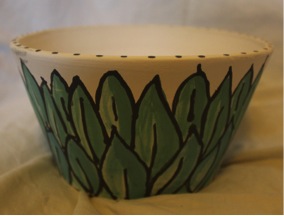
“Gum Leaf” bowl. Stoneware, underglaze and underglaze inks.

“Gum Leaf” bowl. Stoneware, underglaze, underglaze inks.

I often liken my creativity to listening for a faint sound of music on a windswept beach. I need to turn carefully to hear the thread of sound and to follow it. I’ve found that the second I try to force something — to do what I “should” — the sound dries up and I have to start at the beginning again.

Some people are born with the equivalent of full-blown marching bands: they’ve always known what they wanted to do and have never doubted their calling or their path. For the rest of us, particularly those of us who have had our creative leanings deliberately discouraged, the process is a little more tenuous. I’d like to add that that discouragement isn’t necessarily cruel. It’s simply that most people don’t understand how a living can be made from artistic pursuits, and so assume it can’t be done and try to discourage the budding artist “for their own good.”

Leonie Dawson has a wonderful, and quite different, way of describing the creative process. She calls it Riding the Wild Donkey. Actually, being Leonie, she calls it “Riding Ze Wild Donkey” and it’s a much more robust way of framing the issue than “Listening for the Windsong of the Universe.” 🙂

“Bushfire Sunset.” Acrylic on MDF.

“Bushfire Sunset.” Acrylic on MDF.

Her take is that a Wild Donkey of an idea shows up in your paddock and you jump on and ride that thing until it’s done. She has periods of intense creativity and yeehahs her way through until the project is finished, then has periods of recuperation. She calls the stuff she’s tried to do slowly “Mount Project” as it’s piled up into a heap on her desk and slowly gets bigger.

I think that the key to this approach is that you just go at it until it’s done. This may well work better with e-books and courses than with 15-foot canvases or epic photography series. In those cases, you have to find a greater depth of stamina and commitment to see the project through. Or, alternatively, you may need to find some way of chunking the project down so that you can throw yourself at each part with mad abandon.

This approach also has echoes of The Cult of Done Manifesto, which is, as it sounds, about finishing work. I don’t agree with all of it. Number 5, for example: “Banish procrastination. If you wait more than a week to get an idea done, abandon it.” That wouldn’t work for me. I tend to pick things up, do them for a bit, put them down again, then pick up something else. Eventually, I work my way back around to something that I put down and finally finish it. This is where the bit about honoring my creativity comes in. The urge is to finish at all costs, but I just don’t work like that and I need to trust in my process — that I *will* circle back around to those pots and finish them; but right now I’m sticking seashells to my collage (isn’t acrylic medium AMAZING?!).

“Gum Leaf” platter. Porcelain, underglaze. ceramic inks.

“Gum Leaf” platter. Porcelain, underglaze, and ceramic inks.

I’ve also found it unbelievably annoying that the second I try to monetize my art, the creative impulse just dries up completely. I have an Etsy shop that has held the same scarves for the last year. I have a studio FULL of art that I keep putting off photographing and popping up for sale. I have a wide selection of rather cute ceramic dishes (if I do say so myself!) that have been waiting for 4 months to have their bottoms waxed and to be dipped in clear glaze and given their final firing.

I’m lucky in that my family is not dependent on my ability to make money from what I love. I have the opportunity to experiment widely both within and across genres and media. In the last year I have experimented with photography, stamp carving, reduction lino printing, ceramics, acrylic and watercolor painting, needle felting, and collage. In the past I have also experimented with papier-mâché, mosaics, garden design, acid etching, dying, and sewing.

Without a supportive partner, I’d currently be working as a librarian and checking out craft books from the library on the weekends! When I was working fulltime, I had absolutely no time or energy left for my art. Homeschooling has its own set of challenges, but I can set the boys up with paints and paper and they can splosh away while I try to get some painting or glazing done.

Actually, while I have my librarian’s hat on, I can highly recommend the book “Creating a Life Worth Living” by Carol Lloyd. It’s not a quick read, but the book is worth dipping into and out of as Lloyd covers a huge number of the issues to do with both having a creative life and paying the bills at the same time.
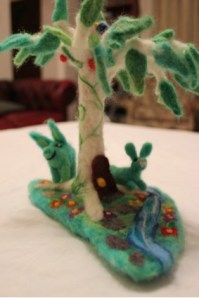
Needle-felted Fairy Tree with Bluebird of Happiness & Zombie Pig & Rabbit. Wool.

Needle-felted Fairy Tree with Bluebird of Happiness & Zombie Pig & Rabbit. Wool.

She’s also a great believer in daily creativity — whatever that may mean to you. I find Morning Pages a bit daunting these days, but can always find time to do a Zentangle. I also find needle-felting in the evenings while listening to documentaries (I MUST get into podcasts!) to be both relaxing and a good way to express my creativity. It’s turning to winter here in Australia and so I suspect that I will circle back around to my knitting needles and start again on the Bolero I put down last October.

Its difficult to trust in this process — to accept that its not an efficient way to get art done, but that it’s *my* way to get art done and if I don’t honor it, the desire to make art at all just dries up completely.

I’d be very interested to hear of your approaches to honoring your creativity. Do you work slowly or do you get things done fast in a fury of inspiration? Does getting paid for your art change the way you approach it? If you get paid for your art, do you approach paid and unpaid work differently? If you are a mother, how does caring for your family impact on your ability to honor your creativity? If you work, what affect does that have? We all have so many roles to play that it can sometimes be difficult to honor our creativity and still get everything else done! I’d love to hear how you do it!
Art and Motherhood

Does blending art and motherhood = mission impossible? One recent response to this perennial question comes from Canadian painter Robert Genn, in his twice-weekly newsletter. While Genn writes about painting, his thoughts usually apply to any creative pursuit, including writing — and I have reposted his letters here before. Late this summer, Robert wrote a letter specific to making art as a mother. The letter garnered a TON of comments that are well-worth reading. Much inspiration and practical advice to be found. (Genn’s newsletter is reprinted here by permission. Thanks again, Bob.)

Yesterday, Cedar Lee of Ellicott City, MD, wrote, “I have a 10-month-old son. Before I had this child I never realized the level of freedom and time that I had. The demands are so all-consuming that they leave me with little if anything left to give to my work. I’m depressed about my career–at full speed a year ago, it’s now barely squeaking along. Do you have any advice for how to keep my creative flames burning, how to keep my professional image from slipping, and how to be productive during this time? What are the creative, financial, political, and practical dilemmas facing female artists with young children.”

Thanks, Cedar. Big order. Before I start in with my stuff about being more efficient, making time, getting help, etc., I need to ask you mothers to give me a hand with Cedar’s questions. Your best advice will be included in the next clickback. Live comments are welcome as well. FYI, we’ve put a short video of Cedar’s studio at the top of the current clickback.

Also, I want to mention the extreme expectations that current parents have for their children. Children have taken on a god-like role and have become the focus for everything from prepping for stellar futures to daily parental companionship. Parents sacrifice their own lives for the potential brilliance of kids. For better or for worse, raising kids well is the new religion.

Further, I wanted to say that letters like Cedar’s come in here like leaves from a shaken maple. I’m conscious that many artists, both male and female, use the advent of parenthood as a scapegoat for failing careers. Artists in this predicament need to examine their true motivation for this popular complaint.

It’s been my experience that dedicated artists will always find a way. I’m also happy to report that selfishness need not prevail, nor need the baby lie unchanged in its crib. The creative mind is always working, even during the application of nappies. Household workstations can be set up and work can continue between feedings and other downtimes. The intermittent business may actually benefit the art–for many of us, contemplation is a much needed ingredient to our progress.

Cedar, exhausted though you may be, there is always recourse to the DMWH (Daily Manic Working Hour). This can be programmed any time, perhaps early morning or late at night. When performed as regularly as baby-feeding, you might amaze yourself with how much you can get done when you focus hard for one lovely little hour.

Best regards,

Robert

PS: “You have no obligation other than to discover your real needs, to fulfill them, and to rejoice in doing so.” (Francois Rabelais)

Esoterica: There is an excellent book on the subject. The Divided Heart: Art and Motherhood by Rachel Power [reviewed at Studio Mothers]. It’s well researched with lots of references and historical evidence. An excerpt is here. There’s value in partnership. “To create art once you have children requires the commitment of more than one person,” she writes. “As novelist Eleanor Dark wrote, ‘The balance is elusive; the support crucial.’ “
To read the many responses to Robert’s letter, click here. Any pieces of advice that really stand out for you?
Spotlight on Sarah Madsen

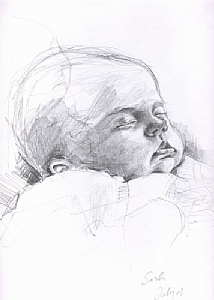
4087_90117mSarah Madsen, Facebook friend of Creative Construction, is a busy mother of four living in Nevada. Sarah is a prolific artist attracted to a range of different media. She finds much satisfaction in drawing from — literally — her vantage point as a mother. From Sarah’s profile on her blog, Arty Moments:

“This [blog] is a insight to a chaotic (ME) artist. I say chaotic because in a sense I seem to go in a million different artistic directions and I’m sure I’m chasing art not as constructively as I should be…However 🙂 This might (I say might because I know deep down, it’s indicative to my nature too!) be my reasons why this occurs… I’m a Mum to 4 busy and happy critters, 4, 6, 8, 10 years old. So with that, comes the balancing act between motherhood and creativity (and of course the odd freelance work). I’ve been drawing painting since I could hold a pencil and I remember drawing, many a night when supposedly asleep in bed. At the blank pages of old books (remember they always had a few blank pages in the beginning?) My get away moments are to draw from life and usually end up in a coffee shop/bars. So one day I would love to be a traveling artist…sketching people in various parts of the world. For now I mix up my love of jewellery and painting. Want to make tiaras, fine precious enamelled pendants, brooches, etc.”

4087_252732mThat chatty blurb gives us the behind-the-scenes look; here’s Sarah’s more formal introduction:

English artist Sarah Elizabeth Madsen attended Central Saint Martins School of Art & Design in London, England. There she gained a BA Hons degree in jewelery design.This interest in 3-D design was quite a different direction from her first love of fine art. The desire to follow figurative art has been constant theme throughout her life as an artist. In 1992 the young artist received a travel bursary from the Royal Society of British Sculptors on a medal design. She has also exhibited at various locations such as the Mall Galleries in London, Silvermine Art Center in Connecticut, and also at Steven Whyte Figurative Sculpture Studio in Carmel, California.

Sarah notes:

4087_121719m“I tend to work quickly with concentration to put the essence onto paper. Portrait drawing from life for me is an absolute challenge. The amount of expressions, gestures, moods, habits, and interaction that people show is incredibly complex. The studies of babies  and children are from constant observation of my own children. This definitely creates its own demands as children rarely remain still. Fortunately this pushes me to just grasp quickly the essentials and not to overdo a drawing. The interest in fine handmade jewelery/medal and enameling stems again from my love of observation (though currently somewhat on hold at present time). So one day hope to produce tiaras, fine gem rings, and necklaces though these would be more towards art/sculpture pieces than mainstream jewelery. The direction I take is organic and figurative in nature. Always to create a ‘living feeling.’ Whether it is a gold-forged wire curling around the nape of the neck, through to a few chosen marks onto canvas or paper.”

Sarah, you’re an inspiration! You can see more of Sarah’s fine art at her art site.

3/25 Weekly creativity contest winner

“Spring equinox” seems like a fitting contest prompt, seeing as we’ll be taking a little hiatus from the weekly contest: change and renewal. Beautiful entries this week — enjoy!

Our winner is Rebecca Coll. Rebecca writes: “As soon as saw what the prompt was for this week, I knew exactly what I was going to do… a dos-à-dos binding. This is a particular bookbinding technique that binds two books together with a shared ‘back’ cover. The two books are therefore both individual and half of a greater whole, much the same as the equinox: equal night. Half night, half day. Following are photos of my equinox-inspired dos-à-dos journal. Two books, each with six signatures (sections) to represent the six months from equinox to equinox, bound together to make one year-long diary. Each signature has 32 pages, which is approximately one page per day (you have to have multiples of 4 when bookbinding, so I couldn’t get the math to work out perfectly). Both ‘books’ are bound in leather with bookcloth onlays and the spines sewn in a button-hole technique using both green and brown cord — for spring and fall. The vernal equinox book is in blue leather with a colorful graphic depicting spring. The autumnal equinox book is bound in black suede (leather glued on backwards with the ‘soft’ side showing). The cover of this book shows a tree having lost it’s leaves. Together with both books one can record a year’s worth of memories: equinox to equinox.” Wow, is all I can say, Rebecca! An absolutely brilliant interpretation of the prompt. Your $10 amazon.com gift certificate has been issued.

dos-a-dos

darkside

blueside


From Cathy Coley:

Spring Equinox

The camellias are a winter bloom,
usually December, but this year
they bloomed in March. The ground
didn’t freeze until then,
and one shot of snow
moved the blooms to the Equinox.
The two red bushes dominate
and make the white one blush
as daffodils struggle,
and crocus never awoke.

The season of waking,
My daughter begins to walk
while first blooms of burgeoning
mingle my teen son’s drawing away
and drawing toward
the streets and halls filled
with cucumber perfumed
tresses and new curves
unsweatered,
scent of new skin.
3192009spring-015


From Karen Winters: “Malibu Creek Afternoon Hike,” 12 x 16 oil on canvas. Karen writes:

“This new landscape oil painting celebrates the arrival of spring in the Santa Monica Mountains in Malibu Creek State Park, one of my favorite local inspirations. The hills will only stay this beautiful green color for a short while but it’s glorious while it lasts. Soon, the greens will dry to a golden brown, and the desert look will be revealed. I learned something interesting about Southern California’s desert nature while watching a show on geology a little while ago. Before the Sierra Nevada range formed due to compression of the North American and Pacific tectonic plates, California received abundant summer rainfall, just like the rest of what is now the United States. When the mountain range rose, this changed weather patterns and So. Cal became a desert. To get the rain back we’ll have to wait quite some time for the mountains to age. But since the plates continue to compress and mountains continue to rise, that’s not going to happen anytime soon. Perhaps one day we’ll have Californian Alps or Himalayan-size peaks. I won’t be around to paint them, but I can imagine that they’ll look wonderful in springtime.”

malibu-creek-painting-b


dsc05371From Jen Johnson: “As I was thinking about this week’s prompt, I found myself reflecting on hibernation, awaking to sunshine. This week I’m also in the thick of preparations for my son’s fourth birthday (his party is Saturday and his actual birthday is March 31st). My little boy loves all things serpentine — two of his most significant attachment objects are rubber snakes that he has named ‘Stuxey’ and ‘The Other Stuxey.’ I knew I wanted to make my son something special for his birthday, and so all these things combined to inspire this morning’s project: ‘Spring’ the snake. ‘Spring’ is made from fleece, which is a fairly new material for me; I find it is very forgiving and I’m enjoying working with it! dsc05370She is the second stuffy that I’ve made from my own pattern. The stripes were the most fun! I brought her outside to take advantage of the sunshine for the picture, and happily our overgrown oxalis provided a suitable backdrop. (Wouldn’t be spring out here without the oxalis explosion!) And for a more literary –- and literal — approach to this week’s prompt, you can check out my blog post on the Equinox itself: an old poem that I found in the files. It’s posted here.”


This weekly contest has been a real pleasure, everyone. Please keep those creative juices flowing, and don’t feel shy about sending your creative endeavors in for posting. We love random acts of creativity!

In case you missed any of the prompts we’ve had during the past 47 weeks, here’s the list, ordered from most recent to oldest:

1.    Spring equinox
2.    Map
3.    Dance
4.    Light
5.    Eyes
6.    Box
7.    Cookies
8.    Clock
9.    Hope
10.   Wool
11.    Snow
12.    Stars
13.    Noel
14.    Gift
15.    Waiting
16.    Fire
17.    Thanksgiving
18.    Silver
19.    Quilt
20.    Self-portrait
21.    Hands
22.    Dream
23.    Apples
24.    Tears
25.    Autumn
26.    The notebook
27.    Dinnertime
28.    The guitar
29.    My favorite shoes
30.    Sunflowers
31.    The wedding
32.    Chocolate
33.    Circles
34.    Vacation
35.    Beauty
36.    Chinese restaurant
37.    My mother’s house
38.    Independence Day
39.    Wings
40.    At 3:00 am
41.    Margaritas
42.    The crows
43.    The ocean
44.    The last time you kissed me
45.    Little black dress
46.    A cup of coffee
47.    View from the window


Cathy: Art for Life’s Sake

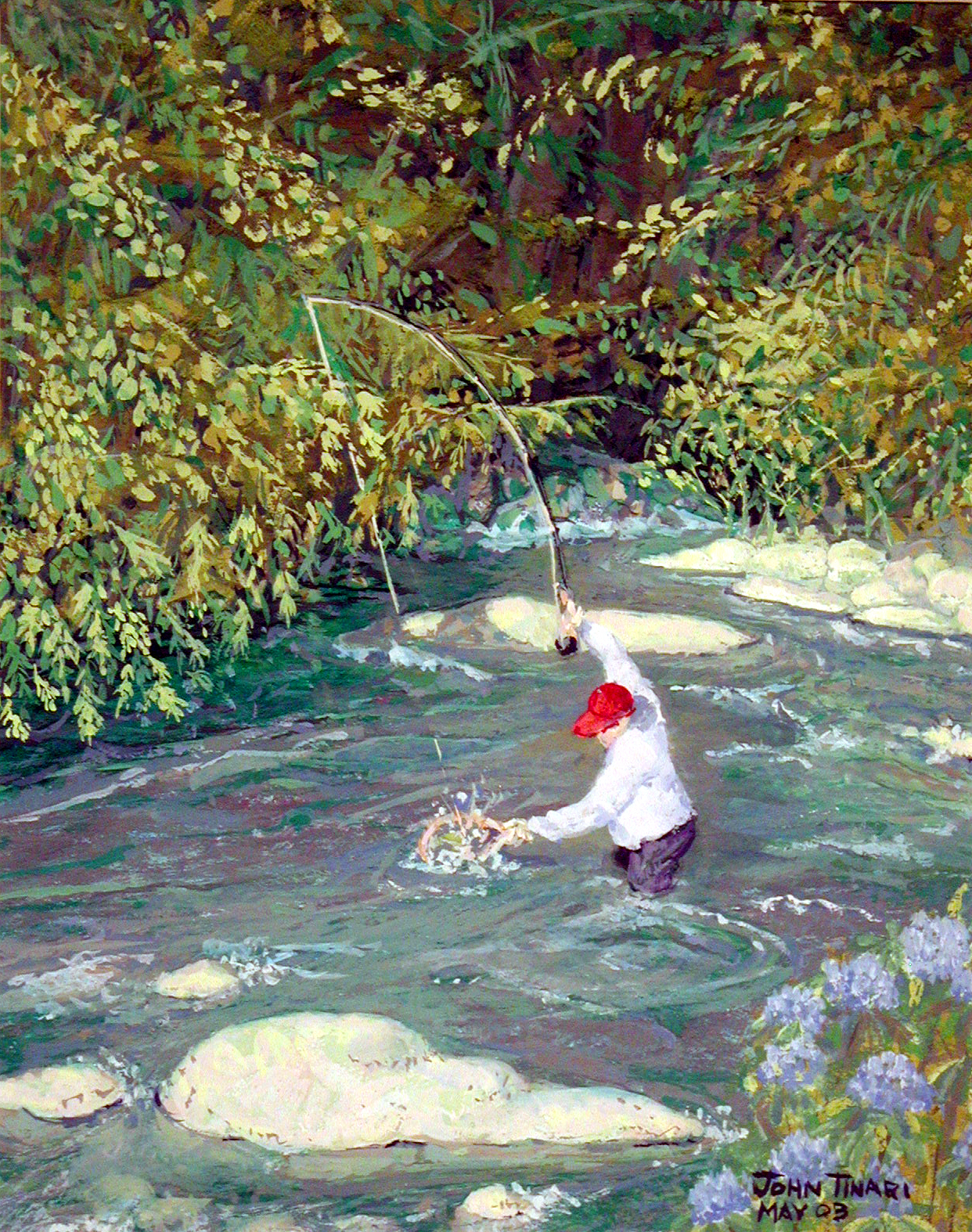
Fisherman watercolor, John Tinari

Fisherman (watercolor), John Tinari

I often feel guilty or self-indulgent knowing that I am not contributing an income to my family. I have never not-contributed an income to my family, in each of its mutable forms throughout the years, for as long a time as now. I have improved my perspective on these feelings in the past six months or so, since I’ve been working on my manuscript. It is slower going than I’d like, but it is going.

I have a constant reminder in my home to tell me how important it is not to forget that creative work is purposeful work, not just an indulgence. My late father-in-law, John Tinari, and mother-in-law, Rose, married very young — I believe while he was in art school. The wedding was in January 1966 and by December, their son, my husband was born. Then within the following year, they had a daughter. Four years after that followed another son. As you have probably guessed by now, John’s dreams of being a painter were quickly put on hold as he worked trade jobs, mostly carpentry or having to do with carpentry, in order to provide for his family.

Trees, John Tinari

Trees, John Tinari

In one of the earliest conversations I had with my husband (we hadn’t even met yet; this was a phone conversation that lasted a few hours), he told me his father was really sick with lung cancer. Within about six months of beginning to know my husband and his family, his father was gone. But what he left behind was beyond legacy.

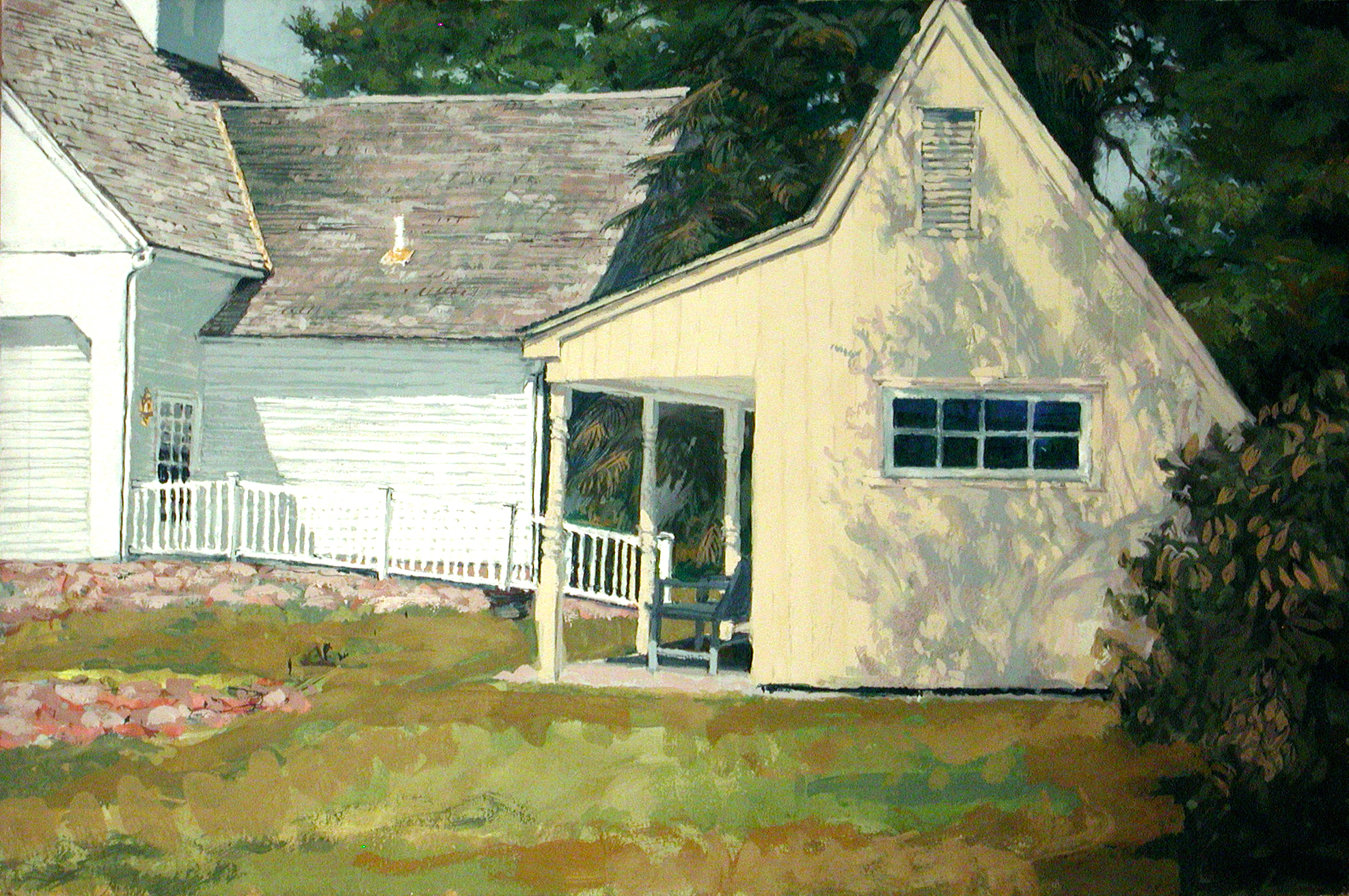
When my father-in-law realized he was too sick to work, as he underwent chemo and radiation, he put down one set of tools: hammers, saws and levels, and picked up another: watercolors, brushes, palette knives, and paper. Sometimes he worked outside, sometimes from photos while getting his treatments. The results of those two years are hanging within our home: many small to medium sized landscapes full of life and green and light and shadow.

House (unfinished), John Tinari

House (unfinished), John Tinari

The most amazing thing to me about these paintings was finding out after I had been in awe of his execution of the variable greens in the leaves of all these paintings, is that he was colorblind to the green and red spectrum. One of my favorite paintings is of a fisherman deep in a river, red hat standing out amidst all that green. I can’t imagine how he was able to do that without some amount of divine sight. According to Rose, he couldn’t match two brown socks from his drawer.

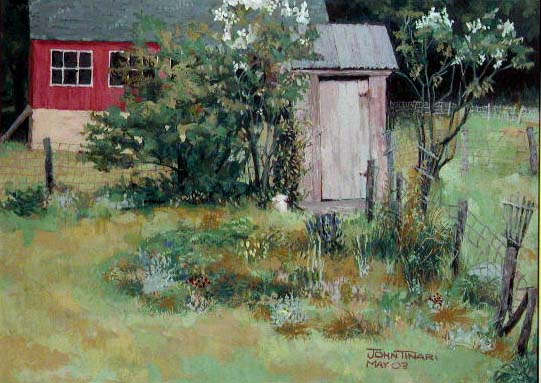
Outhouse, John Tinari

Outhouse, John Tinari

I bring this up because I don’t want to wait until I am dying to do what I love to do most, even if at times I am working from a bit of a torturously dry well. My creative work is what gives my real sense of purpose beyond parenting or the rest of life’s sundries.

Cows, John Tinari

Cows, John Tinari

I was in my second paragraph when I turned to Andrew to confirm or straighten out a detail, and he said. “Hey, it’s Johnny’s birthday today, right?”

So, I just tilt my head up and say thank you, Johnny. This message is really from him to you. I just happened to be here to catch it.

[Editor’s note: Click on any image for a larger view.]

3/04 Weekly creativity contest winner & new prompt

Beautiful submissions for this week’s creativity contest on the prompt “light.” Our winner is Cathy Coley, for a haiku image pairing. I love the simplicity of what Cathy did — just showing up and looking into the every day. Congratulations, Cathy — your $10 amazon.com gift certificate is on its way.


in the new morning light
quiet and promise
are all I need to write


morning-light-001


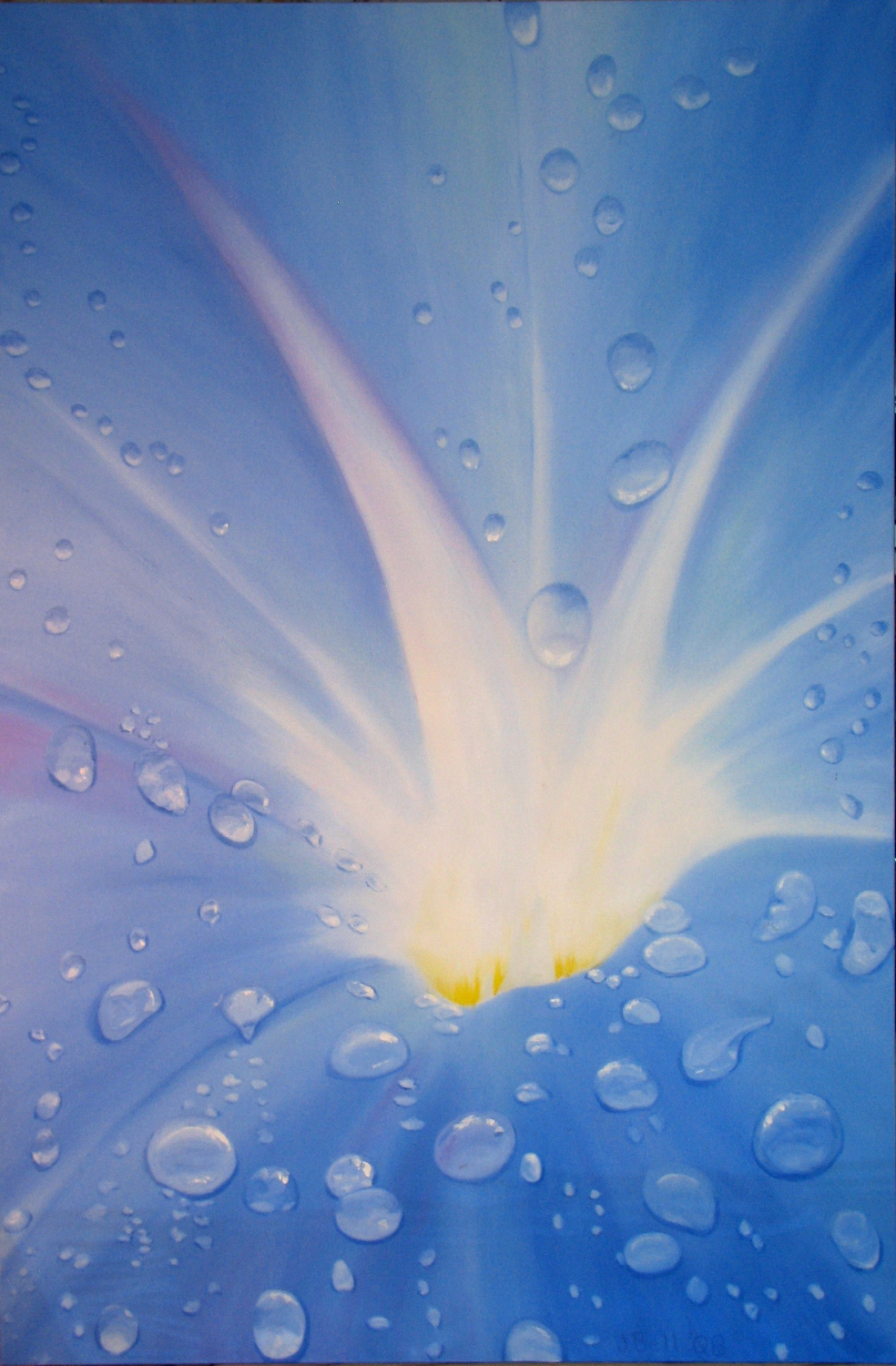
From Juliet Bell: “This is an oil painting I completed recently. It is painted from a photo I took of a morning glory blossom outside my kitchen door after an August rain. I changed the orientation of the light to appear to be coming from inside the blossom. It is entitled ‘Glory After a Morning Rain.'” [Editor’s note: OK, so this BEAUTIFUL painting is actually hanging on the wall in my new library….]

glory-after-the-morning-rain


From Amy Grennell, a beautifully textured pair of images — one an altered version of the other? I wasn’t able to ask Amy what media she used — Amy, please tell us!

light-alt

light-alt2


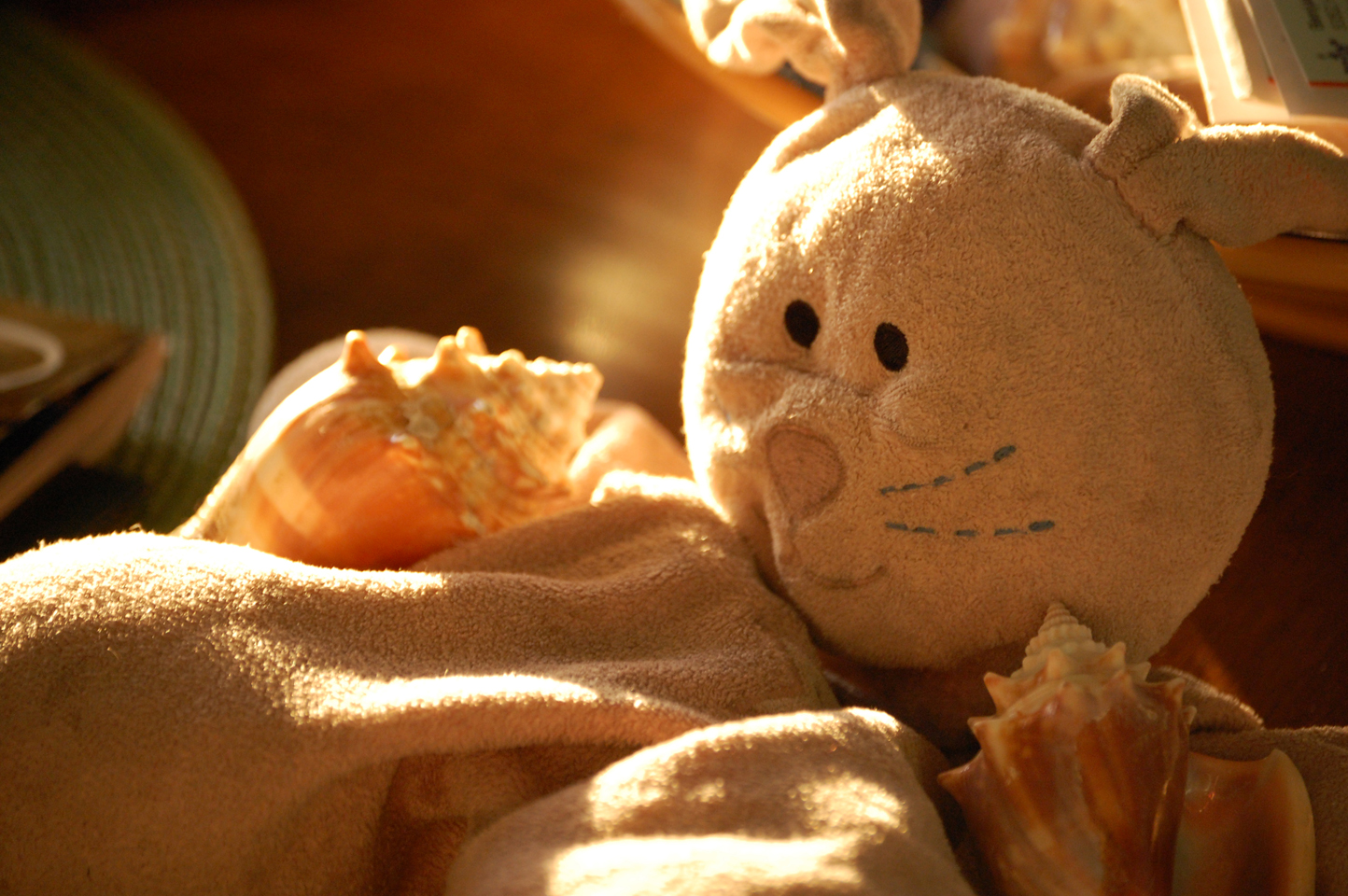
From Kelly Warren: “Here are two photos for you….one of one of lights of my life, and one of the light of her life.  I love the way the light plays off both of them in these pictures, highlighting Sarah’s jumble of lovely red curls and Bunny’s pensive thoughts.”

bunny-portrait-for-cc

sarah-and-bunny


From me (Miranda), a haiku image pair:


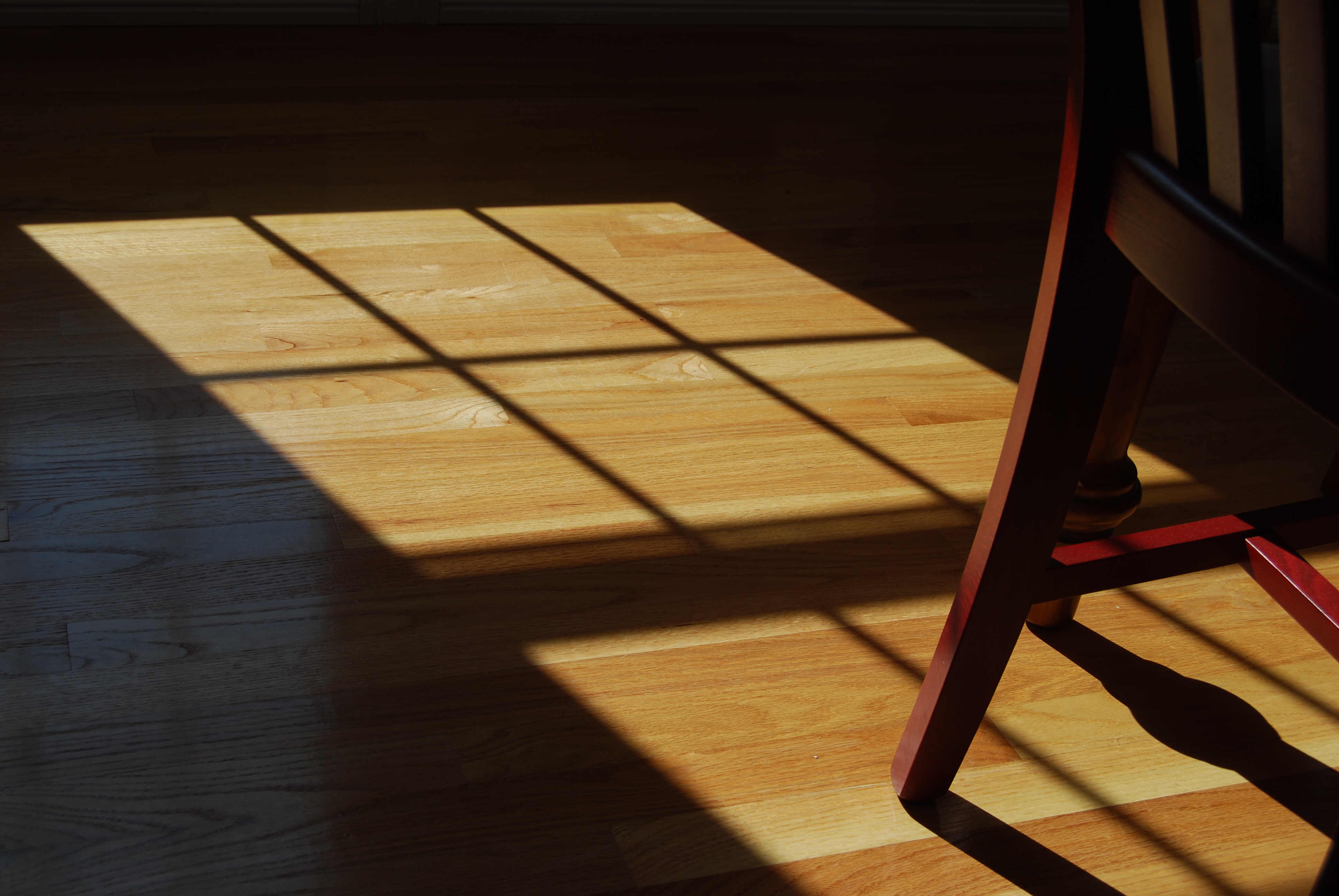
Inside the new house
we orient ourselves to
southern exposure

dsc_0104


This week’s prompt: “Dance”
Use the prompt however you like — literally, or a tangential theme. All media are welcome. Please e-mail your entries to creativereality@live.com by 10:00 p.m. eastern time (GMT -5) on Tuesday, March 10, 2009. The winning entry receives a $10 gift certificate to amazon.com. Writers should include their submission directly in the body text of their e-mail. Visual artists and photographers should attach an image of their work as a jpeg. Enter as often as you like; multiple submissions for a single prompt are welcome. There is no limit to how many times you can win the weekly contest, either. (You do not have to be a contributor to this blog in order to enter. All are invited to participate.) All submissions are acknowledged when received; if you do not receive e-mail confirmation of receipt within 24 hours, please post a comment here. Remember, the point is to stimulate your output, not to create a masterpiece. Keep the bar low and see what happens. Dusting off work you created previously is OK too. For more info, read the original contest blog post.