Meme of the Week

As found here. Happy Friday.
Nov 17
Oct 27
Oct 20
Oct 18
Kim Rohrs
Kim Rohrs is a mixed-media artist and mother of two who, when faced with the challenges of raising a family, learned to adjust her working style in order to continue creating. Rather than feeling like she was just making do, Kim’s new process actually facilitated her success and led her to reframe possibility and outcome; skills that are serving her beautifully in the face of a difficult medical diagnosis. If you need a hand on your back — or a motivational kick on the rear — Kim’s story will have you rushing to your creative work, that pile of tired excuses left behind like last week’s dirty laundry.
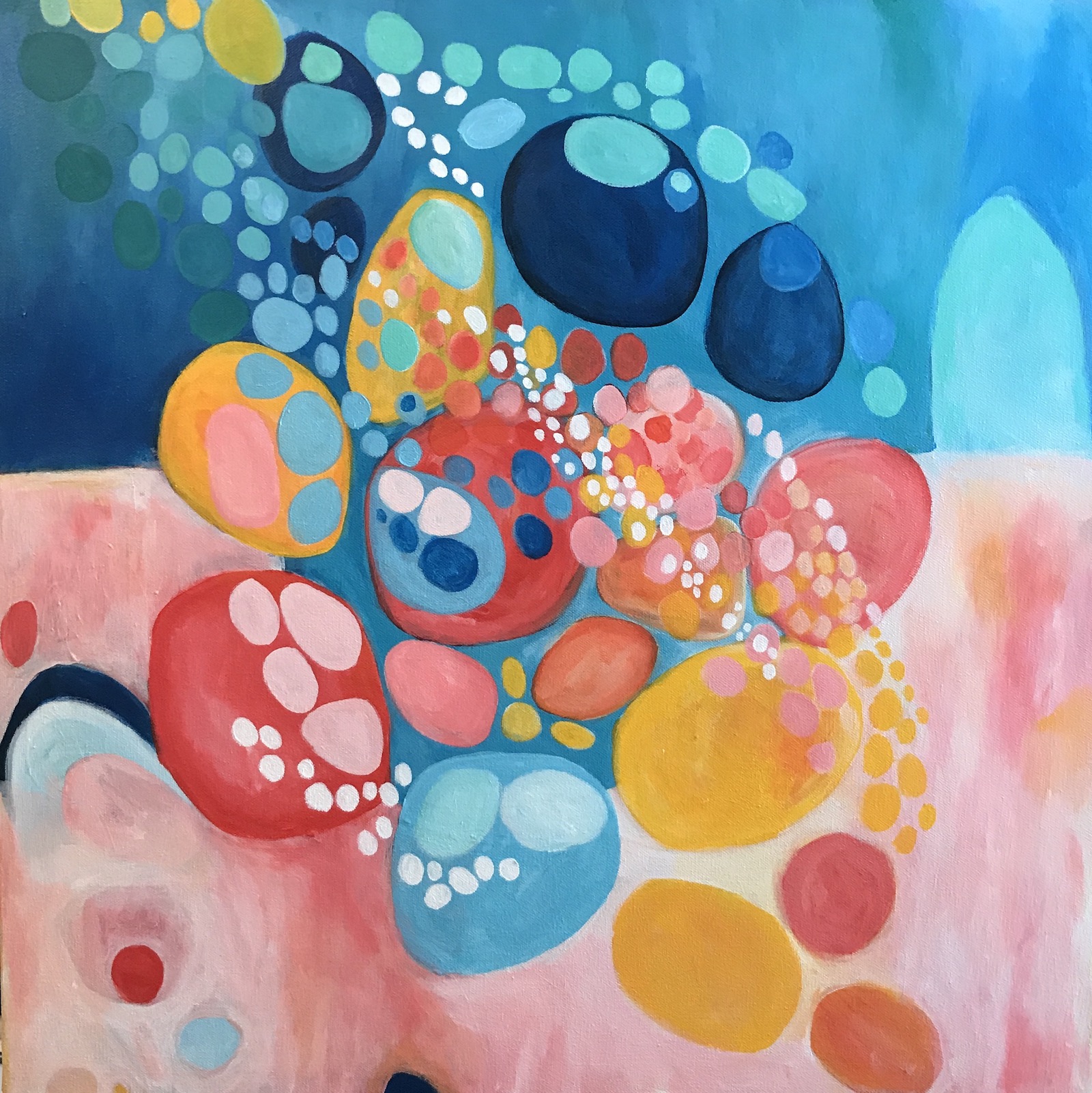
“Rock Slide,” by Kim Rohrs (24″x24″ acrylic on canvas)
My story begins fairly typically. In 2014, I was a stay-at-home mom to two incredible girls, ages four and one. We had busy lives full of playdates, errands, housework, and fun. But when my youngest daughter was almost two, I began to feel a sense of loss of my identity as an artist. I had not consistently made art since she was born. I was finding it difficult and frustrating to find any significant amount of time to build up my practice. On the rare occasion when I had over an hour to paint, I’d be frozen with doubt, anxious that this could be the only chance I’d have to make art for weeks. Inevitably, I would make nearly nothing and feel even more frustrated than when I started.
I finally decided that I was done with this cycle. I was done craving time to paint and then feeling too anxious to paint when I did have the time. Instead, I started looking at what I did have. I had small amounts of time here and there, and the times changed from day to day. I had the desire to have a brush in my hand. I had a creative voice that was ready to be heard.
And so, I started with these positives and slowly developed a way to let these guide my work. I decided to put away the materials that required long set-up and clean-up times. I got out watercolors and ink pens, even though I never considered myself a watercolor artist, and painting with watercolors was not the end goal for me. I did know, however, that watercolors were the materials I needed to build the habit of painting because they are quick and easy to get out and put away. I usually paint in an abstract style and allow paintings to evolve over time and contemplation. Instead of this usual way of painting, I decided to find microscope slides and use these images as inspiration. That way, I could pick up my work, look at an image and get painting without much thought in deciding what to do next.

“Enough for Everyone 2,” by Kim Rohrs (24″x24″ acrylic on canvas)
This method began to work well for me, and I was finding five-minute breaks in the day to grab a brush, put down a few colors, and walk away. I tried painting at the dinner table while my children ate snacks or played with Play-Doh. I painted while they were playing on their own. I even grabbed my brush while walking by my materials and just added a few colors while still standing at our cabinet where my materials sat. Sometimes it went great, sometimes it was a huge challenge. I tried waking up early to paint, or staying up late to paint. I learned that all of these habits served good purposes for me at different times. Enjoying the variety was a new skill I was building.
As I persisted, a shift began to happen. I began to see other times in my day when I could be painting, and because I always knew what I was painting next, these chunks of time became very productive for me. With the unwavering support of my husband, I very gradually went from painting for 5 minutes at a time to consistently painting 10-15 hours a week. Once I had the habit of painting, I revisited my acrylics and my traditional way of abstract painting, which I loved. I even felt ready to experiment with new materials. I started applying for shows, and after a handful of rejections, my work began getting accepted. What started as my five-minute habit was becoming my part-time job, and I loved it.
Artist Statement: “I enjoy giving attention to the many parts that make a whole, specifically the way in which cells provide life for all living things and therefore allow for consciousness to occur. I do this by drawing inspiration from cellular forms. These forms flow, oscillate and intersect in my paintings. At times obsessively painted and at other times concealed or muted, the cellular form drives my paintings and allows me to explore themes through this most basic representation.”
—Kim Rohrs
Fast forward to April 2017. On Easter weekend, I began to develop neurological symptoms that grew and developed over the course of weeks. I entered the realm of medical tests, hypothesis, trying not to Google everything, and waiting. Between April and June I struggled with vision loss, numbness, a feeling of pins and needles over my body, and tremors. On some days, my tremors were extreme enough that I could not paint and on other days I could not trust my vision to help me mix the right colors I needed. I did not paint for a full two months.

“Horizon,” by Kim Rohrs (24″x24″ acrylic on canvas)
In many ways, this was a difficult two months of my life. I felt as though I did not know my body anymore, and each day presented with something different I needed to adjust to. My paint palettes dried up, canvases remained still and incomplete, and I stopped looking for shows to apply to. I was not sure what was happening to me, or how long it was going to last.
What surprised me the most in these months of sickness was that I was not upset about not being able to paint. Instead, I found myself filled with gratitude that when I was able to paint, I DID paint. I was so glad I did not wait until the circumstances were perfect. I did not wait until I was in the right mood. I did not wait until the entire house was spotless. I painted in small bursts when the opportunity arose, and I found ways to build a regular practice from there. I let my body feel sick without the added weight of guilt that comes with “what if.”
The official diagnosis came in: multiple sclerosis.

“Plant Cell Study One,” by Kim Rohrs (8″x10″ watercolor and ink on paper); The first painting Kim completed after committing to painting for five minutes at a time in bursts.
By the time I was diagnosed with MS, the episode was calming down and I was able to paint again. I have since had to adjust my expectations and cut back on deadlines until I get to know this new companion in my life. I am still so thankful for and so proud of the body of work I have completed, and it helps me to understand that change takes time. Developing this disease and not being able to paint as much as I used to does not necessarily feel like a step backward in my progress because now I know there isn’t a linear path to being an artist. It’s up, it’s down, it’s cyclical. It’s five minutes here, an hour or so there.

“Glacial Movement 2,” by Kim Rohrs (12″x12″ acrylic suspended in polished resin)
For me, making art is not about waiting for the right time, the right mood, the right state of mind, or the right state of body. It’s about showing up over and over again with the only expectation of putting paint to canvas. I have found when I am focused on this simple goal, I can achieve it repeatedly. And really, isn’t that most artists’ goal anyway? Using tools to make marks and images over and over again.
Having limited time raising young children allowed me to see that building an art practice can be as simple as I need it to be. Developing MS allowed me to value this simplicity. And now, when I have the time but not the physical ability for the long hours in the studio, I am able to remind myself that five minutes at a time is enough, today.
While earning my art therapy degree at Bowling Green State University, I took as many art studio classes I could cram into my schedule, specifically painting and ceramics. Although I wanted to become a professional artist, I felt a stronger calling to help others discover the healing capacity of art making. After graduating, I moved to Colorado to pursue my master’s degree in art therapy at Naropa University. It was there that I learned to meditate, to listen, to be curious, and to open my heart to help others. I practiced as an art therapist and play therapist, focusing my attention on children and families.
When my husband and I started having children, we felt the Midwest calling us back. We returned to Ohio and at that time I decided to commit my time to raising our children and making art. Today, I am a mixed-media artist. I work with acrylic and resin, encaustic, and watercolors. I am inspired by microscope slides, cycles found in nature, living mindfully, dreams, and art therapy. I paint whenever my kids are asleep. In other words, I am living my dream while my girls dream.
Facebook: Kim Rohrs Art
Instagram: @kimrohrsart
Email: kim@kimrohrs.com
Website: www.kimrohrs.com
To follow Kim’s MS journey, connect with her on Instagram: @ms_mindfulsimplicity.

Instagram: “My daughter and I painting together at the dining room table in 2015. This is when I was painting with watercolors and our dining room was my studio space.”
:::::
Oct 9
Happy Monday, friends! What in the creative realm would you like to accomplish this week? Comment below with the what, when, and how! And if you commented on last week’s Monday Post, let us know how things went: the hiccups as well as the successes.
:::::

Happy Monday, friends! What in the creative realm would you like to accomplish this week? Comment below with the what, when, and how! And if you commented on last week’s Monday Post, let us know how things went: the hiccups as well as the successes.
::::::
Hey, creatives! How about a dose of inspiration this Friday? I’m the closing act at the Creativity Coaching Association’s special one-day Creativity Coaching Tele-Summit: “Catch the Creativity Wave: Success Strategies for Growing Creativity!” Listen to one or all five of the live talks — it’s all free on May 8, 2015! Details here. My session is:
 Building a Real-Life Creative Practice
It’s the ultimate creative dream: The days stretch before you in a glorious string, ripe with creative opportunity because you have nothing else to do and nowhere else to be. No job, no kids, no partner, no responsibilities — just you and your creative work. But then, of course, we wake up. For most of us, the best we can do is shoehorn creative practice into an overflowing life. How do we do that, exactly? And is struggling to maintain a regular creative practice always a good idea? Let’s look at navigating creative work when life is full of competing demands.
I hope you’ll join us!
Jan 10
The internet overflows with inspiration. Encouraging memes? Cheerleading blog posts? Want to hear that you’re awesome, you’re beautiful, you’re full of potential? No problem. We can spend hour upon hour feasting on words and images that fill us up and heal our wounds — at least on the surface. It feels good and can be extremely addictive.
At a certain point, however, you may look around and find yourself holding an empty bag. One day the interwebs aren’t as satisfying, even though you can still spend an entire afternoon on Pinterest and Instagram. Because it isn’t enough to see the vast beauty of the universe as it speeds by. We want to do something. We want to use our talents, not just affirm that they exist. We need to use our creativity to make meaning. All the pretty stuff starts to look like a whole lot of fluff and not a lot of substance. It’s an echo chamber to which many of us unwittingly contribute. That’s not a bad thing, but it might not serve you.
A Life of Intention: Your self-paced, virtual weekend retreat is a simple way to realign with what matters. You don’t need to reinvent sliced bread — or yourself. You already have plenty of ideas about where you want to go and what you want to do. But if you’re feeling adrift, those ideas and instincts need to be clarified. You need a plan. You don’t need to spend a bajillion dollars figuring it out — and there isn’t any magic system (God, how I wish there were a magic system!) that can have you waking up at dawn, completing masterpieces by noon, and serving your family gourmet, locally sourced meals every night while you prance around an immaculate dream house in your skinny jeans.
If only.
But maybe your reality is actually better than that. It is, after all, yours.
A Life of Intention is the gentle nudge and thoughtful friend that reconnects you with what matters. The program isn’t rocket science. It doesn’t take hours upon hours to complete, because we all know that you had all those hours at your disposal, you wouldn’t be feeling at loose ends.
When you purchase the self-paced, virtual weekend retreat, you will receive the access code to the retreat page via e-mail. There you will find the three sessions in full, with links to the documents you’ll need to download. You can complete all three sessions in one go, or spread them out — whatever works for you. If you don’t have a weekend to yourself, you can complete the assignments around the edges of your day. Your access code will be valid for 60 days. When you’ve completed the sessions, you’ll have a road map for the next 12 months and beyond.
$38. Click below to order. After you receive your access code, click here to log in.

:::::
Feb 5
 I’m so excited to bring you this amazing giveaway: a free spot in The Artist’s Way and Beyond, a 12-week teleclass led by the award-winning playwright (and my fellow creativity coach) Zohar Tirosh-Polk. This giveaway is a $200 value! If you’ve always wanted to do The Artist’s Way, or have done it before and are ready to do it again, Zohar (familiarly known as Zoe) will be your personal guide during the 12-week program, which begins February 13. The teleclass will be held on Wednesdays from 1:00 to 2:00 pm eastern (except for the initial class, which may run up to 90 minutes).
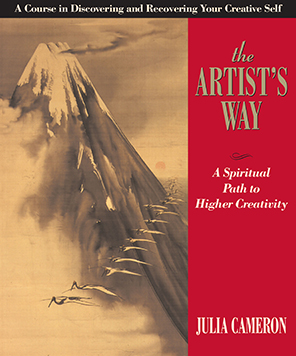 Julia Cameron’s The Artist’s Way is often hailed as the “Artist’s bible,” with tools like morning pages and artist dates now used by millions across the world. The Artist’s Way offers a foundational and spiritual path to accessing your creativity and moving toward achieving your innermost artistic dreams and aspirations. I asked Zoe to share a little bit about what inspired her to offer this teleclass.
What prompted you to create a teleclass from The Artist’s Way?
I’m working on two big creative projects right now and I needed to return to The Artist’s Way myself. I know The Artist’s Way is such a powerful way to reconnect with my own creativity. Having gone through it many times, it has become my artist’s bible of sorts, an anchor. It’s the thing I go back to again and again to find inspiration, hope, and the tools that help me keep going. I also know that creating a community of creative souls/artists is such a potent experience. It allows everyone to be accountable, inspire one another, keep using the tools, and stay on track with our creative projects. Lastly, I hear so many people say, “Oh yes, I want to do The Artist’s Way again,” or “I should read it” and I wanted to create an opportunity for those people to do just that.
Why do you think The Artist’s Way has become such a phenomenon?
Because it works! 🙂 The Artist’s Way addresses the practical, emotional, and spiritual challenges of being an artist/creative soul and offers tangible and brilliant solutions to these challenges. I re-read Julia Cameron’s introduction recently and it was incredible to be reminded about how it all happened. She first heard about a painter-friend who started painting as a result of the work he did with her, and then there was a class, then a packet of handouts, and then a book, which has now sold millions of copies worldwide. Artists all over the world gained access to their creativity and and dancers went back to dancing, photographers got shows, writers wrote novels, actors began acting all over the world. It’s really amazing to think about.
As a creativity coach, what do you most want your students to gain from this teleclass?
I want them to have renewed faith their creativity, be well on their way in working on a project, and have a concrete plan to keep them going. This is where the “Beyond” part comes in. Every participant will have to create a vision for their work. Through coaching, exercises, careful planning, and accountability tools, everyone will complete the class working toward that vision. It’s exciting!
Space is limited. To claim a spot now, register at growcreativecoaching.com/workshops.
To win a free spot in this teleclass, simply post a comment below. Our winner will be selected at random on Friday, February 8, at 9:00 pm eastern. Good luck!
Jul 5
 I’m just a wee bit excited to unveil my new e-book short, The Creative Mother’s Guide: Six Creative Practices for the Early Years. This e-book is the culmination of many years of work, research, and personal interviews. I am so pleased to share this project with you!
When a creative woman has a child, her universe shifts. How to maintain — or begin — a creative practice while caring for a little one? Six Creative Practices for the Early Years is your indispensable guide to navigating the early years of motherhood.
When you have young children, what you don’t have is time. This 35-page e-book short gives you the information and tools that you need, quickly. Six Creative Practices for the Early Years is a resource that you’ll refer to for inspiration and support again and again. It might be the best tool you download this year! It will certainly the best value you’ll get out of $11.98. Click here to order and download. You can also check out a free sample page here.
A few words of praise:
“Miranda Hersey explains how you can keep your creative life vibrant while you parent your young children. Your creativity doesn’t have to be sacrificed while you parent! Miranda tells you exactly what you need to know to keep your creative life alive. Highly recommended.” ~Eric Maisel, Author of Coaching the Artist Within and Fearless Creating
“Becoming a mother can feel as if you have lost yourself deep under nurturing others and meeting their needs. If you’ve also lost view of the way to creative expression, the place you were most yourself, real grief may temper the joy of falling in love with a baby and raising children. When Miranda Hersey encountered that particular reality of motherhood, she asked other writers and artists, women for whom creativity is food, how they managed. She distilled their wise and practical answers into six do-able practices that restore your creative life and make space amid the toys and laundry for you. Those conversations and Miranda’s own experience as a writer and mother of five reveal the best secret of all: when creativity can be merged with mothering, they enhance and expand each other in wonderful, unexpected ways.” ~Gale Pryor, Author, Nursing Mother, Working Mother: The Essential Guide for Staying Close to Your Baby After Returning to Work
“In Six Creative Practices for the Early Years, Miranda Herseyrallies her readers into a band of sisters, united by the challenges we share. Drawing on her own experiences, and the wisdom of 13 practicing artists and writers, Hersey invites us to embrace motherhood and creativity as related, cross-pollinating endeavors. Simple, proven practices lay out a formula for success, encouraging us to reexamine our creativity with openness and generosity. With engaging, frequently humorous, narration, Hersey is the voice in our ear, the friend by our side, nudging us to discover those hidden pockets of time and inspiration and the courage to use them to sustain our creative lives. The lessons in this marvelous volume will be with me for years to come!” ~Susan Edwards Richmond, Poet
“When my twins were babies, I relied on a stack of dog-eared parenting books, flipping through them whenever I needed encouragement, and concrete advice. As a mother who needed to create in order to feel truly alive, I would have added The Creative Mother’s Guide: Six Creative Practices for the Early Years to that library in a heartbeat. Miranda Hersey understands the realities of parenting young children, but gently challenges the reader to tap into the rich creative possibility that exists nonetheless. This is a book that creative mothers will return to again and again for reassurance, inspiration, and genuinely helpful practices.” ~Ellen Olson-Brown, Author
Click here for a free sample page, and to order and download! And of course, if you like what you read, I’d be delighted if you could let your friends know about Six Creative Practices for the Early Years. Thank you!








 Studio Mothers: Life & Art