Skip to content

Posts tagged ‘time management’

The Monday Post 10.2.17

Happy Monday, friends! What in the creative realm would you like to accomplish this week? Comment below with the what, when, and how! And if you commented on last week’s Monday Post, let us know how things went: the hiccups as well as the successes.

:::::

The Monday Post: 9.25.17

Doris Lessing quote

Happy Monday, friends! What in the creative realm would you like to accomplish this week? Comment below with the what, when, and how! And if you commented on last week’s Monday Post, let us know how things went: the hiccups as well as the successes.

:::::

The Monday Post: 9.18.17

Matisse quote

Happy Monday, friends! What in the creative realm would you like to accomplish this week? Comment below with the what, when, and how! And if you commented on last week’s Monday Post, let us know how things went: the hiccups as well as the successes.

:::::

How She Does It: Meet Jane Gilheaney Barry

Jane Gilheaney Barry is a writer, creativist, and curator of the lifestyle and creativity blog That Curious Love of Green. She is seeking representation for her first novel, a modern gothic tale, Cailleach, and editing her creativity book, A Complete Coming Out Guide For Creatives In Hiding, due for publication this year. Jane lives in Co. Leitrim in the North West of Ireland with her husband and children. You’re going to enjoy this bolt of inspiration from Ireland.
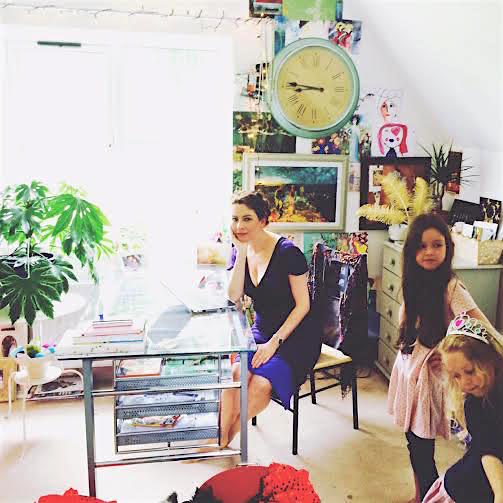

At Home with Jane Barry

SM: Please introduce yourself and your family, Jane!
JB: I’m a writer, creativist, and curator of the lifestyle and creativity blog That Curious Love of Green. I live in the North West of Ireland with my husband Adrian, our children Shaylyn, Saoirse, and Sadhbh, and our cat Ernest Hemingway.

SM: Tell us about your artwork/creative endeavors.
JB: I’ve always been what you’d call highly creative but a few years ago I became deliberate with it and that changed everything.

creativity book cover

I started the blog and within a year started writing my first novel, a modern gothic tale Cailleach, meaning witch, hag, or goddess. Since then I’ve taught myself to paint and written the first in a series of e-books on themes of creativity, food, and home. That Curious Love of Green: A Complete Coming Out Guide for Creatives in Hiding will be available for pre-order on Amazon in October.

SM: What goals do you have for your art? How would you define your “life’s work”?
JB: My goal is to be the best writer I can be and right now, to bring my books to publication. I’m trying the traditional route first with my novel and self-publishing my creativity e-book in October. My life’s work is to create, write, challenge, and inspire.

SM: How has motherhood changed you creatively?
JB: I don’t think it has. What I will say is I have an opportunity to impart a certain spirit to my children which might have been lost had I not embraced my own creativity. I’m certainly conscious of and grateful for that.

SM: Where do you do your creative work?
JB: It used to be wherever was cool, or warm, convenient, or quiet. For a short time I had a room of my own; that’s now a child’s bedroom. My current mode is wanderess. I create a space — right now it’s in the eaves of our bedroom — that moves according to the season. I find it helpful to have a dedicated space, but the stimulation of change is also important to me.

SM: Do you have a schedule for your creative work?
JB: Yes. I’d never have finished the books otherwise. It’s too hard, even when you love it. You have to create a habit. Since our youngest started school I spend two to six hours a day, five days a week. It was more difficult when they were babies. While writing the first draft of my novel I was getting up daily at 5:00 am to get the hours in before Adrian left for work. But I’m always creating, thinking, or talking projects to myself, the children, and Adrian. All day, every day of my life.

SM: What does creative success mean to you?
JB: For 39 years I dreamed of a writing life, a freer, more creative life. I only had one thing on my bucket list, and that was to write a book. And I knew I wanted to paint. At the point when I started the blog I felt blocked from all these things, from even the most basic of creative writing. I had no background, no training, no frame of reference. I thought this kind of life belonged to other people, “artist types.” I could not have been more wrong. That this is my life now, that I had the power to create it, I believe everyone does, and the democracy of it all. That is creative, is life success, for me. Plus I’ve learned how to slay creative blocks, that’s a success in itself.
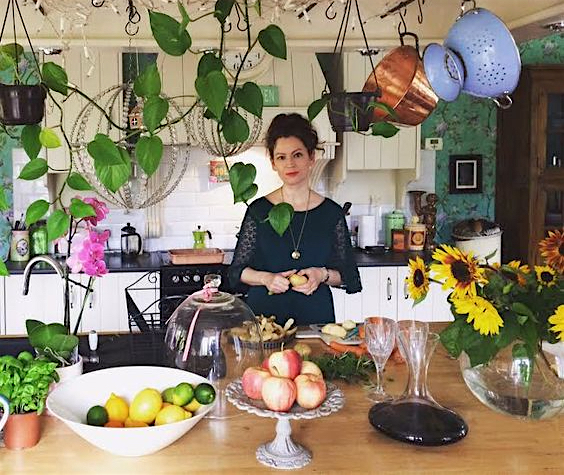
Jane_Gilheany_Barry

SM: What makes you feel successful as a mother?
JB:
My eldest girl will be 22 this December. And when I look at her I feel successful, so, fingers crossed for the next two. We had an art day yesterday with everyone sitting around the table writing, painting, and working on various projects. At different times both small girls headed outside, “for inspiration,” they told me. That felt good. I think I will feel successful enough if they can be themselves, think for themselves, and do what they want to do.

SM: What do you struggle with most?
JB: Protecting myself has been a learning curve; my time and energy. And rest. My tendency is to not rest or take care of myself, because I’d rather just work. Which is a way of taking care of myself. But not enough. I’ve improved, but I need to do more for my physical self.

SM: What inspires you?
JB: Everything inspires me, nothing is wasted, nothing is lost. High on my list is colour, nature, beauty, women, houses, weather, wild landscapes, creativity, thinking, and sibling relationships.

SM: What do you want your life to look like in 10 years?
JB: Not very different to how it looks now. More books I should think. And when my ship comes in to winter abroad; now that would be nice.

SM: What are you reading right now?
JB: My novel writing style has been compared to Daphne du Maurier. In my shock and delight I’m currently reading everything by her. Next on my list is Lolly Willowes by Sylvia Townsend Warner because I love witches, women, rebels, and irreverence.

SM: What are your top 5 favorite blogs/online resources?

SM: What do you wish you’d known a decade ago?
JB: How wonderful life was going to be.

SM: What advice would you offer to other artists/writers struggling to find the time and means to be more creative?
JB: Look at your day critically and see what, even small changes, you can make to support your creativity. We get so caught up in habits, routine, and with a set script for our days that we don’t make improvements. You have to become really conscious and solutions focused. Also, when planning your day schedule your creativity first. Everything else gets done anyway. Trust the process and put your faith in the work. All the answers are there. The answers to fear, doubt, worry, frustration. Just prioritise and do the work. The tendency is to focus on problems, on outcomes, and what people think, but the joy of your life is the work itself. It’s hard when children are small but every little bit you do adds up. So don’t wait. If it’s important to you you’ll find a way.

::::::

Connect with Jane here:
The Monday Post: 9.11.17

Fabienne Frederickson quote

Happy Monday, friends! What in the creative realm would you like to accomplish this week? Comment below with the what, when, and how! And if you commented on last week’s Monday Post, let us know how things went: the hiccups as well as the successes.

:::::

The Monday Post: 9.4.17

Auden quote

Happy Monday, friends! What in the creative realm would you like to accomplish this week? Comment below with the what, when, and how! And if you commented on last week’s Monday Post, let us know how things went: the hiccups as well as the successes.

:::::

The Monday Post: 8.28.17

Victoria Moran quote

Happy Monday, friends! What in the creative realm would you like to accomplish this week? Comment below with the what, when, and how! And if you commented on last week’s Monday Post, let us know how things went: the hiccups as well as the successes.

::::::

The Monday Post: 8.21.17

Patti Digh

Happy Monday, friends! What in the creative realm would you like to accomplish this week? Comment below with the what, when, and how!

:::::

10 Ways to Make the Most of 10 Minutes

One of the most popular pieces from our archives!

10 Ways to Make the Most of 10 Minutes

It’s a rare but beautiful thing: An unexpected gap opens in your otherwise overbooked day. You realize — with disbelief — that you’re actually “free” for a short window. No one’s hair is on fire and there isn’t anything urgent to take care of right now. Maybe the baby who never sleeps finally closes her eyes or your spouse takes the kids out on an errand or you’re between conference calls. Whatever it is, you realize that the next little bit of time is not yet spoken for. The window is too short to dig into a project, but you do have time for something.

If you’re like most people, you reflexively reach for your smartphone.

And then, before you know it, the unclaimed window has closed. The baby wakes up, the client calls, it’s time to head out — and those minutes are gone. Are you the better for how you spent them?

Don’t get me wrong: Downtime is important. Ten minutes of doing nothing has its value; social media and other internet temptations can, at times, serve as recreation. But more often than not, the interwebs become a crutch that we depend on because we’re in a short period of transition and we’ve conditioned our brains to need constant, fast-food stimulation. We don’t know what else to do — or we do know what to do, but we’re procrastinating because we’re over- or under-whelmed by whatever we really want to be working on. And just when we might benefit most from a screen-free breather, we’re particularly addicted to the glow.

Whether you’re using up minutes that aren’t otherwise spoken for or you’re avoiding a task you’d rather not do, use those 10 minutes to your advantage. Here are 10 “unplugged” ways to do just that.

  1. Meditate. Whether or not you already meditate regularly, a 10-minute break is a great opportunity to sit. Research demonstrates the substantial health benefits of meditation: it reduces stress, lowers blood pressure, increases focus, and reduces sensitivity to pain. Not sure how to meditate? Here’s an accessible introduction from Zen Habits.
  2. Write a poem. Short-form poetry is a lot of fun, and it only takes a few minutes to pen a haiku, tanka, or cinquain. Even if you’re unfamiliar with writing poetry, it’s deeply satisfying to solve the poetic puzzle of fitting your ideas into a time-honored structure.
  3. “Treat” read. You know that stack of magazines and journals that you never get to? Perhaps the New York Times Book Review that you set aside for “later,” or that tempting stack of One Story issues? Maybe an alumni magazine you want to peruse? That’s what I call “treat” reading — something that meets these three criteria: it’s short, unplugged, and somewhat indulgent.
  4. Exercise. Do 10 minutes of yoga, jump rope, or — if you have them — run up and down a flight of stairs (assuming you’re healthy enough to do so). A 10-minute burst of exercise boosts your concentration, mood, and physical well-being.
  5. Journal. Grab your journal — even if you’re a regular practitioner of Morning Pages — and gift yourself with a brief clearing session. Write out what you’re doing, what you’re not doing, what’s working, what’s not working. Keep your hand moving. Speaking from experience, 10 minutes of intense journaling can be an amazing stress reliever.
  6. Share the love. Dig out one of those blank cards or bits of stationary that are lurking in a drawer somewhere and write a brief note to someone you care about. It might be a thank-you note, a thinking-of-you note, or just a few lines that amount to “I’m so glad to know you.” Address your envelope, put a stamp on it, and mail the card next time you’re out. This act of gratitude has benefits for you as well as your recipient.
  7. Plot creatively. Grab a few index cards. Using one card per idea, outline a handful of important scenes that need to happen in your novel; the concept, colors, or basis for the painting that’s been kicking around in your head; a few possibilities for future blog posts. If you prefer visuals to words, use the blank side of your index cards to sketch or doodle.
  8. Prepare. Use a short interval to do some groundwork for a project: Gesso a canvas, sharpen your colored pencils, clean off your worktable or desk. If you don’t have any tasks in this category, spend your window filing bills or dealing with that “not sure what to do with this” stack of papers. It’s not sexy, but it sure feels good when it’s finished.
  9. Clip. Gather up a few old magazines (I keep a collection in my art area for this purpose) and flip through those glossy pages in search of collage materials. You don’t need to look for anything specific, just pull or clip the words and images that appeal to you. Save these clippings in a box for later collage work — and file anything else that sparks a story or project idea.
  10. Step outside. Use your brief break to get some fresh air. Go stand outside and marvel at whatever you see, feel, and hear. Raining? Enjoy the sound of rain hitting your umbrella. Snowing? Stand outside and be with it. Can’t go out because the kids are sleeping/watching TV/leaving you alone for a few seconds? Go stand by a window and breathe deeply. We all need to connect with nature, even if it’s just a few long-distance minutes with one straggly tree on the other side of a busy street.

What are your favorite ways to make the most of 10 minutes?

:::::

Your Creative Intentions: The Monday Post ~ September 21, 2015

Emily Dickinson quote

A regular creative practice — a daily practice, if possible — is key to staying in touch with how you make meaning. Key to living, not postponing. (Let’s all agree to give up on “someday.”)

What are your plans for creative practice this week? Given the specifics of your schedule, decide on a realistic intention or practice plan — and ink that time in your calendar. The scheduling part is important, because as you know, if you try to “fit it in” around the edges, it generally won’t happen. An intention as simple as “I will write for 20 minutes every morning after breakfast” or “I will sketch a new still life on Wednesday evening” is what it’s all about. If appropriate, use time estimates to containerize your task, which can make a daunting project feel more accessible.

Share your intentions or goals as a comment to this post. We use a broad brush in defining creativity, so don’t be shy. We also often include well-being practices that support creativity, such as exercise and journaling.

Share your intentions or goals as a comment to this post. Putting your intentions on “paper” helps you get clear on what you want to do — and sharing those intentions with this community leverages the motivation of an accountability group. Join us!

The image used in this week’s Monday Post is courtesy Betsy Gitelman. Thank you, Betsy!

If you would like to contribute a nature image for a future Monday Post, please send an e-mail to creativereality [at] live.com !

:::::::

If you’re an artist or writer with little ones, The Creative Mother’s Guide: Six Creative Practices for the Early Years is the essential survival guide written just for you. Concrete strategies for becoming more creative without adding stress and guilt. Filled with the wisdom of 13 insightful creative mothers; written by a certified creativity coach and mother of five. “Highly recommended.” ~Eric Maisel. 35 pages/$11.98. Available for download here.

Your Creative Intentions: The Monday Post ~ August 17, 2015

Marianne Williamson quote

A regular creative practice — a daily practice, if possible — is key to staying in touch with how you make meaning. Key to living, not postponing. (Let’s all agree to give up on “someday.”)

What are your plans for creative practice this week? Given the specifics of your schedule, decide on a realistic intention or practice plan — and ink that time in your calendar. The scheduling part is important, because as you know, if you try to “fit it in” around the edges, it generally won’t happen. An intention as simple as “I will write for 20 minutes every morning after breakfast” or “I will sketch a new still life on Wednesday evening” is what it’s all about. If appropriate, use time estimates to containerize your task, which can make a daunting project feel more accessible.

Share your intentions or goals as a comment to this post. We use a broad brush in defining creativity, so don’t be shy. We also often include well-being practices that support creativity, such as exercise and journaling.

Share your intentions or goals as a comment to this post, and let us know how things went with your creative plans for last week, if you posted to last week’s Monday Post. Putting your intentions on “paper” helps you get clear on what you want to do — and sharing those intentions with this community leverages the motivation of an accountability group. Join us!

If you would like to contribute a nature image for a future Monday Post, please send an e-mail to creativereality [at] live.com !

:::::::

If you’re an artist or writer with little ones, The Creative Mother’s Guide: Six Creative Practices for the Early Years is the essential survival guide written just for you. Concrete strategies for becoming more creative without adding stress and guilt. Filled with the wisdom of 13 insightful creative mothers; written by a certified creativity coach and mother of five. “Highly recommended.” ~Eric Maisel. 35 pages/$11.98. Available for download here.

Your Creative Intentions: The Monday Post ~ August 10, 2015

Andy Warhol quote

A regular creative practice — a daily practice, if possible — is key to staying in touch with how you make meaning. Key to living, not postponing. (Let’s all agree to give up on “someday.”)

What are your plans for creative practice this week? Given the specifics of your schedule, decide on a realistic intention or practice plan — and ink that time in your calendar. The scheduling part is important, because as you know, if you try to “fit it in” around the edges, it generally won’t happen. An intention as simple as “I will write for 20 minutes every morning after breakfast” or “I will sketch a new still life on Wednesday evening” is what it’s all about. If appropriate, use time estimates to containerize your task, which can make a daunting project feel more accessible.

Share your intentions or goals as a comment to this post. We use a broad brush in defining creativity, so don’t be shy. We also often include well-being practices that support creativity, such as exercise and journaling.

Putting your intentions on “paper” helps you get clear on what you want to do — and sharing those intentions with this community leverages the motivation of an accountability group. Join us!

If you would like to contribute a nature image for a future Monday Post, please send an e-mail to creativereality [at] live.com !

:::::::

If you’re an artist or writer with little ones, The Creative Mother’s Guide: Six Creative Practices for the Early Years is the essential survival guide written just for you. Concrete strategies for becoming more creative without adding stress and guilt. Filled with the wisdom of 13 insightful creative mothers; written by a certified creativity coach and mother of five. “Highly recommended.” ~Eric Maisel. 35 pages/$11.98. Available for download here.