Skip to content

Posts tagged ‘motherhood’

Your Creative Intentions: The Monday Post ~ November 18, 2013

Lau Tzu

Commit to a regular creativity practice. Regularity — a daily practice, if possible — is key to staying in touch with how you make meaning.

What are your plans for creative practice this week? Given the specifics of your schedule, decide on a realistic intention or practice plan — and ink that time in your calendar. The scheduling part is important, because as you know, if you try to “fit it in” around the edges, it generally won’t happen. An intention as simple as “I will write for 20 minutes every morning after breakfast” or “I will sketch a new still life on Wednesday evening” is what it’s all about. If appropriate, use time estimates to containerize your task, which can make a daunting project feel more accessible.

Share your intentions or goals as a comment to this post, and let us know how things went with your creative plans for last week, if you posted to last week’s Monday Post. We use a broad brush in defining creativity, so don’t be shy. We also often include well-being practices that support creativity, such as exercise and journaling.

Putting your intentions on “paper” helps you get clear on what you want to do — and sharing those intentions with this community leverages the motivation of an accountability group. Join us!

:::::::

If you’re an artist or writer with little ones, The Creative Mother’s Guide: Six Creative Practices for the Early Years is the essential survival guide written just for you. Concrete strategies for becoming more creative without adding stress and guilt. Filled with the wisdom of 13 insightful creative mothers; written by a certified creativity coach and mother of five. “Highly recommended.” ~Eric Maisel. 35 pages/$11.98. Available for download here.

Lucy: Cultivating Creativity in the Midst of Motherhood

Editor’s note: In the fall issue of The Creative Times, I previewed The Rainbow Way by Lucy H. Pearce, a positive, nurturing, practical book that will help you unlock your creative potential within the constraints of motherhood. I was glad to provide Lucy with advance praise for her work — and invited Lucy to share her story with the Studio Mothers audience, as I know you will relate. *In celebration, we’re giving away two free e-books! To enter, leave a comment below before 5:00 pm eastern time on November 15, 2013.* And don’t miss Lucy’s invitation to join her blogging carnival of creative women!


Lucy PearceMany of us dream of becoming writers, or artists, or dancers. And then, one day, when babies come along, whether by accident or design, out go the books or paintings with the baby’s bath water — whether through busyness, lack of support, or the misguided belief that we should now dedicate ourselves entirely to our children.

I know. Because it happened to me.

There I was in No-Woman’s Land. Tattered creative dreams in one hand. Children in the other. With little support and no way of knowing how to move forward, how to reclaim my lost self and dreams.

Over the years I have created a new dream for myself: that of the creative mother — writer, artist, editor, and entrepreneur. Out of necessity and a need for sanity. Sometimes the balance has tipped further towards motherhood, at other times creativity. But both elements have been constants in my life. No matter how tired, how overwhelmed, I was never willing to relinquish either my almost-fulltime mothering role, or my creative work. It has been an adventure, and one for which I had few real-life role models.

When I first started out in motherhood, I kept comparing myself to other women who seemed content in their role as stay-at-home mothers, and concluded that I must be doing it wrong. I was happy and recharged when I had my creative time; impatient and mean when I didn’t. But this need, this urge, was not a whim. It would not go away. And so I learned, little by little, to honor it and build my life around it.

The Rainbow WayAt the time I thought I was the only one feeling this way. But in researching my book, and talking to other mothers, I found I was not alone. We are not celebrated by our society. But we are here, wiping little bottoms and writing poetry. Making sculpture and breastfeeding. Writing books late at night and on the bottom of shopping lists. We are here. And we matter.

I wrote The Rainbow Way: Cultivating Creativity in the Midst of Motherhood for myself, for the mother I had been, and all the creative mothers who contact me every week feeling stuck and unsure, lost and confused about how to be both mothers and creative souls in this busy modern world. It came to me and demanded to be written. And so I scribbled notes on any piece of paper I had on hand, wherever I was, in doctor’s offices, car parks, and at the kitchen table. Read more

Suzi: What Was I Thinking? The Birth of an Anthology of Motherhood

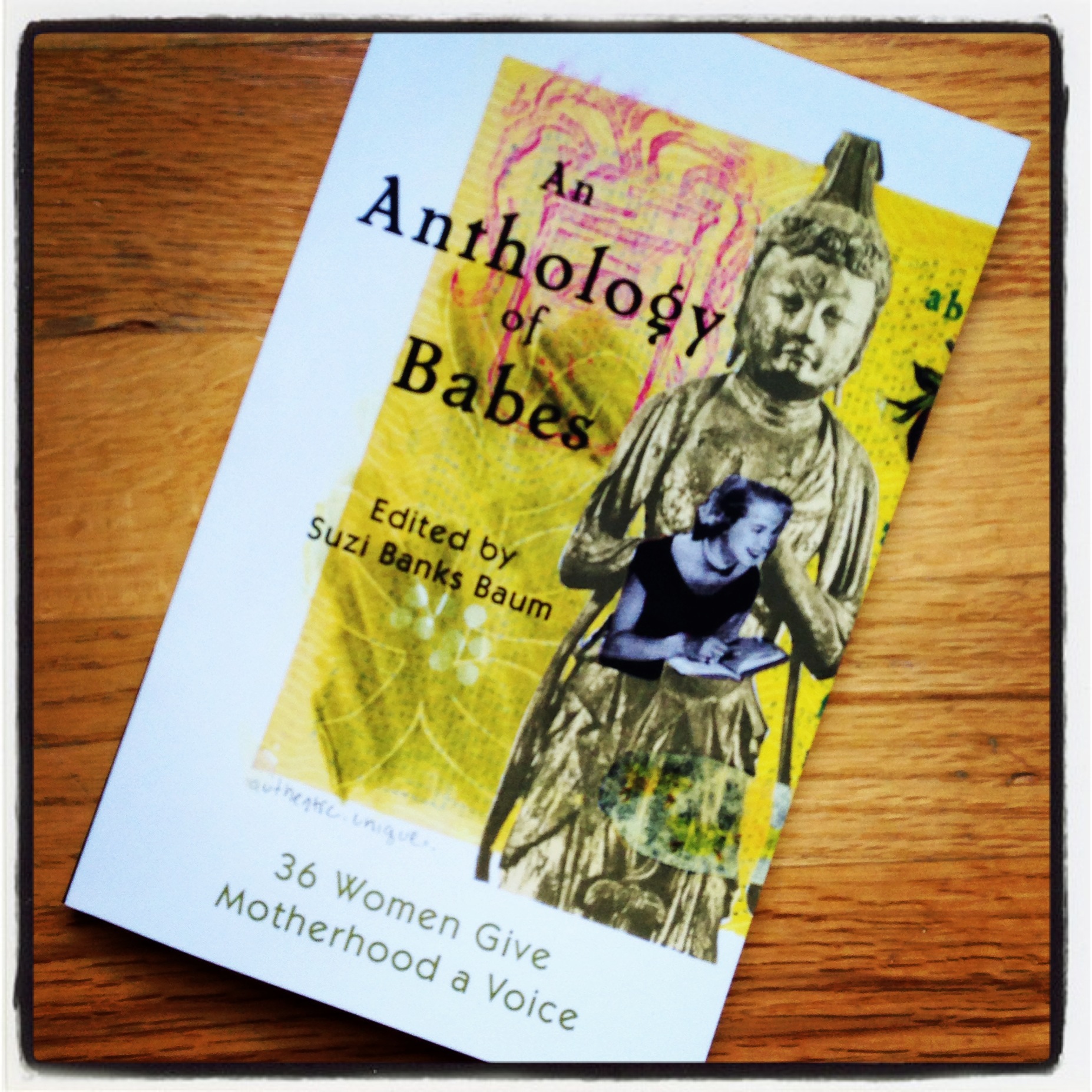
I’m thrilled and honored to be the first blog to publish this piece! Suzi Banks Baum, writer, artist, and blogger, recently released a book that belongs in the hands of every creative mother: An Anthology of Babes: 36 Women Give Motherhood a Voice. (Suzi’s wisdom also appears in my e-book The Creative Mother’s Guide: Six Creative Practices for the Early Years, so you may have already met her in those pages — or here at Studio Mothers.) In the piece below, Suzi shares the journey that resulted in her book, addressing the doubts, obstacles, and beauty that accompany the creation of anything worthwhile. Savor Suzi’s words, and please consider supporting her work by acquiring a copy of the book.


An Anthology of Babes

Vulnerability is the birthplace of love, belonging, joy, courage, empathy and creativity. It is the source of hope, empathy, accountability, and authenticity. To put our art, our writing, our photographs, our ideas out into the world with no assurance of acceptance or appreciation — that’s also vulnerability.”
—Brené Brown, Daring Greatly

Vulnerable is exactly how I felt when I invited 35 women to jump into the freezing-cold waters of public opinion and share themselves and their perspectives on living lives pumped full with creativity in Anthology of Babes: 36 Women Give Motherhood a Voice. At that point I knew wanted to put my words and images out in to the world, but publishing a book? Being that public terrified me. So, I figured I’d rather have some co-conspirators.

Years before, I had started writing my own stories about how I spent my days as a mother, what caught my attention internally, and how I righted the boat of my serenity over and over again with small creative acts. I wrote never thinking anyone but a few close friends would read these stories. I was just writing. But in April 2009, I dared to title the writing Laundry Line Divine: A Wild Soul Book for Mothers. At a writing conference, I spoke to a literary agent about the work, wondering if there was interest in the world beyond my sphere for a book about how I raised myself as I raised my children. (Please note elevator pitch in the last sentence. “Can I describe my book in 10 words or fewer?”)

Standing before a literary agent is much like any other moment in life when you are Dorothy at the feet of the Wizard. “Is there anything in your bag for me?” “Could there be another human aside from my best friends who might be interested in my writing?” Standing there, knees clattering (and go ahead, tell me I was supposed to own my brilliance, stand for all mothers, flirt with the agent, shine shine shine), palms slick with sweat, lips dry, eyes blurring, I learned I was to go home and build my author platform. “Come back when you’ve built that,” said the agent.

An author platform is not something you need wood for. For an author platform you need a website and something to say. Then, just like the newsboys out on the corner hawking the latest headlines, hopefully someone will stop and read your words. Perhaps they will follow your blog and become part of what I have come to understand is my “tribe.”

With help, I built the website. I studied social media, which until that point I barely knew. Read more

Brittany: Finding Time to Write

Brittany VandeputteBrittany Vandeputte, writer and mother of two young boys, is one of 13 contributors whose wisdom appears in the e-book The Creative Mother’s Guide: Six Creative Practices for the Early Years. Brittany wrote the piece below before her second son was born. If you’re a writer with a wee one, do you resonate with Brittany’s snapshot?

I’ve been thinking a lot lately about what it means to be a mother who writes. Ordinarily, when I think of a “writer” I imagine a reclusive character locked behind a door who neither eats nor sleeps for days. I think of this person because that is how I used to write before I had obligations to other people. I still have an “office” but I use the term loosely. An office seems to signify a private place to conduct one’s business and that is hardly how I would describe the place I do most of my writing. As a mother, I fully expect to find toys littering the floor and a strange assortment of other odds and ends that my son finds endlessly amusing. Lately, it has been the remnants of a bag of polyfill stuffing that he excavated from my craft basket.

I don’t get a lot of time to write. I try to jot down ideas while my son is playing, but more times than not, he ends up stealing the pen out of my hand and following that up with a victory dance where he leaps triumphantly on my notebook. For the last 6 months, I have done the bulk of my writing in very short bursts during my son’s naptime — which is unfortunately only once a day. It frustrates me to no end, but the alternative is even more frustrating.

There are times I wish I could push everything outside the door and lock myself in. All I want is one day where I can write and make some real measurable progress. But of course, I can’t do that and I know it. The thing is, other people know it too, and very occasionally, someone will say to me, “Come to my house. Bring the baby. I’ll watch him while you write.” There’s a special place in heaven for these people. And I always take them up on the offer. As a mother, I already know that it takes a village to raise a child, but I’m learning that a village is also essential when you’re a writer. It takes that many offered spaces to get your novel finished!

:::::::

If you’re an artist or writer with little ones, The Creative Mother’s Guide: Six Creative Practices for the Early Years is the essential survival guide written just for you. Concrete strategies for becoming more creative without adding stress and guilt. Filled with the wisdom of 13 insightful creative mothers; written by a certified creativity coach and mother of five. “Highly recommended.” ~Eric Maisel. 35 pages/$11.98. Available for download here.

Zoë: Breaking the Silence

Many of you will resonate with this moving portrait from guest blogger Zoë Purdy, a freelance writer and editor. Zoë lives with her husband and three children in Toronto, Canada.

Zoe Purdy

“I’ve been thinking, and I don’t want to be a mother when I grow up,” Sofie announced gravely one day when she was about three years old. “Oh, yeah?” I answered. “Well, you get to decide, of course, but you don’t have to make up your mind until you’re an adult.” She nodded, the relief evident on her face. Sofie is my middle child, cheerful and smart, stubborn and quirky.

“Babies are cute and stuff,” she went on, “but if I have one of my own then I’ll have to take care of it.” “True enough,” I agreed. “And you don’t think you’d enjoy taking care of a baby?” Sofie has always been gentle and empathetic, and of my three children I think of her as the most nurturing. She is the one who wants to bring every ailing insect and earthworm home to be nursed back to health. When our youngest was a baby, Sofie eagerly suggested ways to soothe her when she cried: nursing, cuddling, feeding her an ice-cream sundae, covering her in stickers. It surprised me to hear that she didn’t find the idea of motherhood attractive. “It’s just that there are so many other things that I want to do and if I’m a mother, I won’t get to do them,” she explained in a matter-of-fact tone.

I protested, of course, forcing myself to sound enthusiastic despite the ache I felt gathering in my chest. I told her that being a mother is only one part of who I am, albeit a very important part. There was absolutely no reason why she couldn’t do all those incredible things she imagined and have a baby. I believed what I was saying, but I know that it fell flat. This is why: as a parent, how I engage with life and who I am fundamentally as a person have far more impact on my children than anything I actively try to teach them.

Over the next days and weeks I returned to that conversation again and again. Something bothered me and it wasn’t that my daughter’s vision of her adult life didn’t include children. If she ultimately decides that parenthood isn’t for her, I won’t object. No, what really bothered me was this: my daughter found my life unappealing and I really couldn’t fault her for it. I had let myself be swallowed whole by motherhood and I had barely noticed. When had I given up on doing gratifying and important work myself? When had I decided that it was enough to raise other people who might grow up to do interesting things, to make their own valuable contributions to the world?

Three-year-olds are fickle creatures. You could ask Sofie what she wants to do when she grows up and get a different answer every day of the week. I’m sure that I too entertained a variety of career fantasies as a child, but one thing has remained constant throughout my life: my love of the written word. I have been devoted to writing and books for as long as I can remember.

My mother tells me that I dictated stories to her before I could read and write. Later I took to carrying around a small notebook just like one of my favourite storybook heroines, Harriet the Spy. As we rode the bus I would jot down notes about the other passengers and then spin off into wild speculations about their lives. At school I was known as a daydreamer — I was always busy putting together stories in my head, making up characters and sticking them into different scenarios to see what would happen.
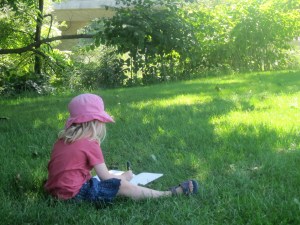
Sofie writingI was a shy child who was constantly told to speak up at school. Whenever a teacher read my writing for the first time, they always remarked with surprise that my voice was so strong and clear. In writing, I was able to try out other lives, to get out of my own head and inhabit someone else’s. It’s not that I was unhappy with my particular circumstances or with who I was; I simply wasn’t content to experience everything through only one set of eyes when books and my imagination gave me the ability to live and to feel so much more broadly and deeply.

I felt a kinship with the protagonist of Roald Dahl’s children’s novel Matilda. I almost cried in recognition when I read these lines: “So Matilda’s strong young mind continued to grow, nurtured by the voices of all those authors who had sent their books out into the world like ships on the sea. These books gave Matilda a hopeful and comforting message: You are not alone.”

As I got older, I never gave any thought to whether I could make my living as a writer. I always assumed that I would find a different way to support myself, but I never doubted that I would continue to write. It was a part of who I am, as basic and incontrovertible as the colour of my eyes.

When I graduated from university with a degree in English literature, I had no firm plan for what would come next. My boyfriend Erik was working on his PhD in chemical engineering at the time, and he spent his days in the lab developing a novel method of aerosol sampling. We joked that our relationship represented the meeting of Arts and Science. While there are plenty of good things to be said about a liberal arts program, it doesn’t prepare you for any specific occupation. Engineering majors become engineers, while English majors become… Englishologists? Baristas? My fellow graduates were all heading off to teacher’s college and law school in droves, but I hadn’t applied to either. I already had a full-time job at a bookstore. While I didn’t envision myself in retail forever, selling books certainly beat selling coffee. I decided to take a year to work and figure out what to do next.

I cast a wide net, sending out resumes and applications to anything that looked remotely appealing. I was particularly interested in a Master of Fine Arts in writing and literature. Spending a couple of years in an MFA program doing nothing but writing and reading was incredibly appealing. Even better, for the first time in my life I would be in the company of other people who thought that these activities were not only legitimate but also important. It was a way to put off adult life and its responsibilities a while longer. There was scholarship money available, and undergraduate teaching or editorial internships could offset the costs further while providing work experience. It wasn’t entirely impractical. I put together my portfolio, rustled up some reference letters, and summoned the courage to send in my applications.

The acceptance letter came that spring, the day after I found out that I was pregnant. Erik and I had agreed that we wanted children, but in that vague way you talk about things that are too far away to feel real. This, however, was real. When the shock wore off, we welcomed the idea of a baby. The timing wasn’t perfect: we weren’t married, we had no money, and Erik was still a student himself. The MFA would have necessitated moving across the country — so for now, school and motherhood were mutually exclusive. I turned down the offer. I told myself that I was postponing it rather than giving up on the idea entirely, but then, as if on cue, I stopped writing. As my belly grew, I imagined my creativity being channeled into the new life within it.

That autumn just after the new school year started, I gave birth to our son. Max entered the world in dramatic fashion, an accidental homebirth. Erik remembered only one thing from our prenatal class and it turned out to be highly relevant: newborns are extremely slippery, and you must keep a firm grasp on them if you don’t want to drop them onto the floor. So on that sunny fall afternoon we went from being two individuals to being a family of three. The world turned upside down. Read more
The True Genius of Mothers

The piece below originally appeared in this month’s Creative Times newsletter.

By Suzi Banks Baum

frost doodleI strive for One Thing Only. But I was not doing one thing only last week at my 18-year-old’s ski race. I’m not sure exactly what I was doing when I left the sidelines and accepted my son’s invitation to step onto the back of his skis for a “little ride” down the mountain. He’d just fallen during his ski race — not badly, but a fall that disqualified him. I wanted to be near him, just to make sure he was okay. That was one thing.

The other thing, the idea of a “little ride,” is what gave me a black eye.

That ride on the slick skis of a slalom racer landed me face-first in the icy snow on the downward slope of a small mountain in the frigid evening air, where I never would have ended up if I’d listened to my inner guidance and stayed home to make soup, but I did not heed that thought, no, there I was on the slopes to cheer. (Something of the crowd’s response told me that cheering is just not done at races. Maybe that is why my boy fell?)

Well. I yelled anyway. I believe in my kids knowing they are being seen.

But I did not yell when I fell.

8452838039_db8de2fe8b_mNo, headfirst in the snow, then sitting up with my cold hand pressed to my hot cheek, I silently beheld the egg blooming under my skin. Now, doing one simple thing, but holding about 10 other thoughts in my mind. “Is anything broken? Why did I listen to my kid? Argh, he makes me nuts! Oh, but he fell too. How is he? Hurt? Embarrassed? Do I need an EMT? What about dinner now? I hate dinner! Will I be able to teach this weekend?”

This morning, I read: “True genius is the ability to hold two contradictory thoughts simultaneously without losing your mind.” Charles Baudelaire wrote that. I’d say he was describing the genius of mother-thoughts entirely.

Some days, I ace thinking one thing at a time. Quiet prevails, the phone is ignored, the Wi-Fi is off, and the laundry dries peacefully on the line, no one needs me, no one is hollering my name from another part of the house, no meal awaits creation, no ski race demands my yelling, just me. Here. With you, the little black tendrils that I coax into letters that make these words that give form to my thoughts.

It is a simple as that.

8348911559_0c808ed79c_mWhen I have been multi-tasking too much, I doodle to settle myself. Then, with my concentration engaged, I can write.

One little black thread of a line leads to another.

And of those thoughts, those layers and layers of mother-thoughts, I work around them, never truly shedding them, but today, I can see they are part of my genius.

Merci, Monsieur Baudelaire. Now please pass the ice pack.

:::::

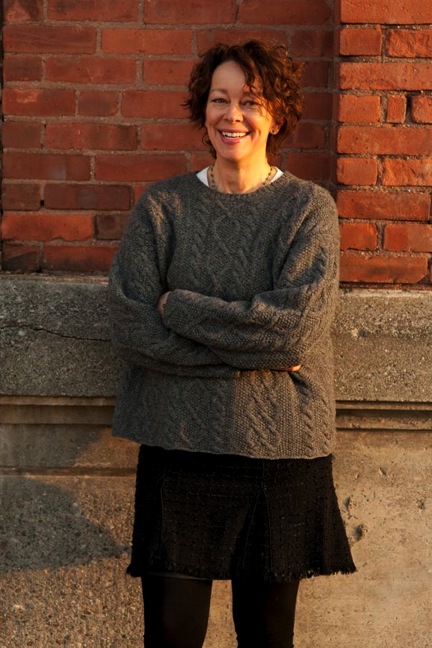
suzi_banks_baumGrowing up in the Upper Peninsula of Michigan made author, blogger, artist, and fulltime mom Suzi Banks Baum a lover of winter. Not afraid of the blank page, blank canvas, or wide expanse of snow, she makes patterns and trails, worlds and visions with her work. Suzi is about to launch an anthology of writings by women on mothering and creativity entitled An Anthology of Babes: Thirty-six Women Give Motherhood a Voice. The book will be sold at her March 1, 2013 event for the Berkshire Festival of Women Writers called Out of the Mouths of Babes: An Evening of Mothers Reading to Others. You can find Suzi at  Laundry Line Divine or at the 10X10on10 Arts Festival in Pittsfield, MA, this month or better yet, out ice-skating.

Three Words for 2013

The new year has begun. At the two-week mark I’m ready to get specific about how I want to approach the months ahead. At about this time last year, I posted my personal review of 2011, and then my intentions for 2012. Instead of goals, l preferred the word intentions, because so many of my priorities comprised an ongoing practice, rather than end points. If you follow our Monday Post you know that my weekly intentions rarely vary. My frame for the coming year is similar. But first, a brief review of 2012, because I like to appreciate where I’ve been before moving forward. Don’t you?

2012 Highlights

  • freshly pressedIn January my nonfiction writers’ group met for the first time. A year later, we’re still going strong — each of the six of us working on books (although we have since sidled into fiction too). We meet monthly in person and share our progress weekly via e-mail. This group is hugely important to me.
  • In January I also launched my first group coaching circle, which met monthly throughout the year. An invaluable experience that will continue into 2013.
  • In March I taught the first of multiple writers’ workshops at Open Studio — workshops that were well received by my students and informed my own writing practice.
  • In March Studio Mothers made the Circle of Moms Top 25 Blogs list.
  • In May my business partner Ellen Olson-Brown and I had our first “live” television appearance as guests on a local cable show, Around Town.
  • In June I had the pleasure of being a guest on Mark Lipinski’s internet radio show, Creative Mojo. Mark is an awesome guy, and the experience was terrific.
  • For Studio Mothers, without a doubt the highlight of the year was making the WordPress Freshly Pressed page in June. The ginormous traffic increase and bump in subscribers means that we’re now reaching a much wider audience.
  • On July 4, I finished and released my e-book, The Creative Mother’s Guide: Six Creative Practices for the Early Years. Amazingly satisfying.
  • In August I began a regular writing practice. It wasn’t every day — not at first — but I realized that 500 words a day was doable, even with I didn’t “have time” to write. Often, I’d write a lot more than 500 words. Now it’s a daily habit. This may be the most significant element of 2012.
  • In September I performed in a live yoga demo for at our town’s annual festival. Nothing like getting on stage in front of a crowd in your yoga kit!
  • In November I pushed the on-stage envelope even further by participating in a fashion-show fundraiser wearing a metal ensemble that Grace Jones might have envied.
  • Throughout the year, I co-hosted various events at Open Studio: art openings, workshops, and our weekly Creative Community Hours.
  • Although I didn’t enact the marketing plan for my coaching business that I created in 2011, I had a good year on the creativity coaching front, developing a roster of ongoing clients who are doing amazing things — and I’m honored to support them in their creative journeys.
  • My editorial business, Pen and Press, had a strong year. Wonderful new clients — two of whom have become friends.
  • On the personal side, my oldest son had a fantastic junior recital at Ithaca College and started his senior year; my second-oldest son graduated from high school and began his freshman year at Berklee College of Music; my 16-year-old daughter got her license and a job; my second-grader became an even more manic football fanatic (which seemed impossible); my youngest started his last preschool year at a Montessori school, which was a huge improvement for him — much happier. In all, the children had a great year. My husband started the year at a new job and ended the year without a job, so that’s been a challenge — but a unifying challenge, which has been positive.

Between the Lines

When I think through the highlights, I see that this year was very much about connecting with other people and becoming increasingly comfortable in front of a crowd, large or small. It’s no accident that our tagline for Open Studio was Connect, Create, Grow. (I used the past tense when referring to the studio. More here.)

When I look at the list of intentions I created for last year, I calculate about at 50% “success” rate. I’m okay with that.

Moving Forward

For this year, instead of another folio of intentions, I’m doing something different. I still have the same priorities, but one concrete goal tops the list: finish my fiction manuscript. I don’t know if this is within my reach, but I’m going to try. On top of that, I’ve identified three words that are my mantra for the year:

three words for 2013

Focus is for working on one thing until it’s done. Working with the wifi shut off and/or with my e-mail turned off. Not jumping from thing to thing in a ridiculous circle. Focus is for planning my day and following the plan. Focus is for my writing practice.

Kindness is for kindness to self. Being kind to others is not a struggle, but I tend to push myself too hard. I’m working on ways to be gentler, which means adjusting my personal expectations. Treating others and myself with empathy.

Delight is for doing less and enjoying it more. Delight is for slowing down and reconnecting with the natural childhood awe that used to be natural. Delight is for not running around like a maniac. Delight is for being here now, and not wanting to be anywhere else.

How about you? What are your intentions for 2013? If you have a word — or three — will you share?

:::

How to Manage the Loss of Naptime

Losing naptime is a panic-inducing prospect for many work-at-home parents. When it comes to working with a little one at home, you have several other options after naptime has been crossed off the list.

Keep an open mind

The key thing to remember is that “ideal” is not necessarily relevant while you have a small person at home. It’s not uncommon for creative parents—especially those who aren’t earning a living from their creative pursuits—to complain that they “can’t” work without at least three hours of uninterrupted time, or they “can’t” work when others are at home, or they “can’t” work unless all of the household chores are done first. When I hear these objections, I have to ask, “What’s more important: Getting your creative work done on your own terms, or getting your creative work done?”

When you make your art a priority, you’ll find a solution, even if it’s several notches down on your list of preferences. A self-described night owl may find that her only work opportunity is from 5:00 am to 6:30 am before the family wakes up. So she gradually gets up 15 minutes earlier each morning until she adjusts to the schedule change and has a work window she can count on. It’s not ideal given her internal clock, but she can enjoy the rest of each day knowing that she’s already taken care of her creative work. Most importantly, she’s writing every day.

Conversely, an early-bird whose children are very early risers may decide that he needs to rely on an hour every evening right after the kids go to bed, even though his creative mind isn’t at its best at that hour. Sometimes making do is the best you can do.

Your options

Examine your basic routine and look for places where you might be able to juggle things around to give yourself a work window. This may well require giving up something else, like watching television with your spouse or attending a regular evening commitment. You may need to give up an hour of sleep on one end or the other, if you can manage that without deprivation. If you’re a perfectionist, you’ll also benefit from lowering your standards on the domestic front during this preschool period. What’s more important: writing your book, or dusting picture frames? Prioritize and become extremely careful about how you spend your time. In the larger scope, you can have it all—but that doesn’t mean you can have it all right now.

The options below, alone or in combination, are your basic menu for creative work:

  • Get up early and write in the morning
  • Work after your child goes to sleep for the night
  • Enroll your child in part-time preschool or hire a babysitter
  • Barter for regular babysitting or develop a playdate co-op
  • Arrange for your spouse or other family member to take evening or weekend stints
  • Learn how to work with your child around

Regarding this last suggestion, many parents balk at the idea of combining writing with parenting. I strongly suggest developing this capability, however. The more your child enjoys independent play, the more latitude you can enjoy. I know of one mother who wrote most of a novel on a hand-held PDA in 5-minute blocks while her two children were playing on the swing set or occupied with Matchbox cars. This strategy requires a lot of flexibility, as you need to be able to set your work aside when your child needs you—and it’s important to have plenty of time with your child when you aren’t staring at a screen—but the ability to blend your creative life into your parenting life is a huge advantage. As a writer, you have this portability. Potters, for example, are far more tied to their studios, and their work requires a greater investment in setup and cleanup time. It’s also not usually safe for young children to entertain themselves in a studio that might have lots of fascinating (and dangerous) tools and materials lying around.

The best solution will come from you, as you know your child best. While you’re working it out, be sure to take a second look at any option that you immediately write off. Sometimes something that seems implausible at first glance turns out to be quite workable.

Without fail, just when you get into the groove with your new routine, the parameters will turn on end and you’ll end up going through this process all over again.

The plug-in Mary Poppins

If you’re inclined to let your daughter watch television at all, be sure to capitalize on her TV time by writing during that window. Children under the age of 2 should not watch any television whatsoever, as recommended by the American Academy of Pediatrics. There are many parents who commendably keep their older preschoolers away from the TV entirely, but others among us rely on the electronic babysitter (preferably free of commercials) for 30-60 minutes of creative productivity on occasion. Don’t abuse this distraction, however, and ensure that your child is getting plenty of physical activity, imaginative play, fresh air, and face time with Mom.

Bend and stretch

The schedule of a work-at-home parent must be fluid by nature. The more flexible and broad you become with your creative paradigm, the better. If you’re working on your project regularly, it will stay fresh in your mind and percolate in the background as you go about your day. Then, when a sudden opportunity strikes—your child becomes engrossed in the dollhouse or takes an unexpected nap—you can grab that opportunity for creative work. When you aren’t in regular contact with your project, the prospect of jumping in can feel like standing at the edge of an icy lake in midwinter. The more frequently you work, the less intimidating that work becomes. In this sense, frequency can actually be more important than duration. A mere 30 minutes every day adds up to 15 hours over the course of a month. That’s significant.

Become a creative opportunist

Live large by reveling in the beauty of small, everyday moments. Allow yourself to follow creative threads that intrigue you, even if you aren’t sure where they’ll lead. By deepening your practice of creativity in other areas of your life, you will enrich the process and output of your primary artistic focus. Your senses will strengthen and you’ll be ever more able to be creative on the fly. Make notes while you sit in your car waiting for a child to emerge from gymnastics class; write a haiku in your head while you’re in the dentist’s chair; use your camera phone to take impromptu photos of anything that strikes your interest during daily life. Record a funny conversation you overheard at the grocery store or a perceptive observation that your child makes. Fill your well.

This too shall pass

It’s also important to remember that whatever is happening right now is not going to last forever. Adopting a less-than-ideal work solution is more palatable when you bear in mind that it’s only temporary. That said, it’s important to be as regular as possible with whatever time slot you’re aiming for in a given time period. Regularity breeds habit, and habit gets the work done.

Be well, and be creative!

:::::

Want more practical tips to support your creativity? If you’re an artist or writer with little ones, The Creative Mother’s Guide: Six Creative Practices for the Early Years is the essential survival guide written just for you. Concrete strategies for becoming more creative without adding stress and guilt. Filled with the wisdom of 13 insightful creative mothers; written by a certified creativity coach and mother of five. “Highly recommended.” ~Eric Maisel. 35 pages/$11.98. Available for download here.

New e-book short! The Creative Mother’s Guide: Six Creative Practices for the Early Years

I’m just a wee bit excited to unveil my new e-book short, The Creative Mother’s Guide: Six Creative Practices for the Early Years. This e-book is the culmination of many years of work, research, and personal interviews. I am so pleased to share this project with you!

When a creative woman has a child, her universe shifts. How to maintain — or begin — a creative practice while caring for a little one? Six Creative Practices for the Early Years is your indispensable guide to navigating the early years of motherhood.

  • Written by a certified creativity coach and mother of five
  • Filled with the first-hand experience and wisdom of 13 artists and writers
  • Specific, concrete strategies for being more creative without adding more guilt and “shoulds” to your already overflowing plate

When you have young children, what you don’t have is time. This 35-page e-book short gives you the information and tools that you need, quickly. Six Creative Practices for the Early Years is a resource that you’ll refer to for inspiration and support again and again. It might be the best tool you download this year! It will certainly the best value you’ll get out of $11.98. Click here to order and download. You can also check out a free sample page here.

Thirteen generous, talented creative mothers share their experience and tested strategies:

A few words of praise:

“Miranda Hersey explains how you can keep your creative life vibrant while you parent your young children. Your creativity doesn’t have to be sacrificed while you parent! Miranda tells you exactly what you need to know to keep your creative life alive. Highly recommended.” ~Eric Maisel, Author of Coaching the Artist Within and Fearless Creating

“Becoming a mother can feel as if you have lost yourself deep under nurturing others and meeting their needs. If you’ve also lost view of the way to creative expression, the place you were most yourself, real grief may temper the joy of falling in love with a baby and raising children. When Miranda Hersey encountered that particular reality of motherhood, she asked other writers and artists, women for whom creativity is food, how they managed. She distilled their wise and practical answers into six do-able practices that restore your creative life and make space amid the toys and laundry for you. Those conversations and Miranda’s own experience as a writer and mother of five reveal the best secret of all: when creativity can be merged with mothering, they enhance and expand each other in wonderful, unexpected ways.” ~Gale Pryor, Author, Nursing Mother, Working Mother: The Essential Guide for Staying Close to Your Baby After Returning to Work

“In Six Creative Practices for the Early Years, Miranda Herseyrallies her readers into a band of sisters, united by the challenges we share. Drawing on her own experiences, and the wisdom of 13 practicing artists and writers, Hersey invites us to embrace motherhood and creativity as related, cross-pollinating endeavors. Simple, proven practices lay out a formula for success, encouraging us to reexamine our creativity with openness and generosity. With engaging, frequently humorous, narration, Hersey is the voice in our ear, the friend by our side, nudging us to discover those hidden pockets of time and inspiration and the courage to use them to sustain our creative lives. The lessons in this marvelous volume will be with me for years to come!”  ~Susan Edwards Richmond, Poet

“When my twins were babies, I relied on a stack of dog-eared parenting books, flipping through them whenever I needed encouragement, and concrete advice. As a mother who needed to create in order to feel truly alive, I would have added The Creative Mother’s Guide: Six Creative Practices for the Early Years to that library in a heartbeat. Miranda Hersey understands the realities of parenting young children, but gently challenges the reader to tap into the rich creative possibility that exists nonetheless. This is a book that creative mothers will return to again and again for reassurance, inspiration, and genuinely helpful practices.”  ~Ellen Olson-Brown, Author

Click here for a free sample page, and to order and download! And of course, if you like what you read, I’d be delighted if you could let your friends know about Six Creative Practices for the Early Years. Thank you!

What are we doing, anyway?

Inspired beauty from Suzi Banks Baum of Laundry Line Divine. Thank you, Suzi!

::::

Kathy: Simply Sick

Normally the kids are like me, strong like ox, but a nasty bug has been making its way around the community and they are stricken like chicken. They’re on the mend but it’s been almost a week of being completely off our schedule and normal daily rhythm. Like, not even getting outside. Kale’s looking a little grey around the edges but his cough is unsettling so inside it is for a couple more days.

Though it’s weird to see my normally screen-free kids veg out in front of with that glazed ‘sicky’ stare, I decided to surrender to the novelty of it; letting them do nothing at all other than quiet activities and naps while I dove into my projects in my studio while stopping every few moments to warm up soup, make more tea, and assist with many, many tea pees.

I have to admit I fought it at first and was grumpy, a little anxious even and concerned about the effect of not doing anything would have on the kids. But then I heard the sultry voice of Danielle Laporte say how life balance is a myth. The essence of life is fluid so it’s only natural that shifts in what needs to be tended to will unabashedly morph constantly. The best thing to do is to see these as opportunities for growth and to reassess what is important and needed in the family right now.

In the meantime I made sure the kids were lubed up with lots of liquids and did implement the bare essential rhythms; mealtimes and bedtimes and our Smokey Sunday pancakes (whipping them up smokes up the whole house — just to explain). I surrendered to life that happens, was reminded of the balance myth (which was a catalyst for reviewing some major life decisions), and saw an opportunity to tend to my own needs at a pivotal time in my career while the children’s growing bodies took on the necessary challenge to strengthen.

Do you want to share your bare minimum rhythm you adhere to even in times of crisis, transition or upheaval? Perhaps a little ritual? Please share in the comments if you feel inspired.

::::

Editor’s Note: Kathy Stowell is a homeschooling, simplicity parenting mother of two small kids, and a hobby farmer’s wife who blogs and offers Backwoods Mama Sew Camps over at Bliss Beyond Naptime, from which the post above is generously cross-posted. Kathy recently released The Bliss Filled Mama: Self-Care for Soulful Mothering, an e-book and audio recording on proper crafty mama care.

Giveaway! Bliss and Soulful Mothering e-book/audio

Last week at Studio Mothers you met Kathy Stowell, the homeschooling, simplicity parenting mother of two little ones who blogs at Bliss Beyond Naptime. I’ve so enjoyed getting to know Kathy over the interwebs and on the phone. She is truly an authentic, deeply creative soul who is dedicated to a life of simplicity, creativity, and presence. I’m always inspired by women who are so clear about the path they want to follow — and walk the talk, with all its challenges and rewards.

Kathy recently released the e-book and audio recording The Bliss Filled Mama: Self-Care for Soulful Mothering. I’m delighted to offer a free copy of this magical resource (e-book AND audio file) to a Studio Mothers reader! Simply leave a comment on this post and you’ll be entered to win. You have until 5:00 p.m. eastern time on Friday, February 17, 2012, to enter.

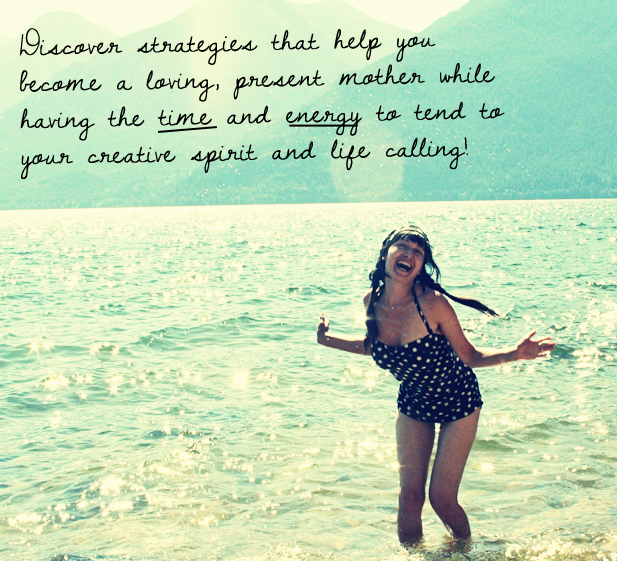
In The Bliss Filled Mama: Self-Care for Soulful Mothering, Kathy shares the strategies and practices that help pull her through the “delicate dance of being a loving, present mother who also has the time and energy to tend to her creative spirit and life calling.” These are the basic self-care approaches Kathy swears by that help make every day an opportunity to keep her needs front and center while “ensuring my genetic makeup flourishes, happily, for generations to come.” And because being a busy mama can make it tricky to sit down and read a whole e-book, Kathy recorded herself “whispering these sweet somethings into your ear.”

The Bliss Filled Mama offers over 10,000 words of insight into:

  • Kathy’s approach to optimum health
  • Simple yet saucy mama style
  • Ladies’ night ideas to maintain your precious friendships
  • Ways to garner your partner’s support in your bliss quest
  • Protecting your boundaries
  • Housekeeping; simplicity style
  • Exploring and pinpointing the joys in your life
  • Carving out pockets of time to indulge in these joys
  • Kathy’s own parenting philosophy that accommodates more mama bliss

If you aren’t the winner of the e-book/audio package, you can purchase it here for $14 USD.

Good luck, creative mamas!

:::::