Meme of the Week

As found here. Happy Friday.
Nov 17
Nov 16
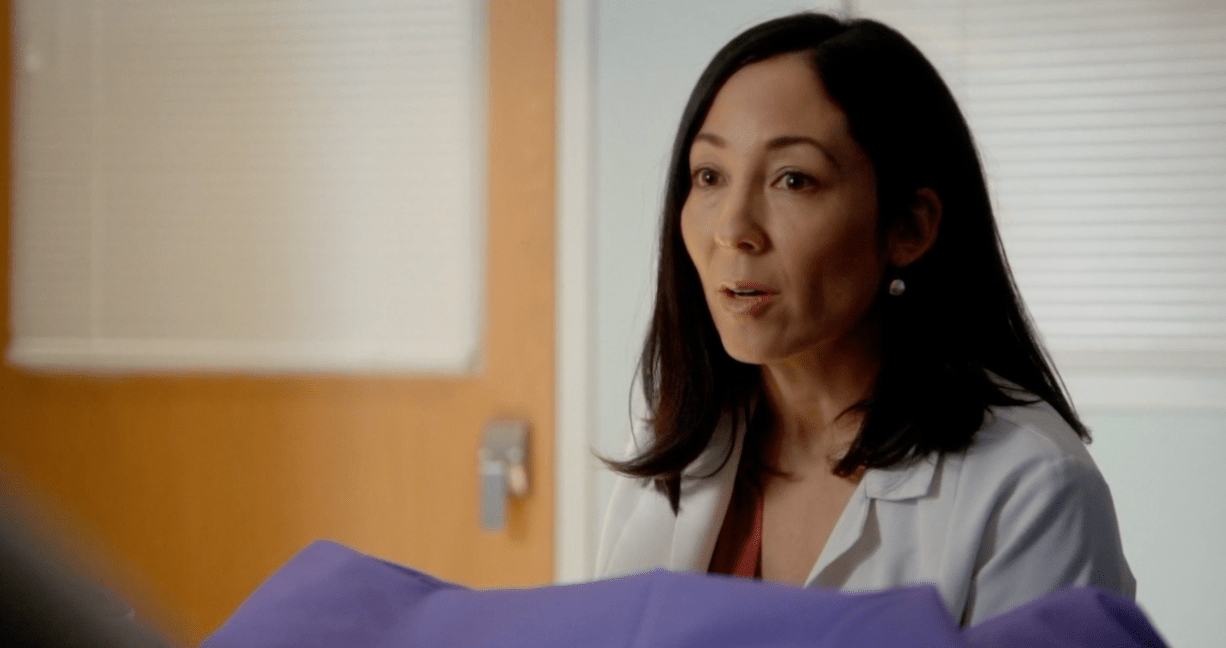
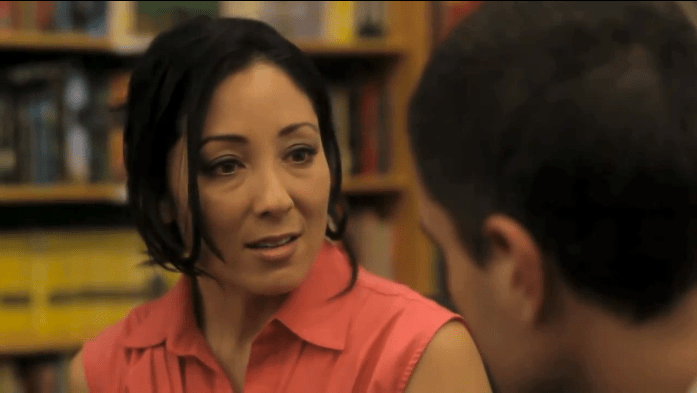
 Of all the ways to combine creativity and motherhood, the performing arts are among the most challenging. But the obstacles inherent to this path are no match for the fierce passion, commitment, and intelligence of Keiko Elizabeth, who you may already know from her work on stage and television. I can’t wait for you to read Keiko’s highly articulate and introspective interview! (Spoiler alert: Inspiration by the boatload.)
Keiko is from in Sacramento, California, and graduated from Stanford University with a degree in biological science. After a stint teaching middle school science to kids coming out of juvenile hall in San Francisco, she decided to pursue a professional acting career. Keiko received an MFA in acting from Cal State Fullerton, where she studied with renowned Russian acting teacher Svetlana Efremova.
Since graduation,Keiko has worked on a range of TV shows including Days of Our Lives, Hawaii Five-0, and Hot in Cleveland. Keiko is a company member at Theatre of NOTE, where she recently originated the role of Naomi in Supper by Phinneas Kiyomura. She lives with her husband and two children just outside of Los Angeles.
SM: Please introduce yourself and your family.
KE: I’m Keiko Elizabeth, I’m an actress, mother, wife, producer, writer (sort of). I work in television, film, and theatre and have a son and a daughter — 9 and 3.
SM: Tell us about your artwork/creative endeavors.
KE: I discovered acting rather later in life. I went to college with hopes to become a doctor, then I nearly went to law school, then I taught middle school students coming out of juvenile hall. It wasn’t until I was nearly 30 that I stepped on stage for the very first time. I knew right away it was something I wanted to do well and for the rest of my life, so I began applying to acting MFA programs with probably the least amount of experience of any MFA applicant in the history of MFA applicants.
 It just so happened that as I was applying and auditioning to MFA programs, I got pregnant. The funny thing is that we were trying. It just never occurred to me that I wouldn’t be able to do both things at once. I had very little experience with babies and I just thought they’d sleep all the time and not move or talk that much (oh, the naïveté). My son was born my first week of my MFA program, and truthfully, that first semester was blisteringly hard. I returned to class full time after two of the shortest and longest weeks of my life, and had to sit on a donut or lie down on a yoga mat in class because I couldn’t sit on a regular chair. I was not only the least experienced actor in my program, but I was now behind, my boobs leaked at random times, and I had to go into evening rehearsals for a play when my son was only 6 weeks old.
But I didn’t quit. In fact, I loved every excruciating minute of it.
And now, I’m a working actor in Los Angeles. I was just in seasons 3 and 4 of How to Get Away with Murder, I’ve been on a variety of television shows and films, plus a commercial or two. I’m a member of a theatre company here in Los Angeles called Theatre of NOTE. I love being a part of the theatre-making process — we are a democratically run company and we read and select all of the plays in our season as well as self-produce every show.
I’m also developing a couple of film projects — a documentary and a scripted feature.
 SM: What goals do you have for your art? How would you define your “life’s work”?
KE: This is such a great question. My goal for my art is continued growth and expansion of myself as a storyteller. So that means playing complex women with lives, beliefs, and tendencies that are different than my own — that’s where the fun is. It also means telling stories on larger platforms that reach more people, and working with other artists who have similar vision.
You know, it’s interesting, acting is one of the arts that really requires other people in order to do it. I can do my own creative and imaginative work on a story or on a character, but at some point the creative cycle feels incomplete if you don’t get to play with others and for others. Seeking out collaboration and work is fundamentally important to being an actor. It’s like when you were little and you’d go over to the neighbors’ house and say, “wanna play?” Part of creative success for an actor is finding people to play with.
SM: How has motherhood changed you creatively?
KE: I really became an artist and a mom at the same time, so I only know myself creatively since becoming a mother. But I will say that being a mother focused my creative work in a way that nothing else would have. It raised the stakes on everything I was doing, and for me this was a good thing for a while, until it wasn’t any more. At first, I took my studies and my development as an actor very seriously, because it was taking me away from my baby, so I felt that in order to make that worthwhile I had to be good. But as any artist knows, at some point you have to give up the desire to be good to make anything remotely truthful. There came a point when I had to let go of tying my worth as a mother to my talent — “I’d better be good and successful, because so many people including myself and my child sacrificed so much for me to do my art.” That’s too much pressure for the muse to work under, it’s incredibly narcissistic, and it’s a belief that resulted in a lot of unhappiness. I had to get back to my mission as a storyteller, to my imagination, to my sense of play and aliveness, and my children helped show me how to do that.
SM: Where do you do your creative work?
KE: I have a little nook in an upstairs dormer of our house that I’ve set up as a quiet creative space. Most of my work is imagination-based, so I don’t need a lot of materials. I also have an office studio where I have a light kit and backdrop for taping auditions, which I do fairly often.
SM: Do you have a schedule for your creative work?
KE: Every morning I wake up and do imagination work for 1 hour and 20 minutes either on a story I’m working on in acting class, or a play that I’m interested in exploring on an ongoing basis. This morning time is like imaginative barre work for me, so if I have an audition or a job that I’m preparing for, I’ll schedule additional time to work on it during the day. The consistency of practice every day, even on weekends, is really important for me—it keeps me emotionally, imaginatively, and spiritually accessible, vulnerable, and creative. I often need to be able to fall seamlessly into a story with less than 24 hours to prepare, and in order to be able to do that, my emotional and imaginative accessibility needs to be very high.
 SM: What does creative success mean to you?
KE: Creative success for me has a lot of do with my ability to empathize and then translate that empathy into action within the story that I’m telling. So that means in every creative encounter — in every audition, every performance — was I able to put aside my own beliefs and life circumstances to step into the shoes of this other person’s life circumstances and beliefs, and engage with the people of my imaginary life as if it were my own? And can I do it every single time? And tomorrow with an entirely different set of life circumstances and beliefs? If I can answer yes to all of those questions, that is creative success. Beyond that, if people see it and want to pay me to do it, that’s cool too.
SM: What makes you feel successful as a mother?
KE: I think the feeling of success as a mother comes for me in fleeting moments. When I see my child genuinely connecting with something in a pure and loving way, it feels like I also am experiencing that connection, and it feels really divine. For example when my son is really enjoying playing a particular piano piece (that maybe he hates playing the next day), or when I hear my children playing pretend together (instead of fighting and crying). It’s like a feeling of rightness, of coherence, of connection. I try to really inhale those moments into my bones, so that when I inevitably have shittier moments, it’s still okay because I know those good ones at least existed so I can’t be that bad.
SM: What do you struggle with most?
KE: I think what motherhood and acting have in common is that there is a lot that you can’t control, because both endeavors involve other human beings. So the best you can do is show up authentically, give as much as you can in that moment, and then keep engaging rather than retreating.
Since I tend to be a control freak, having to let go of that tendency was really, really hard, and continues to be hard. But when I do surrender control and go with the flow, I’m so much happier, everyone else is happier, and my work is better too. But it’s like I have to keep learning the lesson over and over again.
SM: What inspires you?
KE: Other women, especially artist moms who perform great feats of creativity and great acts of selflessness in the service of their children and families and humanity on a daily basis. I started a community for actors who are also moms called the Mama Actor community and these women, 100% of whom I did not know before starting the group, inspire me every day.
I also have creative mentors, three women who, at different times, gave me just the artistic gift that I needed. These women continue to provide creative nourishment and inspiration.
 SM: What do you want your life to look like in 10 years?
KE: In 10 years, I want to be developing and producing TV shows and films under the banner of my own production company. I want to be starring in films and television shows that I’ve had a say in creating, that tell the stories of interesting and unique and flawed women. In 10 years, my son will be going to college and my daughter will be just entering her teens years, so I imagine it will also be a time to double down on my family and what’s important for us to teach our children. Ten years from now is going to be the time of my life.
SM: What are you reading right now?
KE: I just finished reading Outlander, which was like eating the last piece of a rich chocolate cake — so indulgent and delicious, but now that it’s over I miss it! I’m not even sure I want to watch the series, because we all know how that goes. I just started The Power of Kindness by Piero Ferucci.
SM: What are your top 5 favorite blogs/online resources?
SM: What do you wish you’d known a decade ago?
KE: I wish I’d spent less energy on self doubt, worrying about what other people might think, and feeling like I don’t belong. This one life we have is so precious, I just think to my younger self, “Go! Do it! Say it! Don’t be so afraid!”
SM: What advice would you offer to other artists/writers struggling to find the time and means to be more creative?
KE: Three things. One. Just carve out time. It’s important. It’s important to you, it’s important to me that you do it — and I don’t even know you. If you have to leave 15 minutes early for an appointment and sit on the side of the road to have some quiet alone time, so be it (that’s a personal story; I guess it depends on what you need for your own creative expression, if it’s paint, maybe the car isn’t the place).
Two. Distraction is really the killer of creativity, and if you’re just returning to focused creative time after not having it for a while, it’s normal for your brain to be squirrelly. Don’t give up on yourself. Just keep showing up and the focus will return, even if it takes a year. It will return, I promise.
Three. Find a community of creative mamas. Like this one! I didn’t have one so I started one and it’s saved the lives of many of us who are in it. You may feel like an inferior imposter, you may feel a superior artiste, it doesn’t matter, you still need a community. These women will inspire you and give you their own pilot light until you can find the inner strength to relight your own.
:::::
Connect with Keiko!
:::::
Happy Monday, friends! (OK, technically it’s Tuesday 11.14; I lost power yesterday — and everything that goes with it.) What in the creative realm would you like to accomplish this week? Comment below with the what, when, and how! And if you commented on last week’s Monday Post, let us know how things went: the hiccups as well as the successes.
Nov 11
 Today I’m thinking about role models. Role models on the international stage, alive today, who are exemplars for ourselves and for our children. As we grapple with continually breaking stories about A-list sexual impropriety, sexual assault, questionable business dealings, and most every kind of NO YOU DIDN’T, it’s increasingly difficult to settle on well-known paragons of the behavior that we want to emulate and want to hold up as examples to our children.
What is a role model? In its deepest expression, a role model is a person whose behavior you want to emulate. Who embodies and exemplifies your personal values, interests, and beliefs. While on the one hand we understand intellectually that we all, as humans, make mistakes, we want our role models to be beyond reproach. We don’t want to have to say, “Well, this person is amazing and upright in 90% of his or her actions and speech, so I’ll ignore that pesky 10% of not-so-great choices.” We don’t want our most beloved icons to have feet of clay.
When I sat down to write a list of my personal role models — alive, well-known, and scandal-free — I had an extremely difficult time of it. I managed to come up with 30 names, but it wasn’t easy.
I share my personal list with you not because I want to create partisanship (my list is rather left-leaning), but because I want to contribute to an honest conversation about what we hold as important on a societal level; what we want to espouse as our legacy. With your help, I’d like to triple my list, which is notably low on artists (partly because many artists are not visible personalities).
The 30 people on my list are, to my knowledge, people of character. They are leaders. I may not agree with everything these people do and stand for, but I believe that their choices are guided by something I respect. I believe that these people want to make a significant and positive impact on the world — and that they share of themselves and their talents at least in part from altruism. My selections are people who are generally esteemed as “nice people.” I get warm fuzzies thinking about them.
My list, segmented by cisgender (for no good reason) and otherwise in random order:
Females
Males
And you? Who are the role models, alive today and free of scandal, that inspire you and serve as guides along the pathway of self-betterment? Please add your thoughts in the comments. Let’s grow this list!
:::::

Happy Monday, friends! What in the creative realm would you like to accomplish this week? Comment below with the what, when, and how! And if you commented on last week’s Monday Post, let us know how things went: the hiccups as well as the successes.
Oct 30
Happy Monday, friends! What in the creative realm would you like to accomplish this week? Comment below with the what, when, and how! And if you commented on last week’s Monday Post, let us know how things went: the hiccups as well as the successes.
Oct 27

Happy Monday, friends! What in the creative realm would you like to accomplish this week? Comment below with the what, when, and how! And if you commented on last week’s Monday Post, let us know how things went: the hiccups as well as the successes.
Oct 20
Oct 18
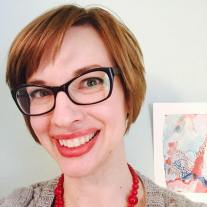
Kim Rohrs
Kim Rohrs is a mixed-media artist and mother of two who, when faced with the challenges of raising a family, learned to adjust her working style in order to continue creating. Rather than feeling like she was just making do, Kim’s new process actually facilitated her success and led her to reframe possibility and outcome; skills that are serving her beautifully in the face of a difficult medical diagnosis. If you need a hand on your back — or a motivational kick on the rear — Kim’s story will have you rushing to your creative work, that pile of tired excuses left behind like last week’s dirty laundry.
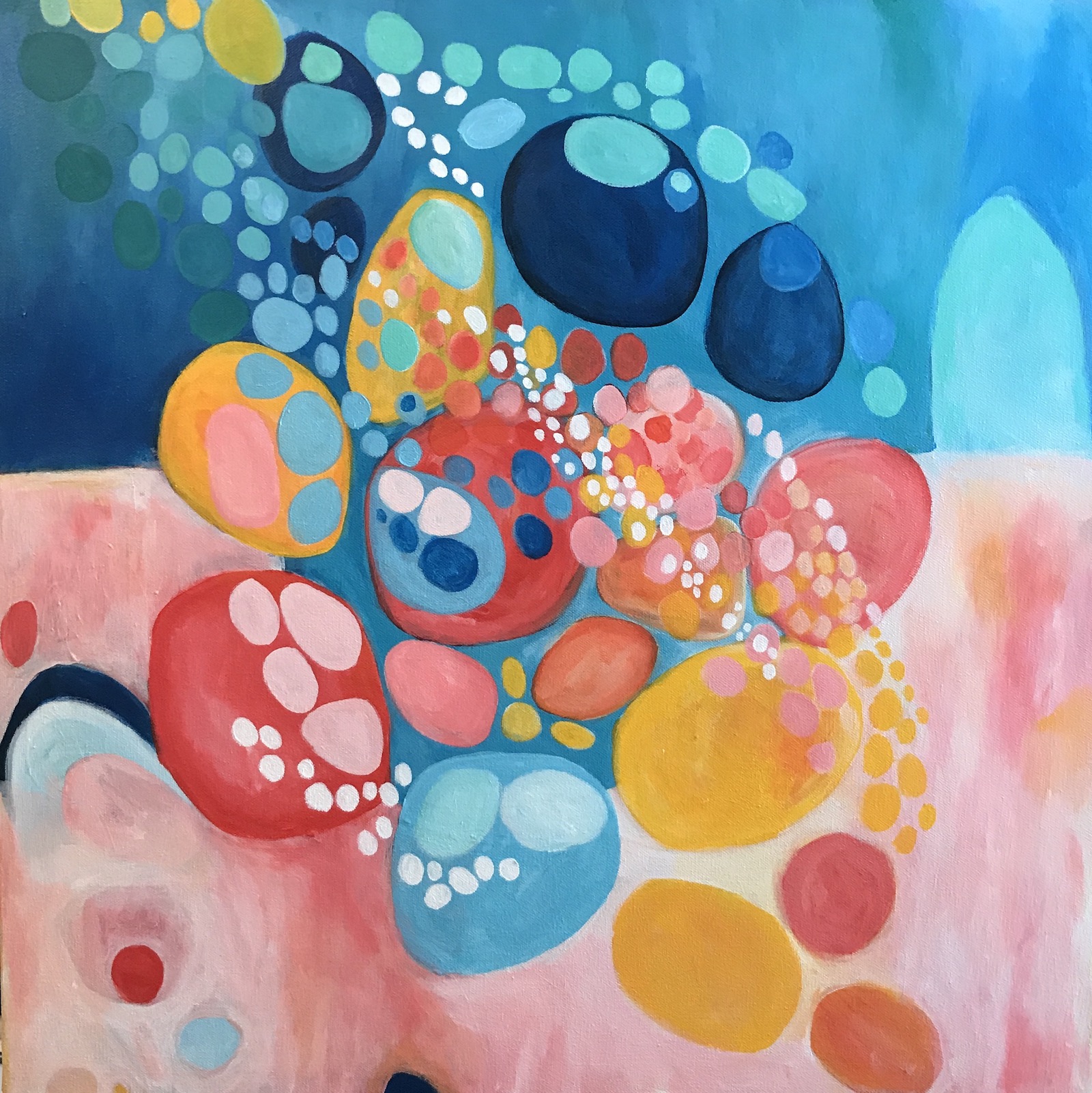
“Rock Slide,” by Kim Rohrs (24″x24″ acrylic on canvas)
My story begins fairly typically. In 2014, I was a stay-at-home mom to two incredible girls, ages four and one. We had busy lives full of playdates, errands, housework, and fun. But when my youngest daughter was almost two, I began to feel a sense of loss of my identity as an artist. I had not consistently made art since she was born. I was finding it difficult and frustrating to find any significant amount of time to build up my practice. On the rare occasion when I had over an hour to paint, I’d be frozen with doubt, anxious that this could be the only chance I’d have to make art for weeks. Inevitably, I would make nearly nothing and feel even more frustrated than when I started.
I finally decided that I was done with this cycle. I was done craving time to paint and then feeling too anxious to paint when I did have the time. Instead, I started looking at what I did have. I had small amounts of time here and there, and the times changed from day to day. I had the desire to have a brush in my hand. I had a creative voice that was ready to be heard.
And so, I started with these positives and slowly developed a way to let these guide my work. I decided to put away the materials that required long set-up and clean-up times. I got out watercolors and ink pens, even though I never considered myself a watercolor artist, and painting with watercolors was not the end goal for me. I did know, however, that watercolors were the materials I needed to build the habit of painting because they are quick and easy to get out and put away. I usually paint in an abstract style and allow paintings to evolve over time and contemplation. Instead of this usual way of painting, I decided to find microscope slides and use these images as inspiration. That way, I could pick up my work, look at an image and get painting without much thought in deciding what to do next.

“Enough for Everyone 2,” by Kim Rohrs (24″x24″ acrylic on canvas)
This method began to work well for me, and I was finding five-minute breaks in the day to grab a brush, put down a few colors, and walk away. I tried painting at the dinner table while my children ate snacks or played with Play-Doh. I painted while they were playing on their own. I even grabbed my brush while walking by my materials and just added a few colors while still standing at our cabinet where my materials sat. Sometimes it went great, sometimes it was a huge challenge. I tried waking up early to paint, or staying up late to paint. I learned that all of these habits served good purposes for me at different times. Enjoying the variety was a new skill I was building.
As I persisted, a shift began to happen. I began to see other times in my day when I could be painting, and because I always knew what I was painting next, these chunks of time became very productive for me. With the unwavering support of my husband, I very gradually went from painting for 5 minutes at a time to consistently painting 10-15 hours a week. Once I had the habit of painting, I revisited my acrylics and my traditional way of abstract painting, which I loved. I even felt ready to experiment with new materials. I started applying for shows, and after a handful of rejections, my work began getting accepted. What started as my five-minute habit was becoming my part-time job, and I loved it.
Artist Statement: “I enjoy giving attention to the many parts that make a whole, specifically the way in which cells provide life for all living things and therefore allow for consciousness to occur. I do this by drawing inspiration from cellular forms. These forms flow, oscillate and intersect in my paintings. At times obsessively painted and at other times concealed or muted, the cellular form drives my paintings and allows me to explore themes through this most basic representation.”
—Kim Rohrs
Fast forward to April 2017. On Easter weekend, I began to develop neurological symptoms that grew and developed over the course of weeks. I entered the realm of medical tests, hypothesis, trying not to Google everything, and waiting. Between April and June I struggled with vision loss, numbness, a feeling of pins and needles over my body, and tremors. On some days, my tremors were extreme enough that I could not paint and on other days I could not trust my vision to help me mix the right colors I needed. I did not paint for a full two months.

“Horizon,” by Kim Rohrs (24″x24″ acrylic on canvas)
In many ways, this was a difficult two months of my life. I felt as though I did not know my body anymore, and each day presented with something different I needed to adjust to. My paint palettes dried up, canvases remained still and incomplete, and I stopped looking for shows to apply to. I was not sure what was happening to me, or how long it was going to last.
What surprised me the most in these months of sickness was that I was not upset about not being able to paint. Instead, I found myself filled with gratitude that when I was able to paint, I DID paint. I was so glad I did not wait until the circumstances were perfect. I did not wait until I was in the right mood. I did not wait until the entire house was spotless. I painted in small bursts when the opportunity arose, and I found ways to build a regular practice from there. I let my body feel sick without the added weight of guilt that comes with “what if.”
The official diagnosis came in: multiple sclerosis.

“Plant Cell Study One,” by Kim Rohrs (8″x10″ watercolor and ink on paper); The first painting Kim completed after committing to painting for five minutes at a time in bursts.
By the time I was diagnosed with MS, the episode was calming down and I was able to paint again. I have since had to adjust my expectations and cut back on deadlines until I get to know this new companion in my life. I am still so thankful for and so proud of the body of work I have completed, and it helps me to understand that change takes time. Developing this disease and not being able to paint as much as I used to does not necessarily feel like a step backward in my progress because now I know there isn’t a linear path to being an artist. It’s up, it’s down, it’s cyclical. It’s five minutes here, an hour or so there.

“Glacial Movement 2,” by Kim Rohrs (12″x12″ acrylic suspended in polished resin)
For me, making art is not about waiting for the right time, the right mood, the right state of mind, or the right state of body. It’s about showing up over and over again with the only expectation of putting paint to canvas. I have found when I am focused on this simple goal, I can achieve it repeatedly. And really, isn’t that most artists’ goal anyway? Using tools to make marks and images over and over again.
Having limited time raising young children allowed me to see that building an art practice can be as simple as I need it to be. Developing MS allowed me to value this simplicity. And now, when I have the time but not the physical ability for the long hours in the studio, I am able to remind myself that five minutes at a time is enough, today.
While earning my art therapy degree at Bowling Green State University, I took as many art studio classes I could cram into my schedule, specifically painting and ceramics. Although I wanted to become a professional artist, I felt a stronger calling to help others discover the healing capacity of art making. After graduating, I moved to Colorado to pursue my master’s degree in art therapy at Naropa University. It was there that I learned to meditate, to listen, to be curious, and to open my heart to help others. I practiced as an art therapist and play therapist, focusing my attention on children and families.
When my husband and I started having children, we felt the Midwest calling us back. We returned to Ohio and at that time I decided to commit my time to raising our children and making art. Today, I am a mixed-media artist. I work with acrylic and resin, encaustic, and watercolors. I am inspired by microscope slides, cycles found in nature, living mindfully, dreams, and art therapy. I paint whenever my kids are asleep. In other words, I am living my dream while my girls dream.
Facebook: Kim Rohrs Art
Instagram: @kimrohrsart
Email: kim@kimrohrs.com
Website: www.kimrohrs.com
To follow Kim’s MS journey, connect with her on Instagram: @ms_mindfulsimplicity.

Instagram: “My daughter and I painting together at the dining room table in 2015. This is when I was painting with watercolors and our dining room was my studio space.”
:::::









 Studio Mothers: Life & Art