Skip to content

Posts tagged ‘Creativity’

Your Creative Intentions: The Monday Post ~ March 11, 2013
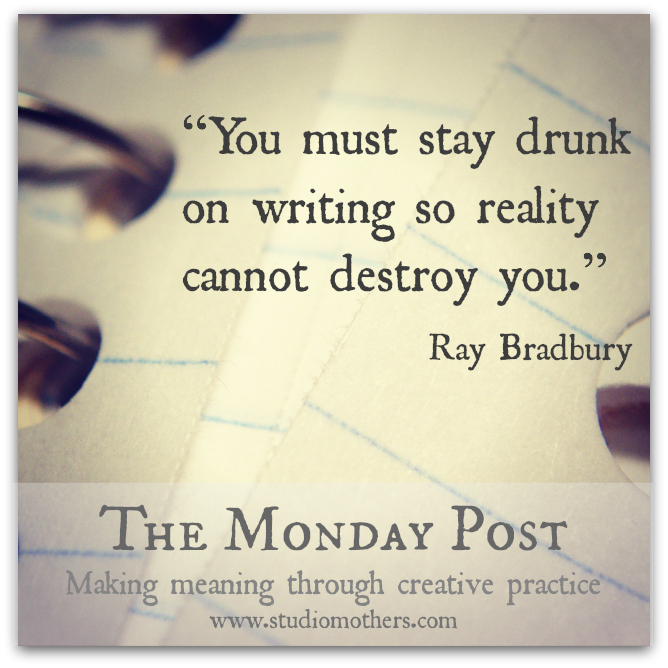
Ray Bradbury quote writing

If you aren’t doing your creative work as often as you’d like, recommit to a regular creativity practice. Regularity — a daily practice, if possible — is one of the best ways to stay in touch with how you make meaning. Can a regular creative practice be part of your intentions for 2013?

What are your plans for creative practice this week? Given the specifics of your schedule, decide on a realistic intention or practice plan — and ink that time in your calendar. The scheduling part is important, because as you know, if you try to “fit it in” around the edges, it generally won’t happen. An intention as simple as “I will write for 20 minutes every morning after breakfast” or “I will sketch a new still life on Wednesday evening” is what it’s all about.

Share your intentions or goals as a comment to this post, and let us know how things went with your creative plans for last week, if you posted to last week’s Monday Post. We use a broad brush in defining creativity, so don’t be shy. We also often include well-being practices that support creativity, such as exercise and journaling.

Putting your intentions on “paper” helps you get clear on what you want to do — and sharing those intentions with this community leverages the motivation of an accountability group. Join us!

:::::::

If you’re an artist or writer with little ones, The Creative Mother’s Guide: Six Creative Practices for the Early Years is the essential survival guide written just for you. Concrete strategies for becoming more creative without adding stress and guilt. Filled with the wisdom of 13 insightful creative mothers; written by a certified creativity coach and mother of five. “Highly recommended.” ~Eric Maisel. 35 pages/$11.98. Available for download here.

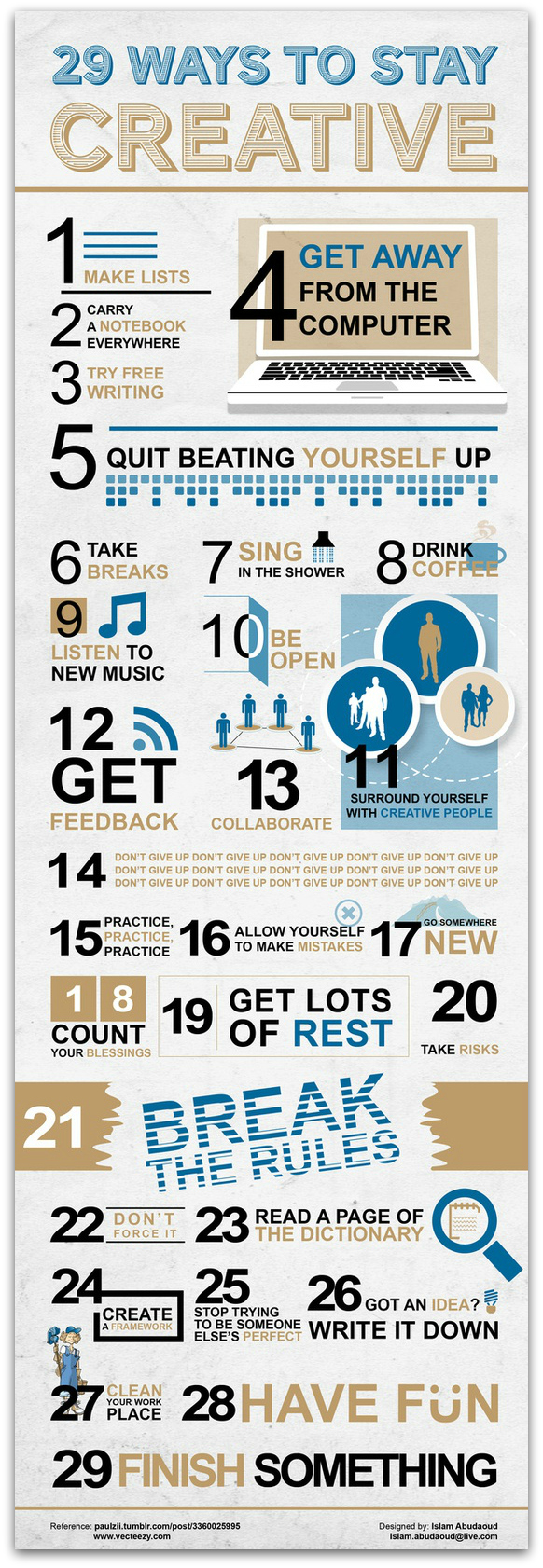
Meme of the Week

29 Ways to Stay Creative

Happy Friday.

:::::

Your Creative Intentions: The Monday Post ~ March 4, 2013

Pablo Picasso quote

If you aren’t doing your creative work as often as you’d like, recommit to a regular creativity practice. Regularity — a daily practice, if possible — is one of the best ways to stay in touch with how you make meaning. Can a regular creative practice be part of your intentions for 2013?

What are your plans for creative practice this week? Given the specifics of your schedule, decide on a realistic intention or practice plan — and ink that time in your calendar. The scheduling part is important, because as you know, if you try to “fit it in” around the edges, it generally won’t happen. An intention as simple as “I will write for 20 minutes every morning after breakfast” or “I will sketch a new still life on Wednesday evening” is what it’s all about.

Share your intentions or goals as a comment to this post, and let us know how things went with your creative plans for last week, if you posted to last week’s Monday Post. We use a broad brush in defining creativity, so don’t be shy. We also often include well-being practices that support creativity, such as exercise and journaling.

Putting your intentions on “paper” helps you get clear on what you want to do — and sharing those intentions with this community leverages the motivation of an accountability group. Join us!

:::::::

If you’re an artist or writer with little ones, The Creative Mother’s Guide: Six Creative Practices for the Early Years is the essential survival guide written just for you. Concrete strategies for becoming more creative without adding stress and guilt. Filled with the wisdom of 13 insightful creative mothers; written by a certified creativity coach and mother of five. “Highly recommended.” ~Eric Maisel. 35 pages/$11.98. Available for download here.

Creative Imperfection Is Perfect

The following is an excerpt from my e-book short, The Creative Mother’s Guide: Six Creative Practices for the Early Years.

Imperfection Is PerfectPerfectionists tend to experience a greater amount of creative resistance than those who are more easy-going. I don’t have scientific data to back up this observation, but reams of anecdotal observation tell me I’m right. Unwilling to sacrifice in any area where someone else is depending on them and unwilling to settle for less, perfectionist creatives often avoid creativity if they can’t have it on their own, ideal terms.

Research does show that perfectionists are more likely to experience burnout, stress, and even depression. If you tend toward perfectionism, you might benefit from trying to readjust that framework, if only in a few areas of your life. The bar may be too high on quality, and it may also be too high on quantity. Or you may be too conditional. For example, if you tell yourself that you can’t write, paint, or create unless you have X hours of uninterrupted solitude — after your house is clean and the laundry’s done — be prepared to wait. If you have children, be prepared to wait for a long time forever.

As time management and productivity guru David Allen puts it, “You can do anything. You just can’t do everything.” The good news is that you don’t have to move mountains or make big sacrifices in order to live a more creatively fulfilling life. Instead of beating yourself up for what you’re not doing, set the stage for success. Your success: feeling creatively satisfied with your ability to “make something” given the constraints and gifts that come with your particular situation. It’s the making part that matters.

Perfectionist standards indicate a focus on outcome, rather than process. Accept that practice is not about perfection. It’s about practice. Is there anything in life that we can knock out of the park on the first try, and thereafter never have to practice, ever? (If there is, please inform me immediately!) Anything that’s worth doing is worth doing. Chalk up those perfectionist voices to the brain noise that prevents us from doing. Forget about perfection. Instead, just do.

And if you end up with a garbage can or recycling bin full of “failures,” so much the better. That basketful of rejects is a lot more useful to your creative journey — and a lot more important to your well-being — than a basketful of nothing.

:::::::

More where this came from: If you’re an artist or writer with little ones, The Creative Mother’s Guide: Six Creative Practices for the Early Years is the essential survival guide written just for you. Concrete strategies for becoming more creative without adding stress and guilt. Filled with the wisdom of 13 insightful creative mothers; written by a certified creativity coach and mother of five. “Highly recommended.” ~Eric Maisel. 35 pages/$11.98. Available for download here.

Your Creative Intentions: The Monday Post ~ February 25, 2013

Maya Angelou quote

If you aren’t doing your creative work as often as you’d like, recommit to a regular creativity practice. Regularity — a daily practice, if possible — is one of the best ways to stay in touch with how you make meaning. Can a regular creative practice be part of your intentions for 2013?

What are your plans for creative practice this week? Given the specifics of your schedule, decide on a realistic intention or practice plan — and ink that time in your calendar. The scheduling part is important, because as you know, if you try to “fit it in” around the edges, it generally won’t happen. An intention as simple as “I will write for 20 minutes every morning after breakfast” or “I will sketch a new still life on Wednesday evening” is what it’s all about.

Share your intentions or goals as a comment to this post, and let us know how things went with your creative plans for last week, if you posted to last week’s Monday Post. We use a broad brush in defining creativity, so don’t be shy. We also often include well-being practices that support creativity, such as exercise and journaling.

Putting your intentions on “paper” helps you get clear on what you want to do — and sharing those intentions with this community leverages the motivation of an accountability group. Join us!

:::::::

If you’re an artist or writer with little ones, The Creative Mother’s Guide: Six Creative Practices for the Early Years is the essential survival guide written just for you. Concrete strategies for becoming more creative without adding stress and guilt. Filled with the wisdom of 13 insightful creative mothers; written by a certified creativity coach and mother of five. “Highly recommended.” ~Eric Maisel. 35 pages/$11.98. Available for download here.

Your Creative Intentions: The Monday Post ~ February 18, 2013

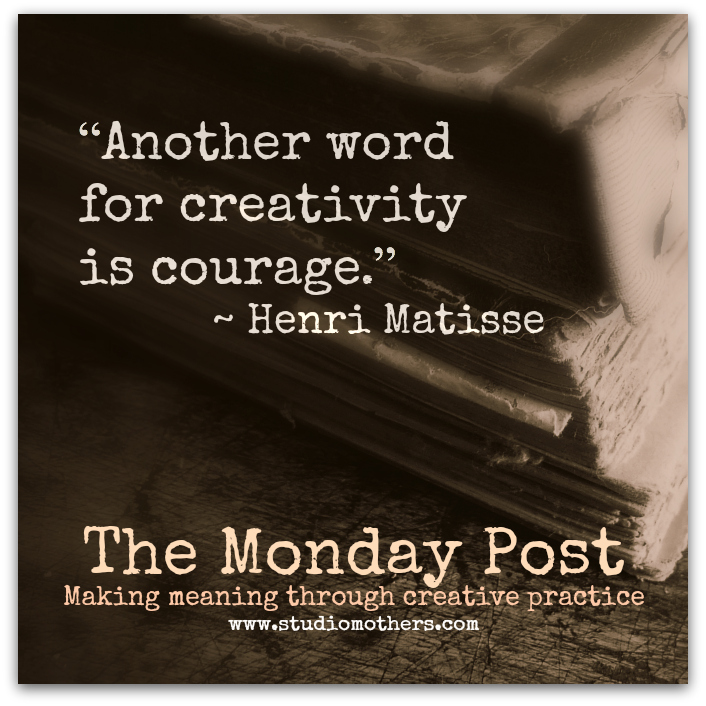
Monday Post Henri Matisse quote

If you aren’t doing your creative work as often as you’d like, recommit to a regular creativity practice. Regularity — a daily practice, if possible — is one of the best ways to stay in touch with how you make meaning. Can a regular creative practice be part of your intentions for 2013?

What are your plans for creative practice this week? Given the specifics of your schedule, decide on a realistic intention or practice plan — and ink that time in your calendar. The scheduling part is important, because as you know, if you try to “fit it in” around the edges, it generally won’t happen. An intention as simple as “I will write for 20 minutes every morning after breakfast” or “I will sketch a new still life on Wednesday evening” is what it’s all about.

Share your intentions or goals as a comment to this post, and let us know how things went with your creative plans for last week, if you posted to last week’s Monday Post. We use a broad brush in defining creativity, so don’t be shy. We also often include well-being practices that support creativity, such as exercise and journaling.

Putting your intentions on “paper” helps you get clear on what you want to do — and sharing those intentions with this community leverages the motivation of an accountability group. Join us!

:::::::

If you’re an artist or writer with little ones, The Creative Mother’s Guide: Six Creative Practices for the Early Years is the essential survival guide written just for you. Concrete strategies for becoming more creative without adding stress and guilt. Filled with the wisdom of 13 insightful creative mothers; written by a certified creativity coach and mother of five. “Highly recommended.” ~Eric Maisel. 35 pages/$11.98. Available for download here.

Your Creative Intentions: The Monday Post ~ February 11, 2013

Thoreau quote

If you aren’t doing your creative work as often as you’d like, recommit to a regular creativity practice. Regularity — a daily practice, if possible — is one of the best ways to stay in touch with how you make meaning. Can a regular creative practice be part of your intentions for 2013?

What are your plans for creative practice this week? Given the specifics of your schedule, decide on a realistic intention or practice plan — and ink that time in your calendar. The scheduling part is important, because as you know, if you try to “fit it in” around the edges, it generally won’t happen. An intention as simple as “I will write for 20 minutes every morning after breakfast” or “I will sketch a new still life on Wednesday evening” is what it’s all about.

Share your intentions or goals as a comment to this post, and let us know how things went with your creative plans for last week, if you posted to last week’s Monday Post. We use a broad brush in defining creativity, so don’t be shy. We also often include well-being practices that support creativity, such as exercise and journaling.

Putting your intentions on “paper” helps you get clear on what you want to do — and sharing those intentions with this community leverages the motivation of an accountability group. Join us!

:::::::

If you’re an artist or writer with little ones, The Creative Mother’s Guide: Six Creative Practices for the Early Years is the essential survival guide written just for you. Concrete strategies for becoming more creative without adding stress and guilt. Filled with the wisdom of 13 insightful creative mothers; written by a certified creativity coach and mother of five. “Highly recommended.” ~Eric Maisel. 35 pages/$11.98. Available for download here.

An Extraordinary Giveaway: The Artist’s Way and Beyond Teleclass

Zohar Tirosh-PolkI’m so excited to bring you this amazing giveaway: a free spot in The Artist’s Way and Beyond, a 12-week teleclass led by the award-winning playwright (and my fellow creativity coach) Zohar Tirosh-Polk. This giveaway is a $200 value! If you’ve always wanted to do The Artist’s Way, or have done it before and are ready to do it again, Zohar (familiarly known as Zoe) will be your personal guide during the 12-week program, which begins February 13. The teleclass will be held on Wednesdays from 1:00 to 2:00 pm eastern (except for the initial class, which may run up to 90 minutes).

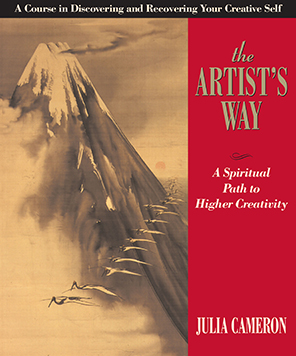
The Artist's WayJulia Cameron’s The Artist’s Way is often hailed as the “Artist’s bible,” with tools like morning pages and artist dates now used by millions across the world. The Artist’s Way offers a foundational and spiritual path to accessing your creativity and moving toward achieving your innermost artistic dreams and aspirations. I asked Zoe to share a little bit about what inspired her to offer this teleclass.

What prompted you to create a teleclass from The Artist’s Way?
I’m working on two big creative projects right now and I needed to return to The Artist’s Way myself. I know The Artist’s Way is such a powerful way to reconnect with my own creativity. Having gone through it many times, it has become my artist’s bible of sorts, an anchor. It’s the thing I go back to again and again to find inspiration, hope, and the tools that help me keep going. I also know that creating a community of creative souls/artists is such a potent experience. It allows everyone to be accountable, inspire one another, keep using the tools, and stay on track with our creative projects. Lastly, I hear so many people say, “Oh yes, I want to do The Artist’s Way again,” or “I should read it” and I wanted to create an opportunity for those people to do just that.

Why do you think The Artist’s Way has become such a phenomenon?
Because it works! 🙂 The Artist’s Way addresses the practical, emotional, and spiritual challenges of being an artist/creative soul and offers tangible and brilliant solutions to these challenges. I re-read Julia Cameron’s introduction recently and it was incredible to be reminded about how it all happened. She first heard about a painter-friend who started painting as a result of the work he did with her, and then there was a class, then a packet of handouts, and then a book, which has now sold millions of copies worldwide. Artists all over the world gained access to their creativity and and dancers went back to dancing, photographers got shows, writers wrote novels, actors began acting all over the world. It’s really amazing to think about.

As a creativity coach, what do you most want your students to gain from this teleclass?
I want them to have renewed faith their creativity, be well on their way in working on a project, and have a concrete plan to keep them going. This is where the “Beyond” part comes in. Every participant will have to create a vision for their work. Through coaching, exercises, careful planning, and accountability tools, everyone will complete the class working toward that vision. It’s exciting!

Space is limited. To claim a spot now, register at growcreativecoaching.com/workshops.

To win a free spot in this teleclass, simply post a comment below. Our winner will be selected at random on Friday, February 8, at 9:00 pm eastern. Good luck!

Your Creative Intentions: The Monday Post ~ February 4, 2013

Simone Weil Monday Post

Now is the time to recommit to a regular creativity practice. Regularity — a daily practice, if possible — is one of the best ways to stay in touch with how you make meaning. Can a regular creative practice be part of your intentions for 2013?

What are your plans for creative practice this week? Given the specifics of your schedule, decide on a realistic intention or practice plan — and ink that time in your calendar. The scheduling part is important, because as you know, if you try to “fit it in” around the edges, it generally won’t happen. An intention as simple as “I will write for 20 minutes every morning after breakfast” or “I will sketch a new still life on Wednesday evening” is what it’s all about.

Share your intentions or goals as a comment to this post, and let us know how things went with your creative plans for last week, if you posted to last week’s Monday Post. We use a broad brush in defining creativity, so don’t be shy. We also often include well-being practices that support creativity, such as exercise and journaling.

Putting your intentions on “paper” helps you get clear on what you want to do — and sharing those intentions with this community leverages the motivation of an accountability group. Join us!

:::::::

If you’re an artist or writer with little ones, The Creative Mother’s Guide: Six Creative Practices for the Early Years is the essential survival guide written just for you. Concrete strategies for becoming more creative without adding stress and guilt. Filled with the wisdom of 13 insightful creative mothers; written by a certified creativity coach and mother of five. “Highly recommended.” ~Eric Maisel. 35 pages/$11.98. Available for download here.
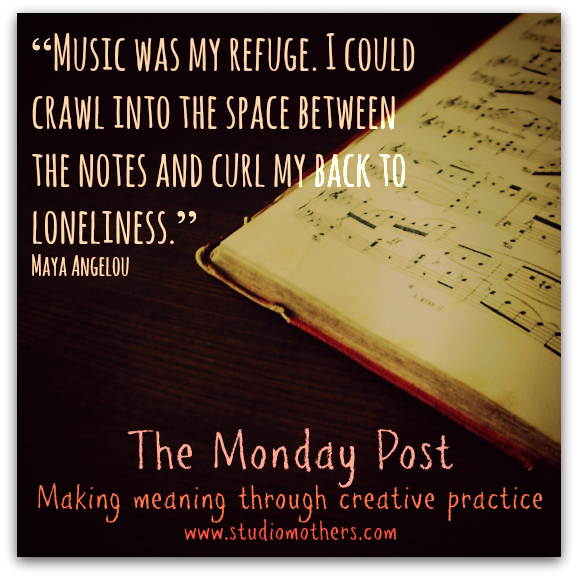
Your Creative Intentions: The Monday Post ~ January 28, 2013

Monday Post frost

Now is the time to recommit to a regular creativity practice. Regularity — a daily practice, if possible — is one of the best ways to stay in touch with how you make meaning. Can a regular creative practice be part of your intentions for 2013?

What are your plans for creative practice this week? Given the specifics of your schedule, decide on a realistic intention or practice plan — and ink that time in your calendar. The scheduling part is important, because as you know, if you try to “fit it in” around the edges, it generally won’t happen. An intention as simple as “I will write for 20 minutes every morning after breakfast” or “I will sketch a new still life on Wednesday evening” is what it’s all about.

Share your intentions or goals as a comment to this post, and let us know how things went with your creative plans for last week, if you posted to last week’s Monday Post. We use a broad brush in defining creativity, so don’t be shy. We also often include well-being practices that support creativity, such as exercise and journaling.

Putting your intentions on “paper” helps you get clear on what you want to do — and sharing those intentions with this community leverages the motivation of an accountability group. Join us!

:::::::

If you’re an artist or writer with little ones, The Creative Mother’s Guide: Six Creative Practices for the Early Years is the essential survival guide written just for you. Concrete strategies for becoming more creative without adding stress and guilt. Filled with the wisdom of 13 insightful creative mothers; written by a certified creativity coach and mother of five. “Highly recommended.” ~Eric Maisel. 35 pages/$11.98. Available for download here.

Your Creative Intentions: The Monday Post ~ January 21, 2013

“Sometimes life is hard. Things go wrong — and in life, and in love, and in business, and in friendship, and in health, and in all the other ways in which life can go wrong. And when things get tough, this is what you should do: Make good art. I’m serious. Husband runs off with a politician? Make good art. Leg crushed and then eaten by a mutated boa constrictor? Make good art. IRS on your trail? Make good art. Cat exploded? Make good art. Someone on the internet thinks what you’re doing is stupid, or evil, or it’s all been done before? Make good art.”
~Neil Gaiman

Monday_Post_January_21_2013

Now is the time to recommit to a regular creativity practice. Regularity — a daily practice, if possible — is one of the best ways to stay in touch with how you make meaning. Can a regular creative practice be part of your intentions for 2013?

What are your plans for creative practice this week? Given the specifics of your schedule, decide on a realistic intention or practice plan — and ink that time in your calendar. The scheduling part is important, because as you know, if you try to “fit it in” around the edges, it generally won’t happen. An intention as simple as “I will write for 20 minutes every morning after breakfast” or “I will sketch a new still life on Wednesday evening” is what it’s all about.

Share your intentions or goals as a comment to this post, and let us know how things went with your creative plans for last week, if you posted to last week’s Monday Post. We use a broad brush in defining creativity, so don’t be shy. We also often include well-being practices that support creativity, such as exercise and journaling.

Putting your intentions on “paper” helps you get clear on what you want to do — and sharing those intentions with this community leverages the motivation of an accountability group. Join us!

:::::::

If you’re an artist or writer with little ones, The Creative Mother’s Guide: Six Creative Practices for the Early Years is the essential survival guide written just for you. Concrete strategies for becoming more creative without adding stress and guilt. Filled with the wisdom of 13 insightful creative mothers; written by a certified creativity coach and mother of five. “Highly recommended.” ~Eric Maisel. 35 pages/$11.98. Available for download here.
Three Words for 2013

The new year has begun. At the two-week mark I’m ready to get specific about how I want to approach the months ahead. At about this time last year, I posted my personal review of 2011, and then my intentions for 2012. Instead of goals, l preferred the word intentions, because so many of my priorities comprised an ongoing practice, rather than end points. If you follow our Monday Post you know that my weekly intentions rarely vary. My frame for the coming year is similar. But first, a brief review of 2012, because I like to appreciate where I’ve been before moving forward. Don’t you?

2012 Highlights

  • freshly pressedIn January my nonfiction writers’ group met for the first time. A year later, we’re still going strong — each of the six of us working on books (although we have since sidled into fiction too). We meet monthly in person and share our progress weekly via e-mail. This group is hugely important to me.
  • In January I also launched my first group coaching circle, which met monthly throughout the year. An invaluable experience that will continue into 2013.
  • In March I taught the first of multiple writers’ workshops at Open Studio — workshops that were well received by my students and informed my own writing practice.
  • In March Studio Mothers made the Circle of Moms Top 25 Blogs list.
  • In May my business partner Ellen Olson-Brown and I had our first “live” television appearance as guests on a local cable show, Around Town.
  • In June I had the pleasure of being a guest on Mark Lipinski’s internet radio show, Creative Mojo. Mark is an awesome guy, and the experience was terrific.
  • For Studio Mothers, without a doubt the highlight of the year was making the WordPress Freshly Pressed page in June. The ginormous traffic increase and bump in subscribers means that we’re now reaching a much wider audience.
  • On July 4, I finished and released my e-book, The Creative Mother’s Guide: Six Creative Practices for the Early Years. Amazingly satisfying.
  • In August I began a regular writing practice. It wasn’t every day — not at first — but I realized that 500 words a day was doable, even with I didn’t “have time” to write. Often, I’d write a lot more than 500 words. Now it’s a daily habit. This may be the most significant element of 2012.
  • In September I performed in a live yoga demo for at our town’s annual festival. Nothing like getting on stage in front of a crowd in your yoga kit!
  • In November I pushed the on-stage envelope even further by participating in a fashion-show fundraiser wearing a metal ensemble that Grace Jones might have envied.
  • Throughout the year, I co-hosted various events at Open Studio: art openings, workshops, and our weekly Creative Community Hours.
  • Although I didn’t enact the marketing plan for my coaching business that I created in 2011, I had a good year on the creativity coaching front, developing a roster of ongoing clients who are doing amazing things — and I’m honored to support them in their creative journeys.
  • My editorial business, Pen and Press, had a strong year. Wonderful new clients — two of whom have become friends.
  • On the personal side, my oldest son had a fantastic junior recital at Ithaca College and started his senior year; my second-oldest son graduated from high school and began his freshman year at Berklee College of Music; my 16-year-old daughter got her license and a job; my second-grader became an even more manic football fanatic (which seemed impossible); my youngest started his last preschool year at a Montessori school, which was a huge improvement for him — much happier. In all, the children had a great year. My husband started the year at a new job and ended the year without a job, so that’s been a challenge — but a unifying challenge, which has been positive.

Between the Lines

When I think through the highlights, I see that this year was very much about connecting with other people and becoming increasingly comfortable in front of a crowd, large or small. It’s no accident that our tagline for Open Studio was Connect, Create, Grow. (I used the past tense when referring to the studio. More here.)

When I look at the list of intentions I created for last year, I calculate about at 50% “success” rate. I’m okay with that.

Moving Forward

For this year, instead of another folio of intentions, I’m doing something different. I still have the same priorities, but one concrete goal tops the list: finish my fiction manuscript. I don’t know if this is within my reach, but I’m going to try. On top of that, I’ve identified three words that are my mantra for the year:

three words for 2013

Focus is for working on one thing until it’s done. Working with the wifi shut off and/or with my e-mail turned off. Not jumping from thing to thing in a ridiculous circle. Focus is for planning my day and following the plan. Focus is for my writing practice.

Kindness is for kindness to self. Being kind to others is not a struggle, but I tend to push myself too hard. I’m working on ways to be gentler, which means adjusting my personal expectations. Treating others and myself with empathy.

Delight is for doing less and enjoying it more. Delight is for slowing down and reconnecting with the natural childhood awe that used to be natural. Delight is for not running around like a maniac. Delight is for being here now, and not wanting to be anywhere else.

How about you? What are your intentions for 2013? If you have a word — or three — will you share?

:::