Skip to content

Posts tagged ‘art’

Your Creative Intentions: The Monday Post ~ March 25, 2013
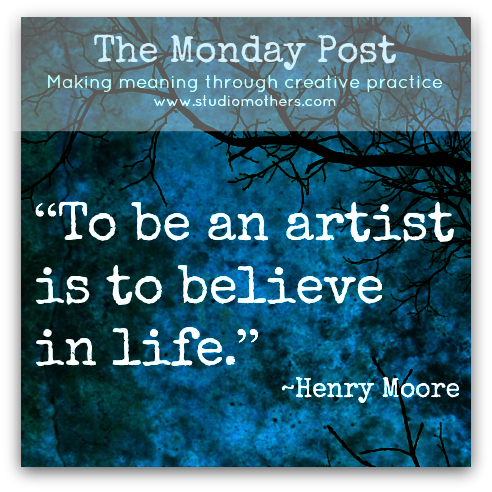
To be an artist is to believe in life.

If you aren’t doing your creative work as often as you’d like, recommit to a regular creativity practice. Regularity — a daily practice, if possible — is one of the best ways to stay in touch with how you make meaning. Can a regular creative practice be part of your intentions for 2013?

What are your plans for creative practice this week? Given the specifics of your schedule, decide on a realistic intention or practice plan — and ink that time in your calendar. The scheduling part is important, because as you know, if you try to “fit it in” around the edges, it generally won’t happen. An intention as simple as “I will write for 20 minutes every morning after breakfast” or “I will sketch a new still life on Wednesday evening” is what it’s all about.

Share your intentions or goals as a comment to this post, and let us know how things went with your creative plans for last week, if you posted to last week’s Monday Post. We use a broad brush in defining creativity, so don’t be shy. We also often include well-being practices that support creativity, such as exercise and journaling.

Putting your intentions on “paper” helps you get clear on what you want to do — and sharing those intentions with this community leverages the motivation of an accountability group. Join us!

:::::::

If you’re an artist or writer with little ones, The Creative Mother’s Guide: Six Creative Practices for the Early Years is the essential survival guide written just for you. Concrete strategies for becoming more creative without adding stress and guilt. Filled with the wisdom of 13 insightful creative mothers; written by a certified creativity coach and mother of five. “Highly recommended.” ~Eric Maisel. 35 pages/$11.98. Available for download here.

Meme of the Week

Creativity Takes No Excuses

Happy Friday.

:::::

Your Creative Intentions: The Monday Post ~ March 18, 2013

Monday Post door

If you aren’t doing your creative work as often as you’d like, recommit to a regular creativity practice. Regularity — a daily practice, if possible — is one of the best ways to stay in touch with how you make meaning. Can a regular creative practice be part of your intentions for 2013?

What are your plans for creative practice this week? Given the specifics of your schedule, decide on a realistic intention or practice plan — and ink that time in your calendar. The scheduling part is important, because as you know, if you try to “fit it in” around the edges, it generally won’t happen. An intention as simple as “I will write for 20 minutes every morning after breakfast” or “I will sketch a new still life on Wednesday evening” is what it’s all about.

Share your intentions or goals as a comment to this post, and let us know how things went with your creative plans for last week, if you posted to last week’s Monday Post. We use a broad brush in defining creativity, so don’t be shy. We also often include well-being practices that support creativity, such as exercise and journaling.

Putting your intentions on “paper” helps you get clear on what you want to do — and sharing those intentions with this community leverages the motivation of an accountability group. Join us!

:::::::

If you’re an artist or writer with little ones, The Creative Mother’s Guide: Six Creative Practices for the Early Years is the essential survival guide written just for you. Concrete strategies for becoming more creative without adding stress and guilt. Filled with the wisdom of 13 insightful creative mothers; written by a certified creativity coach and mother of five. “Highly recommended.” ~Eric Maisel. 35 pages/$11.98. Available for download here.

Meme of the Week

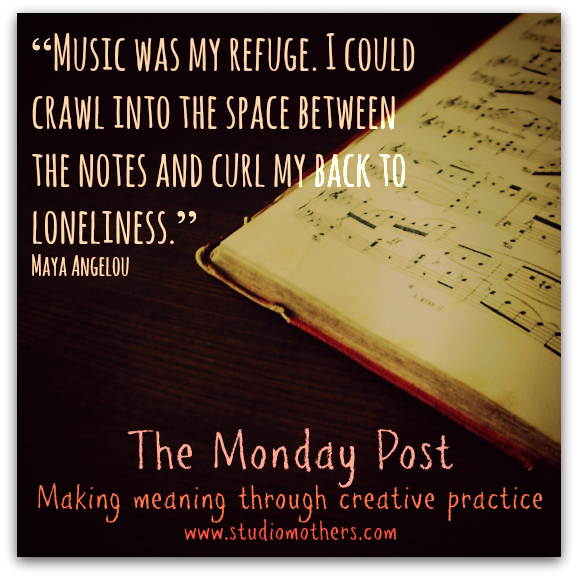
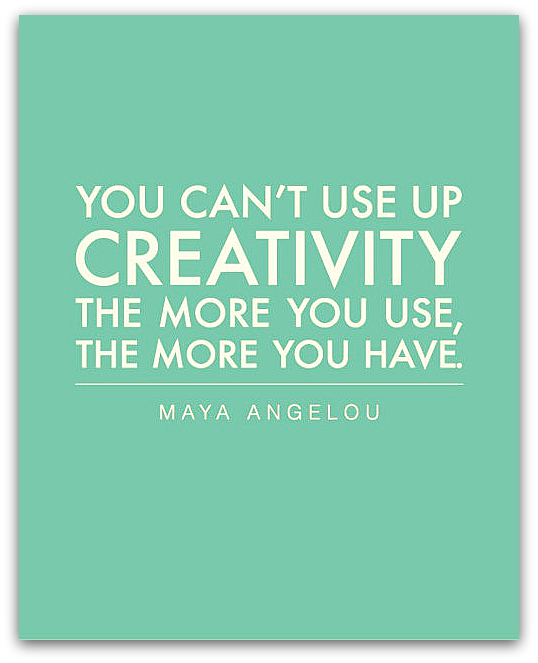
Maya_Angelou_quoteHappy Friday.

:::::

Your Creative Intentions: The Monday Post ~ March 11, 2013

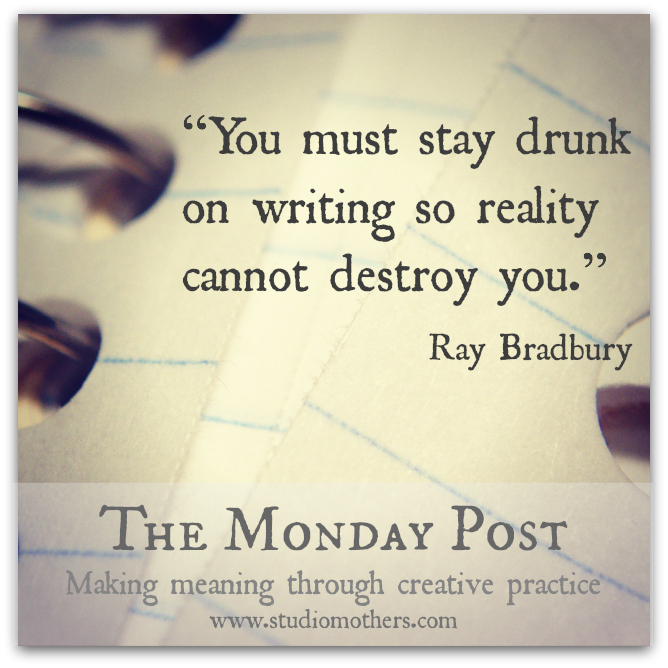
Ray Bradbury quote writing

If you aren’t doing your creative work as often as you’d like, recommit to a regular creativity practice. Regularity — a daily practice, if possible — is one of the best ways to stay in touch with how you make meaning. Can a regular creative practice be part of your intentions for 2013?

What are your plans for creative practice this week? Given the specifics of your schedule, decide on a realistic intention or practice plan — and ink that time in your calendar. The scheduling part is important, because as you know, if you try to “fit it in” around the edges, it generally won’t happen. An intention as simple as “I will write for 20 minutes every morning after breakfast” or “I will sketch a new still life on Wednesday evening” is what it’s all about.

Share your intentions or goals as a comment to this post, and let us know how things went with your creative plans for last week, if you posted to last week’s Monday Post. We use a broad brush in defining creativity, so don’t be shy. We also often include well-being practices that support creativity, such as exercise and journaling.

Putting your intentions on “paper” helps you get clear on what you want to do — and sharing those intentions with this community leverages the motivation of an accountability group. Join us!

:::::::

If you’re an artist or writer with little ones, The Creative Mother’s Guide: Six Creative Practices for the Early Years is the essential survival guide written just for you. Concrete strategies for becoming more creative without adding stress and guilt. Filled with the wisdom of 13 insightful creative mothers; written by a certified creativity coach and mother of five. “Highly recommended.” ~Eric Maisel. 35 pages/$11.98. Available for download here.
Meme of the Week

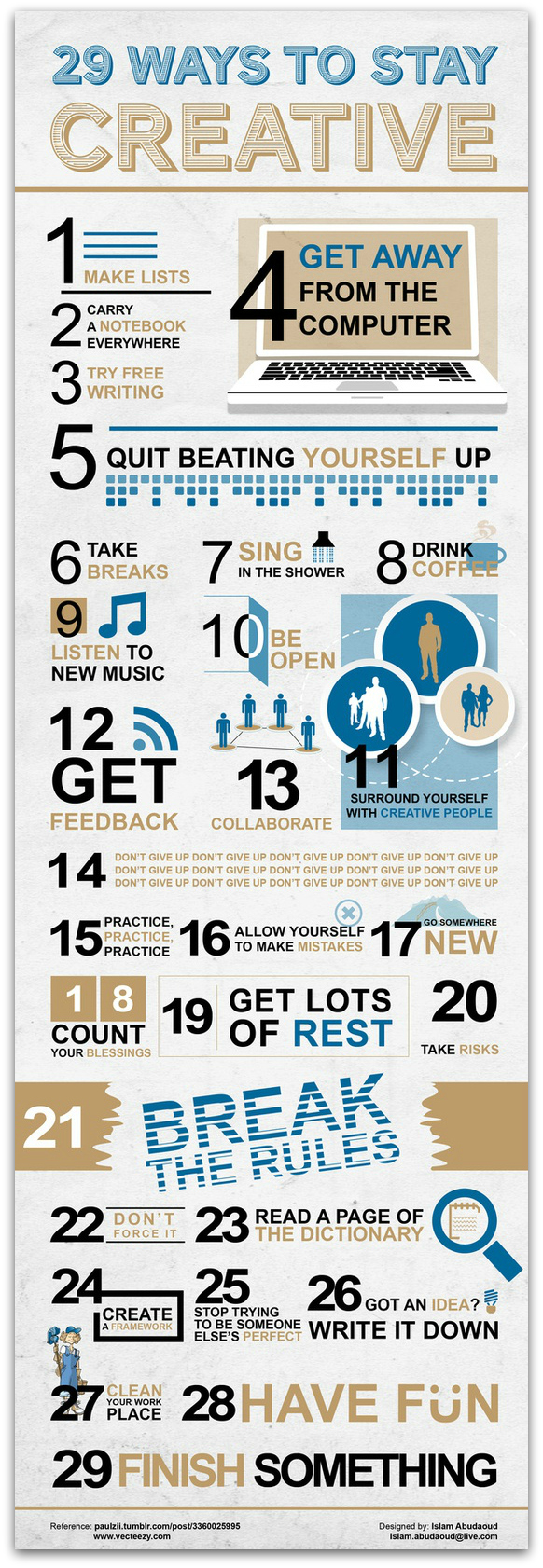
29 Ways to Stay Creative

Happy Friday.

:::::

Your Creative Intentions: The Monday Post ~ March 4, 2013

Pablo Picasso quote

If you aren’t doing your creative work as often as you’d like, recommit to a regular creativity practice. Regularity — a daily practice, if possible — is one of the best ways to stay in touch with how you make meaning. Can a regular creative practice be part of your intentions for 2013?

What are your plans for creative practice this week? Given the specifics of your schedule, decide on a realistic intention or practice plan — and ink that time in your calendar. The scheduling part is important, because as you know, if you try to “fit it in” around the edges, it generally won’t happen. An intention as simple as “I will write for 20 minutes every morning after breakfast” or “I will sketch a new still life on Wednesday evening” is what it’s all about.

Share your intentions or goals as a comment to this post, and let us know how things went with your creative plans for last week, if you posted to last week’s Monday Post. We use a broad brush in defining creativity, so don’t be shy. We also often include well-being practices that support creativity, such as exercise and journaling.

Putting your intentions on “paper” helps you get clear on what you want to do — and sharing those intentions with this community leverages the motivation of an accountability group. Join us!

:::::::

If you’re an artist or writer with little ones, The Creative Mother’s Guide: Six Creative Practices for the Early Years is the essential survival guide written just for you. Concrete strategies for becoming more creative without adding stress and guilt. Filled with the wisdom of 13 insightful creative mothers; written by a certified creativity coach and mother of five. “Highly recommended.” ~Eric Maisel. 35 pages/$11.98. Available for download here.

Your Creative Intentions: The Monday Post ~ February 25, 2013

Maya Angelou quote

If you aren’t doing your creative work as often as you’d like, recommit to a regular creativity practice. Regularity — a daily practice, if possible — is one of the best ways to stay in touch with how you make meaning. Can a regular creative practice be part of your intentions for 2013?

What are your plans for creative practice this week? Given the specifics of your schedule, decide on a realistic intention or practice plan — and ink that time in your calendar. The scheduling part is important, because as you know, if you try to “fit it in” around the edges, it generally won’t happen. An intention as simple as “I will write for 20 minutes every morning after breakfast” or “I will sketch a new still life on Wednesday evening” is what it’s all about.

Share your intentions or goals as a comment to this post, and let us know how things went with your creative plans for last week, if you posted to last week’s Monday Post. We use a broad brush in defining creativity, so don’t be shy. We also often include well-being practices that support creativity, such as exercise and journaling.

Putting your intentions on “paper” helps you get clear on what you want to do — and sharing those intentions with this community leverages the motivation of an accountability group. Join us!

:::::::

If you’re an artist or writer with little ones, The Creative Mother’s Guide: Six Creative Practices for the Early Years is the essential survival guide written just for you. Concrete strategies for becoming more creative without adding stress and guilt. Filled with the wisdom of 13 insightful creative mothers; written by a certified creativity coach and mother of five. “Highly recommended.” ~Eric Maisel. 35 pages/$11.98. Available for download here.
Your Creative Intentions: The Monday Post ~ February 18, 2013

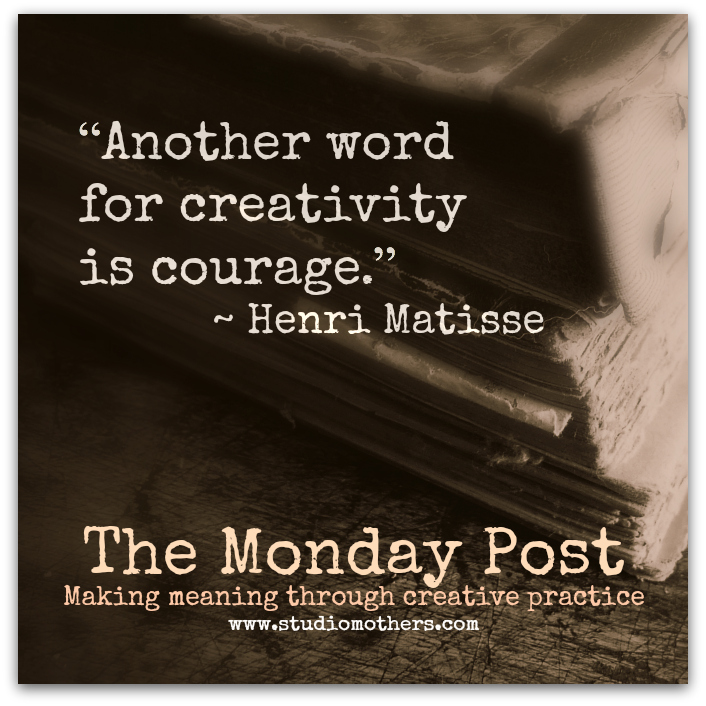
Monday Post Henri Matisse quote

If you aren’t doing your creative work as often as you’d like, recommit to a regular creativity practice. Regularity — a daily practice, if possible — is one of the best ways to stay in touch with how you make meaning. Can a regular creative practice be part of your intentions for 2013?

What are your plans for creative practice this week? Given the specifics of your schedule, decide on a realistic intention or practice plan — and ink that time in your calendar. The scheduling part is important, because as you know, if you try to “fit it in” around the edges, it generally won’t happen. An intention as simple as “I will write for 20 minutes every morning after breakfast” or “I will sketch a new still life on Wednesday evening” is what it’s all about.

Share your intentions or goals as a comment to this post, and let us know how things went with your creative plans for last week, if you posted to last week’s Monday Post. We use a broad brush in defining creativity, so don’t be shy. We also often include well-being practices that support creativity, such as exercise and journaling.

Putting your intentions on “paper” helps you get clear on what you want to do — and sharing those intentions with this community leverages the motivation of an accountability group. Join us!

:::::::

If you’re an artist or writer with little ones, The Creative Mother’s Guide: Six Creative Practices for the Early Years is the essential survival guide written just for you. Concrete strategies for becoming more creative without adding stress and guilt. Filled with the wisdom of 13 insightful creative mothers; written by a certified creativity coach and mother of five. “Highly recommended.” ~Eric Maisel. 35 pages/$11.98. Available for download here.

Your Creative Intentions: The Monday Post ~ February 11, 2013

Thoreau quote

If you aren’t doing your creative work as often as you’d like, recommit to a regular creativity practice. Regularity — a daily practice, if possible — is one of the best ways to stay in touch with how you make meaning. Can a regular creative practice be part of your intentions for 2013?

What are your plans for creative practice this week? Given the specifics of your schedule, decide on a realistic intention or practice plan — and ink that time in your calendar. The scheduling part is important, because as you know, if you try to “fit it in” around the edges, it generally won’t happen. An intention as simple as “I will write for 20 minutes every morning after breakfast” or “I will sketch a new still life on Wednesday evening” is what it’s all about.

Share your intentions or goals as a comment to this post, and let us know how things went with your creative plans for last week, if you posted to last week’s Monday Post. We use a broad brush in defining creativity, so don’t be shy. We also often include well-being practices that support creativity, such as exercise and journaling.

Putting your intentions on “paper” helps you get clear on what you want to do — and sharing those intentions with this community leverages the motivation of an accountability group. Join us!

:::::::

If you’re an artist or writer with little ones, The Creative Mother’s Guide: Six Creative Practices for the Early Years is the essential survival guide written just for you. Concrete strategies for becoming more creative without adding stress and guilt. Filled with the wisdom of 13 insightful creative mothers; written by a certified creativity coach and mother of five. “Highly recommended.” ~Eric Maisel. 35 pages/$11.98. Available for download here.
Your Creative Intentions: The Monday Post ~ February 4, 2013

Simone Weil Monday Post

Now is the time to recommit to a regular creativity practice. Regularity — a daily practice, if possible — is one of the best ways to stay in touch with how you make meaning. Can a regular creative practice be part of your intentions for 2013?

What are your plans for creative practice this week? Given the specifics of your schedule, decide on a realistic intention or practice plan — and ink that time in your calendar. The scheduling part is important, because as you know, if you try to “fit it in” around the edges, it generally won’t happen. An intention as simple as “I will write for 20 minutes every morning after breakfast” or “I will sketch a new still life on Wednesday evening” is what it’s all about.

Share your intentions or goals as a comment to this post, and let us know how things went with your creative plans for last week, if you posted to last week’s Monday Post. We use a broad brush in defining creativity, so don’t be shy. We also often include well-being practices that support creativity, such as exercise and journaling.

Putting your intentions on “paper” helps you get clear on what you want to do — and sharing those intentions with this community leverages the motivation of an accountability group. Join us!

:::::::

If you’re an artist or writer with little ones, The Creative Mother’s Guide: Six Creative Practices for the Early Years is the essential survival guide written just for you. Concrete strategies for becoming more creative without adding stress and guilt. Filled with the wisdom of 13 insightful creative mothers; written by a certified creativity coach and mother of five. “Highly recommended.” ~Eric Maisel. 35 pages/$11.98. Available for download here.

My New Rule: The Power of One (wherein I attempt to be slightly less manic)

The piece below originally appeared in this month’s Creative Times newsletter.

The Power of One

For many months now — or is it years? — I’ve been on a quest. A quest to slow things down. A quest to stop running around like a maniac from calendar item to calendar item. A quest to breathe more and do less. And I’m pretty sure you know what I’m talking about.

After being over-booked and over-worked for way too long, with too many days like this one, I finally realized that I have to stop overestimating the bandwidth of any given day. I have a bad habit of continually anticipating more time than I actually have, not leaving room for the significant amount of unexpected and last-minute requests and events that force me to shoe-horn my “regular” work into the margins. I decided to take drastic action with my schedule.

At the beginning of this month, I enacted a One Thing Only rule. This means that I only schedule one thing on any given day. There are still all of the regular activities — kids, domestic life, errands, hours of laptop-based work — but any kind of one-off that gets written in my calendar has to stand alone. This means that if I have a client meeting in the afternoon, I don’t schedule anything else for that day. If I decide to schedule morning coffee with a friend, I leave the afternoon unbooked. If I have a dentist appointment just after lunch, the rest of the day is locked down. Crazy, huh?

It hasn’t been easy. I still look at my planner and say “Well, on Thursday I only have a 30-minute coaching call at 11:00. I can fit an hour-long editorial conference call in at 2:00, right?” I mean, who wouldn’t do that? But the truth is, that with two or more events scheduled in any given day, reality eats up the rest of my schedule. I end up losing the hours of actual work time that I’d planned on. By the time I crawl into bed, I’ve been busy all day but I haven’t crossed off even half of the action items on my list. As a freelancer and a coach, I don’t get paid without billable time — and I don’t get billable time unless I’m at my desk, uninterrupted, doing my work.

Working for yourself means that you have the luxury — and the potential curse — of managing your time in the way that works best for you. If you’re a fulltime employee at an office, your time isn’t entirely within your control. There are days when you sit in endless meetings and feel like you didn’t get a moment of actual work done. Is there any way you can creatively apply the One Thing Only rule to parts of your workday, or at least your time away from the office?

In time, as the anxiety about being less scheduled recedes, what takes its place is a greater sense of calmness, focus, and satisfaction. You really can do more with less.

I’ll be writing more about the power of one in next month’s issue of the Creative Times. If you’re motivated to try this, or have already enacted a different plan for reducing your busy-ness, please share.

::::::