Meme of the Week
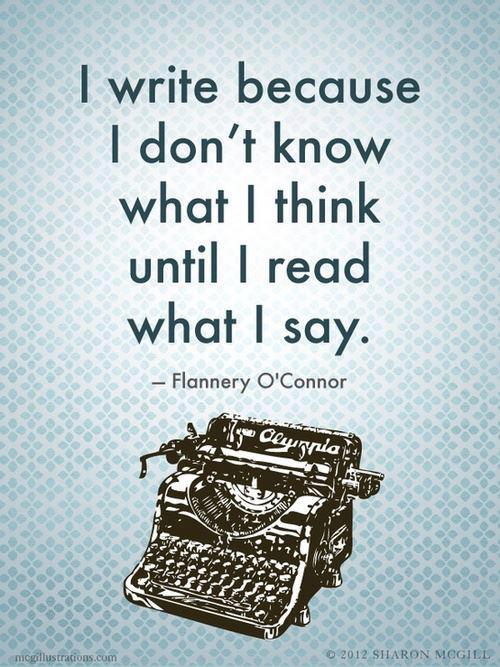
Happy Friday.
:::::
Feb 15
Feb 13
The piece below originally appeared in this month’s Creative Times newsletter.
 In our do-it-all-now culture, multitasking is considered a skill. Just look at a few help wanted ads online — most job descriptions call for candidates who are able to “multitask.”
But we know from research that multitasking is actually unnatural and inefficient. “Do two or more things simultaneously, and you’ll do none at full capacity.”
Multitasking is the antithesis of the concept of “flow” or “being in the zone,” as identified by Mihaly Csikszentmihalyi. We want flow. It’s an essential part of creativity. Can you be creative when you’re unfocused and distracted? Sure. But the output probably won’t be as great — or feel as good — as what you get when you experience flow.
While it may be a lot to expect to enter flow on a daily basis, it’s not too much to develop work habits that support doing one thing at a time. I recently realized that my own habits had reached new depths of multitasking frenzy. The ugly truth looked something like this:
I’m in the middle of a client project and reflexively check my e-mail. A new action item comes in — something that will only take a couple of minutes to take care of. So I do that quick thing, and in the process remember that I’ve forgotten to order more paper towels. So I go to amazon to order paper towels and realize that I need to order a few other things too. I try to remember what those things are while going to the kitchen to make a fresh cup of tea. I unload the dishwasher while waiting for the kettle to boil. Back at my desk, finishing the amazon order, I get a text from one of my sons asking for a ride home from the train station later. I look at my schedule and realize that I have to make an ATM deposit, which I can do on the way to the train station. I take a few minutes to put together my deposit, which requires me to open my bookkeeping application and make a few entries. I glance at my to-do list and realize that I’m overdue for posting an update to a client’s facebook account. I go to facebook to make the update, but inevitably see my personal notifications at the same time. I get sucked into the feed. I click through to external pages. When a page is slow to load, I open another browser window and read news headlines or take a turn in Words With Friends. I realize it’s getting late and I really need to finish the client project I started with. I work on that for a a short burst before reflexively checking my e-mail again and the whole cycle repeats in some variation.
A pathetic spin on If You Give a Mouse a Cookie. Can you relate?
At the end of the day, I’d have the unpleasant feeling of having been busy for hours without having made much measurable progress — and without having done anything to the best of my ability. That doesn’t work well, and doesn’t feel good.
How had I gone so awry? How could doing just one thing at a time possibly be so complicated? I knew it had something to do with electronic life — and the real-time availability and demands that come with it. I realized that I needed some training wheels. More than training wheels, I needed some duct tape and a hammer. I had to start doing one thing at a time, doing each task until a) it was completed or b) for external or predetermined reasons I had to stop. Duh. But for some reason, I couldn’t get myself to stick to this simple framework.
Enter the time log, which has — literally — transformed my life. We know that dieters who write down everything they eat lose more weight than those who don’t. There’s something about having to fess up — even if just to yourself — that encourages you to stick with your intentions. Here’s what I started doing.
In the “notes” side of my two-page per day planner (although you could use anything — including a sheet of paper) I write down the time and what task I’m starting. When the moment comes that I need/want to do something else, I write down the time and what I’m about to do. I can do anything I want, but I can only do the one thing I last wrote down. If I’m going to change tasks, I have to write it down first.
It’s that simple. Write down the time and what you’re about to do. Then do that one thing, and only that thing, until you need/want to do something else. Then write that thing down. Repeat. If something unexpected comes up and you need to deal with it, write it down. That’s now your one “thing.”
Here’s an excerpt from my log for Friday, February 1, 2013:
10:00 work on Coaching Circle planner
11:31 Client coaching call
12:05 work on Coaching Circle planner
12:26 e-mail Coaching Circle planner to recipients
12:35 check facebook
12:38 check e-mail/respond client messages
12:40 lunch and playtime with Liam
2:27 help Emma with online project
2:57 check e-mail/respond client messages
3:10 draft blog post
3:50 write e-mail to EB
3:55 send messages to coaching clients
4:20 writing practice
5:15 depart for Matthew pickup
You get the idea. The thing is, if I hadn’t been keeping this log, I wouldn’t have stuck with that 90-minute focused work block at 10:00, and I wouldn’t have refrained from checking e-mail during my playtime with Liam. Keeping this log continually reminds me of my commitment to doing just one thing at a time, and to doing it as well as I can. For larger projects, I decide ahead of time that I’m going to spend 60 or 90 minutes on that project. Then, if necessary, I stop and move on to the other things that have to get taken care of.
Want to try it? I encourage you to use paper for your time log, rather than an electronic device. Paper is immediate — and unplugged. It isn’t full of distractions like your phone and computer. And I think there’s something about having a log in your own handwriting that keeps it all “real.”
Do yourself a big favor and close your e-mail client and all social media when you’re not actually “doing” those things. Sticking to your time log is easier without those added temptations.
It also helps to spend some time in the morning outlining what you need and want to get done that day, so that as you finish one thing, you don’t get lost trying to decide on the next. Assign time estimates to each task on your list beforehand. And if you like to take a lot of breaks, by all means, take them! Just write down what you’re doing. Then you don’t run the risk of kidding yourself when your 20-minute break turns into a 2-hour social media binge.
The only downside to the log is that now I feel lost without it. I’ve started using it from the moment I get up in the morning. It helps me avoid OD’ing on Words With Friends when I really want to be doing my Morning Pages.
If you’re motivated to try this, or have another plan for reducing your busy-ness, please share it below!
::::::
 If you’re an artist or writer with little ones, The Creative Mother’s Guide: Six Creative Practices for the Early Years is the essential survival guide written just for you. Concrete strategies for becoming more creative without adding stress and guilt. Filled with the wisdom of 13 insightful creative mothers; written by a certified creativity coach and mother of five. “Highly recommended.” ~Eric Maisel. 35 pages/$11.98. Available for download here.
Feb 11

What are your plans for creative practice this week? Given the specifics of your schedule, decide on a realistic intention or practice plan — and ink that time in your calendar. The scheduling part is important, because as you know, if you try to “fit it in” around the edges, it generally won’t happen. An intention as simple as “I will write for 20 minutes every morning after breakfast” or “I will sketch a new still life on Wednesday evening” is what it’s all about.
Share your intentions or goals as a comment to this post, and let us know how things went with your creative plans for last week, if you posted to last week’s Monday Post. We use a broad brush in defining creativity, so don’t be shy. We also often include well-being practices that support creativity, such as exercise and journaling.
Putting your intentions on “paper” helps you get clear on what you want to do — and sharing those intentions with this community leverages the motivation of an accountability group. Join us!
:::::::
If you’re an artist or writer with little ones, The Creative Mother’s Guide: Six Creative Practices for the Early Years is the essential survival guide written just for you. Concrete strategies for becoming more creative without adding stress and guilt. Filled with the wisdom of 13 insightful creative mothers; written by a certified creativity coach and mother of five. “Highly recommended.” ~Eric Maisel. 35 pages/$11.98. Available for download here.
Feb 5
 I’m so excited to bring you this amazing giveaway: a free spot in The Artist’s Way and Beyond, a 12-week teleclass led by the award-winning playwright (and my fellow creativity coach) Zohar Tirosh-Polk. This giveaway is a $200 value! If you’ve always wanted to do The Artist’s Way, or have done it before and are ready to do it again, Zohar (familiarly known as Zoe) will be your personal guide during the 12-week program, which begins February 13. The teleclass will be held on Wednesdays from 1:00 to 2:00 pm eastern (except for the initial class, which may run up to 90 minutes).
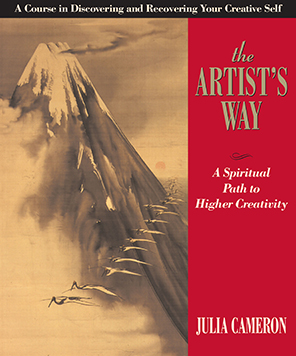 Julia Cameron’s The Artist’s Way is often hailed as the “Artist’s bible,” with tools like morning pages and artist dates now used by millions across the world. The Artist’s Way offers a foundational and spiritual path to accessing your creativity and moving toward achieving your innermost artistic dreams and aspirations. I asked Zoe to share a little bit about what inspired her to offer this teleclass.
What prompted you to create a teleclass from The Artist’s Way?
I’m working on two big creative projects right now and I needed to return to The Artist’s Way myself. I know The Artist’s Way is such a powerful way to reconnect with my own creativity. Having gone through it many times, it has become my artist’s bible of sorts, an anchor. It’s the thing I go back to again and again to find inspiration, hope, and the tools that help me keep going. I also know that creating a community of creative souls/artists is such a potent experience. It allows everyone to be accountable, inspire one another, keep using the tools, and stay on track with our creative projects. Lastly, I hear so many people say, “Oh yes, I want to do The Artist’s Way again,” or “I should read it” and I wanted to create an opportunity for those people to do just that.
Why do you think The Artist’s Way has become such a phenomenon?
Because it works! 🙂 The Artist’s Way addresses the practical, emotional, and spiritual challenges of being an artist/creative soul and offers tangible and brilliant solutions to these challenges. I re-read Julia Cameron’s introduction recently and it was incredible to be reminded about how it all happened. She first heard about a painter-friend who started painting as a result of the work he did with her, and then there was a class, then a packet of handouts, and then a book, which has now sold millions of copies worldwide. Artists all over the world gained access to their creativity and and dancers went back to dancing, photographers got shows, writers wrote novels, actors began acting all over the world. It’s really amazing to think about.
As a creativity coach, what do you most want your students to gain from this teleclass?
I want them to have renewed faith their creativity, be well on their way in working on a project, and have a concrete plan to keep them going. This is where the “Beyond” part comes in. Every participant will have to create a vision for their work. Through coaching, exercises, careful planning, and accountability tools, everyone will complete the class working toward that vision. It’s exciting!
Space is limited. To claim a spot now, register at growcreativecoaching.com/workshops.
To win a free spot in this teleclass, simply post a comment below. Our winner will be selected at random on Friday, February 8, at 9:00 pm eastern. Good luck!
Feb 4

What are your plans for creative practice this week? Given the specifics of your schedule, decide on a realistic intention or practice plan — and ink that time in your calendar. The scheduling part is important, because as you know, if you try to “fit it in” around the edges, it generally won’t happen. An intention as simple as “I will write for 20 minutes every morning after breakfast” or “I will sketch a new still life on Wednesday evening” is what it’s all about.
Share your intentions or goals as a comment to this post, and let us know how things went with your creative plans for last week, if you posted to last week’s Monday Post. We use a broad brush in defining creativity, so don’t be shy. We also often include well-being practices that support creativity, such as exercise and journaling.
Putting your intentions on “paper” helps you get clear on what you want to do — and sharing those intentions with this community leverages the motivation of an accountability group. Join us!
:::::::
If you’re an artist or writer with little ones, The Creative Mother’s Guide: Six Creative Practices for the Early Years is the essential survival guide written just for you. Concrete strategies for becoming more creative without adding stress and guilt. Filled with the wisdom of 13 insightful creative mothers; written by a certified creativity coach and mother of five. “Highly recommended.” ~Eric Maisel. 35 pages/$11.98. Available for download here.
Jan 30
The piece below originally appeared in this month’s Creative Times newsletter.

For many months now — or is it years? — I’ve been on a quest. A quest to slow things down. A quest to stop running around like a maniac from calendar item to calendar item. A quest to breathe more and do less. And I’m pretty sure you know what I’m talking about.
After being over-booked and over-worked for way too long, with too many days like this one, I finally realized that I have to stop overestimating the bandwidth of any given day. I have a bad habit of continually anticipating more time than I actually have, not leaving room for the significant amount of unexpected and last-minute requests and events that force me to shoe-horn my “regular” work into the margins. I decided to take drastic action with my schedule.
At the beginning of this month, I enacted a One Thing Only rule. This means that I only schedule one thing on any given day. There are still all of the regular activities — kids, domestic life, errands, hours of laptop-based work — but any kind of one-off that gets written in my calendar has to stand alone. This means that if I have a client meeting in the afternoon, I don’t schedule anything else for that day. If I decide to schedule morning coffee with a friend, I leave the afternoon unbooked. If I have a dentist appointment just after lunch, the rest of the day is locked down. Crazy, huh?
It hasn’t been easy. I still look at my planner and say “Well, on Thursday I only have a 30-minute coaching call at 11:00. I can fit an hour-long editorial conference call in at 2:00, right?” I mean, who wouldn’t do that? But the truth is, that with two or more events scheduled in any given day, reality eats up the rest of my schedule. I end up losing the hours of actual work time that I’d planned on. By the time I crawl into bed, I’ve been busy all day but I haven’t crossed off even half of the action items on my list. As a freelancer and a coach, I don’t get paid without billable time — and I don’t get billable time unless I’m at my desk, uninterrupted, doing my work.
Working for yourself means that you have the luxury — and the potential curse — of managing your time in the way that works best for you. If you’re a fulltime employee at an office, your time isn’t entirely within your control. There are days when you sit in endless meetings and feel like you didn’t get a moment of actual work done. Is there any way you can creatively apply the One Thing Only rule to parts of your workday, or at least your time away from the office?
In time, as the anxiety about being less scheduled recedes, what takes its place is a greater sense of calmness, focus, and satisfaction. You really can do more with less.
I’ll be writing more about the power of one in next month’s issue of the Creative Times. If you’re motivated to try this, or have already enacted a different plan for reducing your busy-ness, please share.
::::::
Jan 28
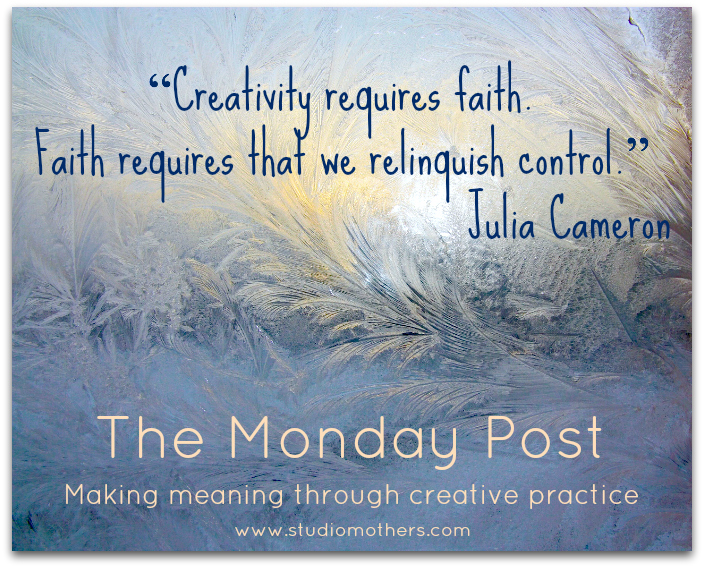
What are your plans for creative practice this week? Given the specifics of your schedule, decide on a realistic intention or practice plan — and ink that time in your calendar. The scheduling part is important, because as you know, if you try to “fit it in” around the edges, it generally won’t happen. An intention as simple as “I will write for 20 minutes every morning after breakfast” or “I will sketch a new still life on Wednesday evening” is what it’s all about.
Share your intentions or goals as a comment to this post, and let us know how things went with your creative plans for last week, if you posted to last week’s Monday Post. We use a broad brush in defining creativity, so don’t be shy. We also often include well-being practices that support creativity, such as exercise and journaling.
Putting your intentions on “paper” helps you get clear on what you want to do — and sharing those intentions with this community leverages the motivation of an accountability group. Join us!
:::::::
If you’re an artist or writer with little ones, The Creative Mother’s Guide: Six Creative Practices for the Early Years is the essential survival guide written just for you. Concrete strategies for becoming more creative without adding stress and guilt. Filled with the wisdom of 13 insightful creative mothers; written by a certified creativity coach and mother of five. “Highly recommended.” ~Eric Maisel. 35 pages/$11.98. Available for download here.
Jan 24
The piece below, which appeared in this month’s Creative Times newsletter, was written by my friend and former business partner Ellen Olson-Brown. Enjoy!

On the first of the month, I choose one familiar household object — a toy, a necklace, a clock on the wall — to sketch every morning of that month. I draw every day because I want to draw well, and I believe in the power of consistent practice, for two minutes or an hour, or an entire morning. I draw because I find the nonverbal work of visual observation and moving the pencil on the page to be meditative and centering. I draw because anchoring myself in wordless observation and movement ultimately helps me access my writing (the word-soaked centerpiece of the creative work that I do) from a more honest and flexible place.
Drawing the same object every morning means that I eliminate “but I don’t know what to draw!” as a barrier to getting started. It allows me to zoom in, sometimes drawing a tiny portion of an object, or to zoom out and include context and surroundings. It allows me to try and fail and try again to capture curves and shadows and relationships, to be playful, with the knowledge that I can give it another go the next day.
At the end of the month, I flip back through my journal and review the drawings I’ve done. I literally stack up evidence that I have met my commitment to myself, and this deepens my belief (and the self-fulfilling prophecy) that I’ll be able to show up again in the future, for drawing and other projects. I’m often surprised by the quality of what I’ve drawn, especially on the mornings where I recall feeling frustrated or stuck. And I’m never able to look at the objects I’ve drawn for 28 or 20 or 31 days without feeling that they’re not just props in my life, but friends I know intimately.
Would this practice work for you? Give it a try and let us know!
::::::
Jan 21
What are your plans for creative practice this week? Given the specifics of your schedule, decide on a realistic intention or practice plan — and ink that time in your calendar. The scheduling part is important, because as you know, if you try to “fit it in” around the edges, it generally won’t happen. An intention as simple as “I will write for 20 minutes every morning after breakfast” or “I will sketch a new still life on Wednesday evening” is what it’s all about.
Share your intentions or goals as a comment to this post, and let us know how things went with your creative plans for last week, if you posted to last week’s Monday Post. We use a broad brush in defining creativity, so don’t be shy. We also often include well-being practices that support creativity, such as exercise and journaling.
Putting your intentions on “paper” helps you get clear on what you want to do — and sharing those intentions with this community leverages the motivation of an accountability group. Join us!
:::::::
If you’re an artist or writer with little ones, The Creative Mother’s Guide: Six Creative Practices for the Early Years is the essential survival guide written just for you. Concrete strategies for becoming more creative without adding stress and guilt. Filled with the wisdom of 13 insightful creative mothers; written by a certified creativity coach and mother of five. “Highly recommended.” ~Eric Maisel. 35 pages/$11.98. Available for download here.
Jan 16
The new year has begun. At the two-week mark I’m ready to get specific about how I want to approach the months ahead. At about this time last year, I posted my personal review of 2011, and then my intentions for 2012. Instead of goals, l preferred the word intentions, because so many of my priorities comprised an ongoing practice, rather than end points. If you follow our Monday Post you know that my weekly intentions rarely vary. My frame for the coming year is similar. But first, a brief review of 2012, because I like to appreciate where I’ve been before moving forward. Don’t you?
 In January my nonfiction writers’ group met for the first time. A year later, we’re still going strong — each of the six of us working on books (although we have since sidled into fiction too). We meet monthly in person and share our progress weekly via e-mail. This group is hugely important to me.
When I think through the highlights, I see that this year was very much about connecting with other people and becoming increasingly comfortable in front of a crowd, large or small. It’s no accident that our tagline for Open Studio was Connect, Create, Grow. (I used the past tense when referring to the studio. More here.)
When I look at the list of intentions I created for last year, I calculate about at 50% “success” rate. I’m okay with that.
For this year, instead of another folio of intentions, I’m doing something different. I still have the same priorities, but one concrete goal tops the list: finish my fiction manuscript. I don’t know if this is within my reach, but I’m going to try. On top of that, I’ve identified three words that are my mantra for the year:

Focus is for working on one thing until it’s done. Working with the wifi shut off and/or with my e-mail turned off. Not jumping from thing to thing in a ridiculous circle. Focus is for planning my day and following the plan. Focus is for my writing practice.
Kindness is for kindness to self. Being kind to others is not a struggle, but I tend to push myself too hard. I’m working on ways to be gentler, which means adjusting my personal expectations. Treating others and myself with empathy.
Delight is for doing less and enjoying it more. Delight is for slowing down and reconnecting with the natural childhood awe that used to be natural. Delight is for not running around like a maniac. Delight is for being here now, and not wanting to be anywhere else.
How about you? What are your intentions for 2013? If you have a word — or three — will you share?
:::
Jan 14

What are your plans for creative practice this week? Given the specifics of your schedule, decide on a realistic intention or practice plan — and ink that time in your calendar. The scheduling part is important, because as you know, if you try to “fit it in” around the edges, it generally won’t happen. An intention as simple as “I will write for 20 minutes every morning after breakfast” or “I will sketch a new still life on Wednesday evening” is what it’s all about.
Share your intentions or goals as a comment to this post, and let us know how things went with your creative plans for last week, if you posted to last week’s Monday Post. We use a broad brush in defining creativity, so don’t be shy. We also often include well-being practices that support creativity, such as exercise and journaling.
Putting your intentions on “paper” helps you get clear on what you want to do — and sharing those intentions with this community is a great way to leverage the motivation of an accountability group. Join us!
:::::::
If you’re an artist or writer with little ones, The Creative Mother’s Guide: Six Creative Practices for the Early Years is the essential survival guide written just for you. Concrete strategies for becoming more creative without adding stress and guilt. Filled with the wisdom of 13 insightful creative mothers; written by a certified creativity coach and mother of five. “Highly recommended.” ~Eric Maisel. 35 pages/$11.98. Available for download here.
Jan 7

What are your plans for creative practice this week? Given the specifics of your schedule, decide on a realistic intention or practice plan — and ink that time in your calendar. The scheduling part is important, because as you know, if you try to “fit it in” around the edges, it generally won’t happen. An intention as simple as “I will write for 20 minutes every morning after breakfast” or “I will sketch a new still life on Wednesday evening” is what it’s all about.
Share your intentions or goals as a comment to this post, and let us know how things went with your creative plans for last week, if you posted to last week’s Monday Post. We use a broad brush in defining creativity, so don’t be shy. We also often include well-being practices that support creativity, such as exercise and journaling.
Putting your intentions on “paper” helps you get clear on what you want to do — and sharing those intentions with this community is a great way to leverage the motivation of an accountability group. Join us!
:::::::
If you’re an artist or writer with little ones, The Creative Mother’s Guide: Six Creative Practices for the Early Years is the essential survival guide written just for you. Concrete strategies for becoming more creative without adding stress and guilt. Filled with the wisdom of 13 insightful creative mothers; written by a certified creativity coach and mother of five. “Highly recommended.” ~Eric Maisel. 35 pages/$11.98. Available for download here.




 Studio Mothers: Life & Art