Skip to content

10 Ways to Make the Most of 10 Minutes

10 Ways to Make the Most of 10 MinutesIt’s a rare but beautiful thing: An unexpected gap opens in your otherwise overbooked day. You realize — with disbelief — that you’re actually “free” for a short window. No one’s hair is on fire and there isn’t anything urgent to take care of right now. Maybe the baby who never sleeps finally closes her eyes or your spouse takes the kids out on an errand or you’re between conference calls. Whatever it is, you realize that the next little bit of time is not yet spoken for. The window is too short to dig into a project, but you do have time for something. What do you do?

For many of us, one thing rises reflexively to the top of the list of possibilities: Facebook. (Or whatever social media you happen to prefer.) We fritter away our 10, 20, or 30 minutes scrolling through the minutia and photographic exploits of people we may or may not a) know, b) like, or c) find interesting. Or maybe we hit our regular news sites or entertainment blogs. So long as we’re online, we’re engaged.

Then our window closes — the baby wakes up, the client calls, it’s time to head out — and those minutes are gone. Are we the better for how we spent them?

Don’t get me wrong: Downtime is important. Ten minutes of doing nothing has its value;  social media and other internet temptations can, at times, serve as recreation. But more often than not, the interwebs become a crutch that we depend on because we’re in a short period of transition. We don’t know what else to do — or we do know what to do, but we’re procrastinating because we’re over- or under-whelmed by whatever we’re supposed to be working on. And just when we might benefit most from a screen-free breather, we’re particularly addicted to the glow.

Whether you’re using up minutes that aren’t otherwise spoken for or you’re avoiding a task you’d rather not do, use those 10 minutes to your advantage. Here are 10 “unplugged” ways to do just that.

  1. Meditate. Whether or not you already meditate regularly, a 10-minute break is a great opportunity to sit. Research demonstrates the substantial health benefits of meditation: it reduces stress, lowers blood pressure, increases focus, and reduces sensitivity to pain. Not sure how to meditate? Here’s an accessible introduction from Zen Habits.
  2. Write a poem. Short-form poetry is a lot of fun, and it only takes a few minutes to pen a haiku, tanka, or cinquain. Even if you’re unfamiliar with writing poetry, it’s deeply satisfying to solve the poetic puzzle of fitting your ideas into a time-honored structure.
  3. “Treat” read. You know that stack of magazines and journals that you never get to? Perhaps the New York Times Book Review that you set aside for “later,” or that tempting collection of One Story issues? Maybe an alumni magazine you want to peruse? That’s what I call “treat” reading — something that meets these three criteria: it’s short, unplugged, and somewhat indulgent.
  4. Exercise. Do 10 minutes of yoga, jump rope, or — if you have them — run up and down a flight of stairs (assuming you’re healthy enough to do so). A 10-minute burst of exercise boosts your concentration, mood, and physical well-being.
  5. Journal. Grab your journal — even if you’re a regular practitioner of Morning Pages — and gift yourself with a brief clearing session. Write out what you’re doing, what you’re not doing, what’s working, what’s not working. Keep your hand moving. Speaking from experience, 10 minutes of intense journaling can be an amazing stress reliever.
  6. Share the love. Dig out one of those blank cards or bits of stationary that are lurking in a drawer somewhere and write a brief note to someone you care about. It might be a thank-you note, a thinking-of-you note, or just a few lines that amount to “I’m so glad to know you.” Address your envelope, put a stamp on it, and mail the card next time you’re out. This act of gratitude has benefits for you as well as your recipient.
  7. Plot creatively. Grab a few index cards. Using one card per idea, outline a handful of important scenes that need to happen in your novel; the concept, colors, or basis for the painting that’s been kicking around in your head; a few possibilities for future blog posts. If you prefer visuals to words, use the blank side of your index cards to sketch or doodle.
  8. Prepare. Use a short interval to do some groundwork for a project: Gesso a canvas, sharpen your colored pencils, clean off your worktable or desk. If you don’t have any tasks in this category, spend your window filing bills or dealing with that “not sure what to do with this” stack of papers. It’s not sexy, but it sure feels good when it’s finished.
  9. Clip. Gather up a few old magazines (I keep a collection in my art room for this purpose) and flip through those glossy pages in search of collage materials. You don’t need to look for anything specific, just pull or clip the words and images that appeal to you. Save these clippings in a box for later collage work — and file anything else that sparks a story or project idea.
  10. Step outside. Use your brief break to get some fresh air. Go stand outside and marvel at whatever you see, feel, and hear. Raining? Enjoy the sound of rain hitting your umbrella. Snowing? Stand outside and be with it. Can’t go out because the kids are sleeping/watching TV/leaving you alone for a few seconds? Go stand by a window and breathe deeply. We all need to connect with nature, even if it’s just a few long-distance minutes with one straggly tree on the other side of a busy street.

What are your favorite ways to make the most of 10 minutes?

:::::

If you’re an artist or writer with little ones, The Creative Mother’s Guide: Six Creative Practices for the Early Years is the essential survival guide written just for you. Concrete strategies for becoming more creative without adding stress and guilt. Filled with the wisdom of 13 insightful creative mothers; written by a certified creativity coach and mother of five. “Highly recommended.” ~Eric Maisel. 35 pages/$11.98. Download here.


Your Creative Intentions: The Monday Post ~ March 18, 2013

Monday Post door

If you aren’t doing your creative work as often as you’d like, recommit to a regular creativity practice. Regularity — a daily practice, if possible — is one of the best ways to stay in touch with how you make meaning. Can a regular creative practice be part of your intentions for 2013?

What are your plans for creative practice this week? Given the specifics of your schedule, decide on a realistic intention or practice plan — and ink that time in your calendar. The scheduling part is important, because as you know, if you try to “fit it in” around the edges, it generally won’t happen. An intention as simple as “I will write for 20 minutes every morning after breakfast” or “I will sketch a new still life on Wednesday evening” is what it’s all about.

Share your intentions or goals as a comment to this post, and let us know how things went with your creative plans for last week, if you posted to last week’s Monday Post. We use a broad brush in defining creativity, so don’t be shy. We also often include well-being practices that support creativity, such as exercise and journaling.

Putting your intentions on “paper” helps you get clear on what you want to do — and sharing those intentions with this community leverages the motivation of an accountability group. Join us!

:::::::

If you’re an artist or writer with little ones, The Creative Mother’s Guide: Six Creative Practices for the Early Years is the essential survival guide written just for you. Concrete strategies for becoming more creative without adding stress and guilt. Filled with the wisdom of 13 insightful creative mothers; written by a certified creativity coach and mother of five. “Highly recommended.” ~Eric Maisel. 35 pages/$11.98. Available for download here.

Meme of the Week

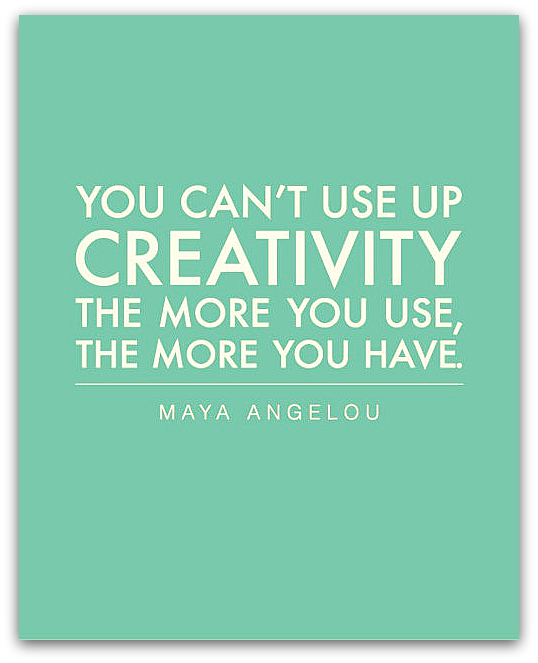
Maya_Angelou_quoteHappy Friday.

:::::

Your Creative Intentions: The Monday Post ~ March 11, 2013

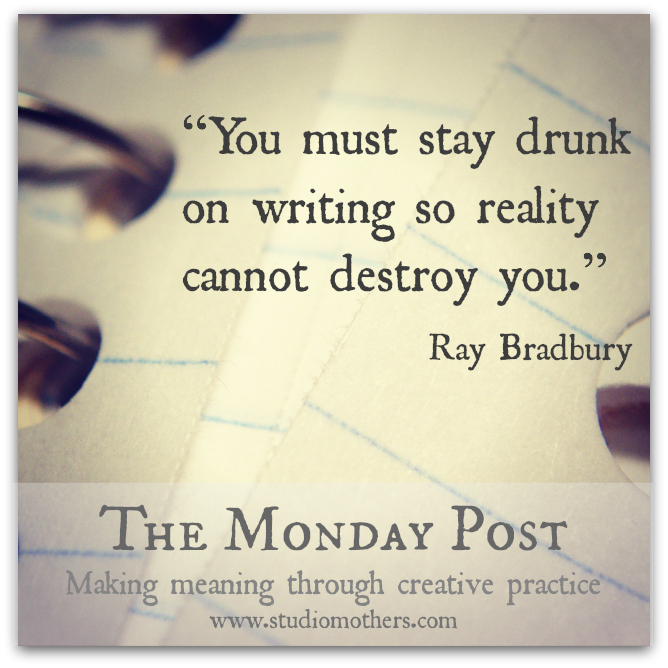
Ray Bradbury quote writing

If you aren’t doing your creative work as often as you’d like, recommit to a regular creativity practice. Regularity — a daily practice, if possible — is one of the best ways to stay in touch with how you make meaning. Can a regular creative practice be part of your intentions for 2013?

What are your plans for creative practice this week? Given the specifics of your schedule, decide on a realistic intention or practice plan — and ink that time in your calendar. The scheduling part is important, because as you know, if you try to “fit it in” around the edges, it generally won’t happen. An intention as simple as “I will write for 20 minutes every morning after breakfast” or “I will sketch a new still life on Wednesday evening” is what it’s all about.

Share your intentions or goals as a comment to this post, and let us know how things went with your creative plans for last week, if you posted to last week’s Monday Post. We use a broad brush in defining creativity, so don’t be shy. We also often include well-being practices that support creativity, such as exercise and journaling.

Putting your intentions on “paper” helps you get clear on what you want to do — and sharing those intentions with this community leverages the motivation of an accountability group. Join us!

:::::::

If you’re an artist or writer with little ones, The Creative Mother’s Guide: Six Creative Practices for the Early Years is the essential survival guide written just for you. Concrete strategies for becoming more creative without adding stress and guilt. Filled with the wisdom of 13 insightful creative mothers; written by a certified creativity coach and mother of five. “Highly recommended.” ~Eric Maisel. 35 pages/$11.98. Available for download here.

Meme of the Week

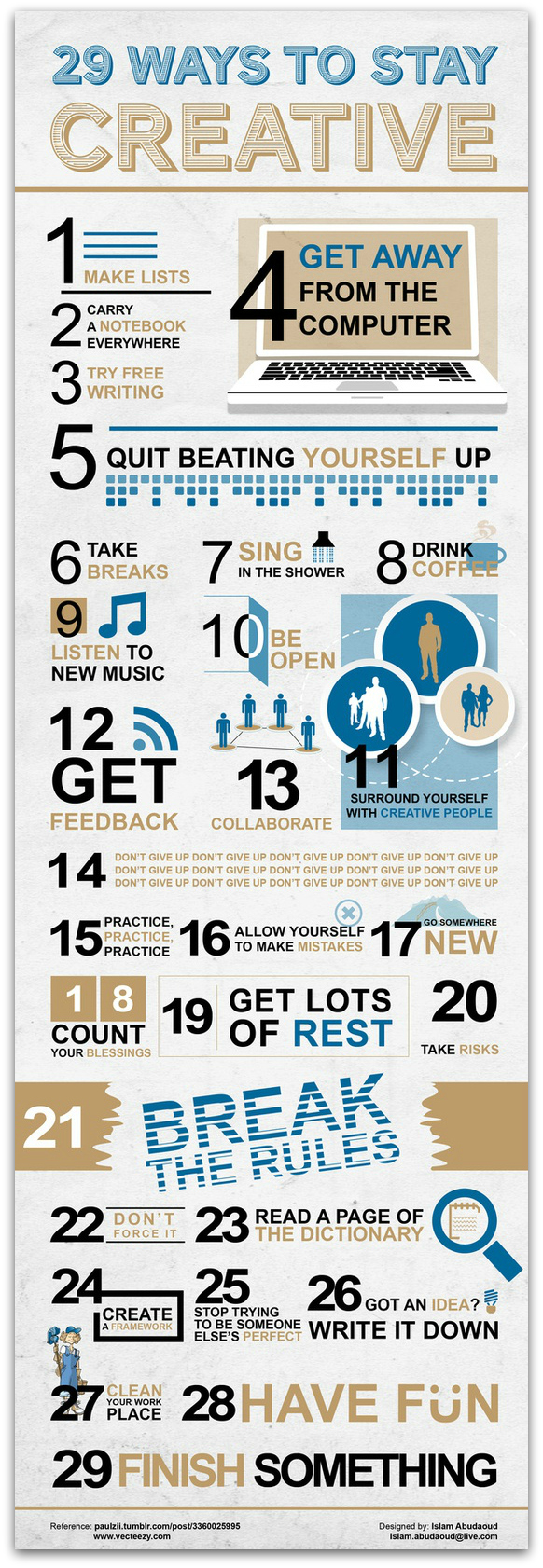
29 Ways to Stay Creative

Happy Friday.

:::::

Your Creative Intentions: The Monday Post ~ March 4, 2013

Pablo Picasso quote

If you aren’t doing your creative work as often as you’d like, recommit to a regular creativity practice. Regularity — a daily practice, if possible — is one of the best ways to stay in touch with how you make meaning. Can a regular creative practice be part of your intentions for 2013?

What are your plans for creative practice this week? Given the specifics of your schedule, decide on a realistic intention or practice plan — and ink that time in your calendar. The scheduling part is important, because as you know, if you try to “fit it in” around the edges, it generally won’t happen. An intention as simple as “I will write for 20 minutes every morning after breakfast” or “I will sketch a new still life on Wednesday evening” is what it’s all about.

Share your intentions or goals as a comment to this post, and let us know how things went with your creative plans for last week, if you posted to last week’s Monday Post. We use a broad brush in defining creativity, so don’t be shy. We also often include well-being practices that support creativity, such as exercise and journaling.

Putting your intentions on “paper” helps you get clear on what you want to do — and sharing those intentions with this community leverages the motivation of an accountability group. Join us!

:::::::

If you’re an artist or writer with little ones, The Creative Mother’s Guide: Six Creative Practices for the Early Years is the essential survival guide written just for you. Concrete strategies for becoming more creative without adding stress and guilt. Filled with the wisdom of 13 insightful creative mothers; written by a certified creativity coach and mother of five. “Highly recommended.” ~Eric Maisel. 35 pages/$11.98. Available for download here.

Meme of the Week

Steven Pressfield quote

Happy Friday.

:::::

Creative Imperfection Is Perfect

The following is an excerpt from my e-book short, The Creative Mother’s Guide: Six Creative Practices for the Early Years.

Imperfection Is PerfectPerfectionists tend to experience a greater amount of creative resistance than those who are more easy-going. I don’t have scientific data to back up this observation, but reams of anecdotal observation tell me I’m right. Unwilling to sacrifice in any area where someone else is depending on them and unwilling to settle for less, perfectionist creatives often avoid creativity if they can’t have it on their own, ideal terms.

Research does show that perfectionists are more likely to experience burnout, stress, and even depression. If you tend toward perfectionism, you might benefit from trying to readjust that framework, if only in a few areas of your life. The bar may be too high on quality, and it may also be too high on quantity. Or you may be too conditional. For example, if you tell yourself that you can’t write, paint, or create unless you have X hours of uninterrupted solitude — after your house is clean and the laundry’s done — be prepared to wait. If you have children, be prepared to wait for a long time forever.

As time management and productivity guru David Allen puts it, “You can do anything. You just can’t do everything.” The good news is that you don’t have to move mountains or make big sacrifices in order to live a more creatively fulfilling life. Instead of beating yourself up for what you’re not doing, set the stage for success. Your success: feeling creatively satisfied with your ability to “make something” given the constraints and gifts that come with your particular situation. It’s the making part that matters.

Perfectionist standards indicate a focus on outcome, rather than process. Accept that practice is not about perfection. It’s about practice. Is there anything in life that we can knock out of the park on the first try, and thereafter never have to practice, ever? (If there is, please inform me immediately!) Anything that’s worth doing is worth doing. Chalk up those perfectionist voices to the brain noise that prevents us from doing. Forget about perfection. Instead, just do.

And if you end up with a garbage can or recycling bin full of “failures,” so much the better. That basketful of rejects is a lot more useful to your creative journey — and a lot more important to your well-being — than a basketful of nothing.

:::::::

More where this came from: If you’re an artist or writer with little ones, The Creative Mother’s Guide: Six Creative Practices for the Early Years is the essential survival guide written just for you. Concrete strategies for becoming more creative without adding stress and guilt. Filled with the wisdom of 13 insightful creative mothers; written by a certified creativity coach and mother of five. “Highly recommended.” ~Eric Maisel. 35 pages/$11.98. Available for download here.

Your Creative Intentions: The Monday Post ~ February 25, 2013

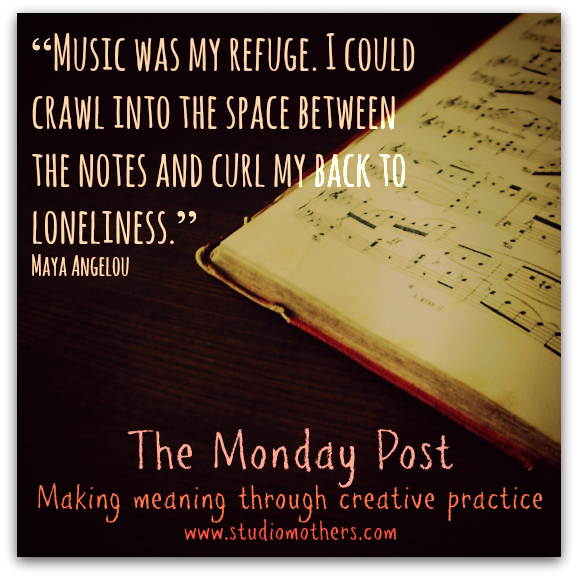
Maya Angelou quote

If you aren’t doing your creative work as often as you’d like, recommit to a regular creativity practice. Regularity — a daily practice, if possible — is one of the best ways to stay in touch with how you make meaning. Can a regular creative practice be part of your intentions for 2013?

What are your plans for creative practice this week? Given the specifics of your schedule, decide on a realistic intention or practice plan — and ink that time in your calendar. The scheduling part is important, because as you know, if you try to “fit it in” around the edges, it generally won’t happen. An intention as simple as “I will write for 20 minutes every morning after breakfast” or “I will sketch a new still life on Wednesday evening” is what it’s all about.

Share your intentions or goals as a comment to this post, and let us know how things went with your creative plans for last week, if you posted to last week’s Monday Post. We use a broad brush in defining creativity, so don’t be shy. We also often include well-being practices that support creativity, such as exercise and journaling.

Putting your intentions on “paper” helps you get clear on what you want to do — and sharing those intentions with this community leverages the motivation of an accountability group. Join us!

:::::::

If you’re an artist or writer with little ones, The Creative Mother’s Guide: Six Creative Practices for the Early Years is the essential survival guide written just for you. Concrete strategies for becoming more creative without adding stress and guilt. Filled with the wisdom of 13 insightful creative mothers; written by a certified creativity coach and mother of five. “Highly recommended.” ~Eric Maisel. 35 pages/$11.98. Available for download here.

Meme of the Week

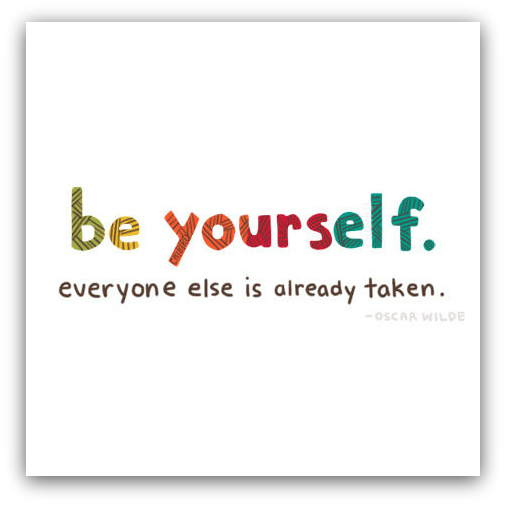
be youself. everyone else is already taken.

Happy Friday.

:::::

The True Genius of Mothers

The piece below originally appeared in this month’s Creative Times newsletter.

By Suzi Banks Baum

frost doodleI strive for One Thing Only. But I was not doing one thing only last week at my 18-year-old’s ski race. I’m not sure exactly what I was doing when I left the sidelines and accepted my son’s invitation to step onto the back of his skis for a “little ride” down the mountain. He’d just fallen during his ski race — not badly, but a fall that disqualified him. I wanted to be near him, just to make sure he was okay. That was one thing.

The other thing, the idea of a “little ride,” is what gave me a black eye.

That ride on the slick skis of a slalom racer landed me face-first in the icy snow on the downward slope of a small mountain in the frigid evening air, where I never would have ended up if I’d listened to my inner guidance and stayed home to make soup, but I did not heed that thought, no, there I was on the slopes to cheer. (Something of the crowd’s response told me that cheering is just not done at races. Maybe that is why my boy fell?)

Well. I yelled anyway. I believe in my kids knowing they are being seen.

But I did not yell when I fell.

8452838039_db8de2fe8b_mNo, headfirst in the snow, then sitting up with my cold hand pressed to my hot cheek, I silently beheld the egg blooming under my skin. Now, doing one simple thing, but holding about 10 other thoughts in my mind. “Is anything broken? Why did I listen to my kid? Argh, he makes me nuts! Oh, but he fell too. How is he? Hurt? Embarrassed? Do I need an EMT? What about dinner now? I hate dinner! Will I be able to teach this weekend?”

This morning, I read: “True genius is the ability to hold two contradictory thoughts simultaneously without losing your mind.” Charles Baudelaire wrote that. I’d say he was describing the genius of mother-thoughts entirely.

Some days, I ace thinking one thing at a time. Quiet prevails, the phone is ignored, the Wi-Fi is off, and the laundry dries peacefully on the line, no one needs me, no one is hollering my name from another part of the house, no meal awaits creation, no ski race demands my yelling, just me. Here. With you, the little black tendrils that I coax into letters that make these words that give form to my thoughts.

It is a simple as that.

8348911559_0c808ed79c_mWhen I have been multi-tasking too much, I doodle to settle myself. Then, with my concentration engaged, I can write.

One little black thread of a line leads to another.

And of those thoughts, those layers and layers of mother-thoughts, I work around them, never truly shedding them, but today, I can see they are part of my genius.

Merci, Monsieur Baudelaire. Now please pass the ice pack.

:::::

suzi_banks_baumGrowing up in the Upper Peninsula of Michigan made author, blogger, artist, and fulltime mom Suzi Banks Baum a lover of winter. Not afraid of the blank page, blank canvas, or wide expanse of snow, she makes patterns and trails, worlds and visions with her work. Suzi is about to launch an anthology of writings by women on mothering and creativity entitled An Anthology of Babes: Thirty-six Women Give Motherhood a Voice. The book will be sold at her March 1, 2013 event for the Berkshire Festival of Women Writers called Out of the Mouths of Babes: An Evening of Mothers Reading to Others. You can find Suzi at  Laundry Line Divine or at the 10X10on10 Arts Festival in Pittsfield, MA, this month or better yet, out ice-skating.

Your Creative Intentions: The Monday Post ~ February 18, 2013

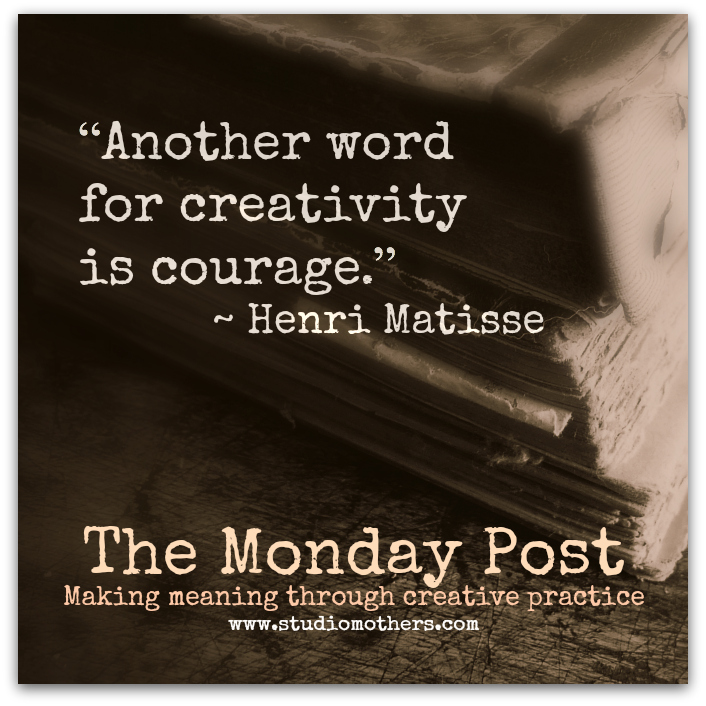
Monday Post Henri Matisse quote

If you aren’t doing your creative work as often as you’d like, recommit to a regular creativity practice. Regularity — a daily practice, if possible — is one of the best ways to stay in touch with how you make meaning. Can a regular creative practice be part of your intentions for 2013?

What are your plans for creative practice this week? Given the specifics of your schedule, decide on a realistic intention or practice plan — and ink that time in your calendar. The scheduling part is important, because as you know, if you try to “fit it in” around the edges, it generally won’t happen. An intention as simple as “I will write for 20 minutes every morning after breakfast” or “I will sketch a new still life on Wednesday evening” is what it’s all about.

Share your intentions or goals as a comment to this post, and let us know how things went with your creative plans for last week, if you posted to last week’s Monday Post. We use a broad brush in defining creativity, so don’t be shy. We also often include well-being practices that support creativity, such as exercise and journaling.

Putting your intentions on “paper” helps you get clear on what you want to do — and sharing those intentions with this community leverages the motivation of an accountability group. Join us!

:::::::

If you’re an artist or writer with little ones, The Creative Mother’s Guide: Six Creative Practices for the Early Years is the essential survival guide written just for you. Concrete strategies for becoming more creative without adding stress and guilt. Filled with the wisdom of 13 insightful creative mothers; written by a certified creativity coach and mother of five. “Highly recommended.” ~Eric Maisel. 35 pages/$11.98. Available for download here.