Skip to content

How to Do One Thing this Summer

kids' summer schedule planningIn the Northern Hemisphere, it’s warm and the days are long. The kids are out of school. We hope for leisurely days, hours spent outside, lots of reading, cooking on the grill, and hopefully a bit of actual time off — whether that means a staycation, an exotic getaway, or something in between.

Unfortunately, we still have to get crap done maintain some level of productivity.

If, like me, you work from a home office and have cobbled together a variety of childcare options for the next two months, your schedule may be turned on its head. Those with fulltime jobs outside the house must also navigate seasonal schedule changes. With the load of juggling that summer requires, it can seem near impossible to get through even a few things on your daily task list — despite the extra hours of sunshine. On top of your workload, you still have to maintain a vague semblance of functionality on the home front, keep everyone fed and clothed, and serve as cruise director. So we shoehorn the necessities into as few hours as possible in order to get the kids to the pool or go for a hike or spend some time working in the garden.

As you already know — all too well — when there’s a time crunch, the first thing to go is the stuff that matters only to you. Creative work, personal practices, personal care. The things you care about but that no one else particularly notices. There may be an indirect effect, as in, if you’re doing your creative work and meditating every morning you’re nicer to be around (as opposed to when you skip those things for too many days in a row and you morph into a raving lunatic get a little grouchy). But on the whole, these are the things that directly impact only one person when ignored: you.

morning freedom reminderDecide on One Thing that you’re going to focus on during the next two months. This could be a creative practice, such as writing or drawing for 30 minutes every day, or it could be that you’d like to complete a specific project during this timeframe. You might decide that your One Thing is a midsummer artist’s date; four hours on a Saturday afternoon to visit a museum by yourself, browse in a bookstore, or sit outside with an iced soy latte while you journal. Maybe you want to save one evening every week to enjoy that pile of magazines that never get read. Or you might be pulled to the self-care category: Perhaps you’d like to do yoga at home every morning. Whatever it is, pick One Thing that is important only to you, and claim it.

Can you pick more than One Thing? Of course. But One Thing, if chosen wisely, is accessible and doesn’t spawn overwhelm. Set yourself up for success. Make your One Thing something that is exciting and doable; realistic while pushing yourself just enough to feel your muscles stretching and strengthening. (I don’t recommend committing to write an 80K-word novel this summer, for example, unless your kids go to overnight camp for two months and you’re barring the door at a remote cabin. You get the idea.)

What’s my One Thing? At present my creative practice is rock solid (I haven’t missed my 500-word daily quota in more than six months), so I chose something that supports “focus,” one of my three words for 2013. I decided to enjoy my mornings and evenings without the distraction of social media and e-mail. This means no facebook, twitter, instagram, pinterest, or e-mail before 9:00 am or after 7:00 pm. Not on my iPhone, not on my laptop. When I adhere to this boundary, I avoid getting sucked into the vortex and have more time for things that matter. Social media is a amazing tool for connectivity — and I manage social media accounts for several clients, so actually get paid to be on facebook, ha ha — but on the personal front, idle social media usage that too easily too easily turns into an hour of wasted time. So the ban is essential — framed as something positive (which it is) as opposed to deprivation.

evening freedom reminderThe three steps to ensure that you do your One Thing:

  1. Put a stake in the ground: Write your One Thing in your calendar or daily schedule, as appropriate. If you have a project goal, decide how much time you’re going to devote to this work on a daily or weekly basis and add it to your calendar as you would an appointment.
  2. Create accountability: Since you already know how easy it is to skip out on what matters only to you, accountability is essential. Share your One Thing here as a comment. Then come back at the end of August and tell us how it went.
  3. Establish reminders: Write down your One Thing on sticky notes and place them in obvious locations around your house. Use reminders on your phone. Or use an app just for this purpose. I’m using the app Intention, which allows you to create visual reminders to keep you on track (the images that accompany this post are from the app; available for iPhone and iPad). The combination of intention with positive visuals is powerful. (For the record, I’m not a paid spokesperson.)

So pick your One Thing, follow the three steps, and enjoy the next two months.

I look forward to seeing what you chose for your One Thing, and supporting you in your success!

:::::

Your Creative Intentions: The Monday Post ~ July 1, 2013

Albert Einstein

Commit to a regular creativity practice. Regularity — a daily practice, if possible — is key to staying in touch with how you make meaning.

What are your plans for creative practice this week? Given the specifics of your schedule, decide on a realistic intention or practice plan — and ink that time in your calendar. The scheduling part is important, because as you know, if you try to “fit it in” around the edges, it generally won’t happen. An intention as simple as “I will write for 20 minutes every morning after breakfast” or “I will sketch a new still life on Wednesday evening” is what it’s all about. If appropriate, use time estimates to containerize your task, which can make a daunting project feel more accessible.

Share your intentions or goals as a comment to this post, and let us know how things went with your creative plans for last week, if you posted to last week’s Monday Post. We use a broad brush in defining creativity, so don’t be shy. We also often include well-being practices that support creativity, such as exercise and journaling.

Putting your intentions on “paper” helps you get clear on what you want to do — and sharing those intentions with this community leverages the motivation of an accountability group. Join us!

:::::::

If you’re an artist or writer with little ones, The Creative Mother’s Guide: Six Creative Practices for the Early Years is the essential survival guide written just for you. Concrete strategies for becoming more creative without adding stress and guilt. Filled with the wisdom of 13 insightful creative mothers; written by a certified creativity coach and mother of five. “Highly recommended.” ~Eric Maisel. 35 pages/$11.98. Available for download here.

Meme of the Week

imagination

Happy Friday.

:::::

Suzi: What Was I Thinking? The Birth of an Anthology of Motherhood

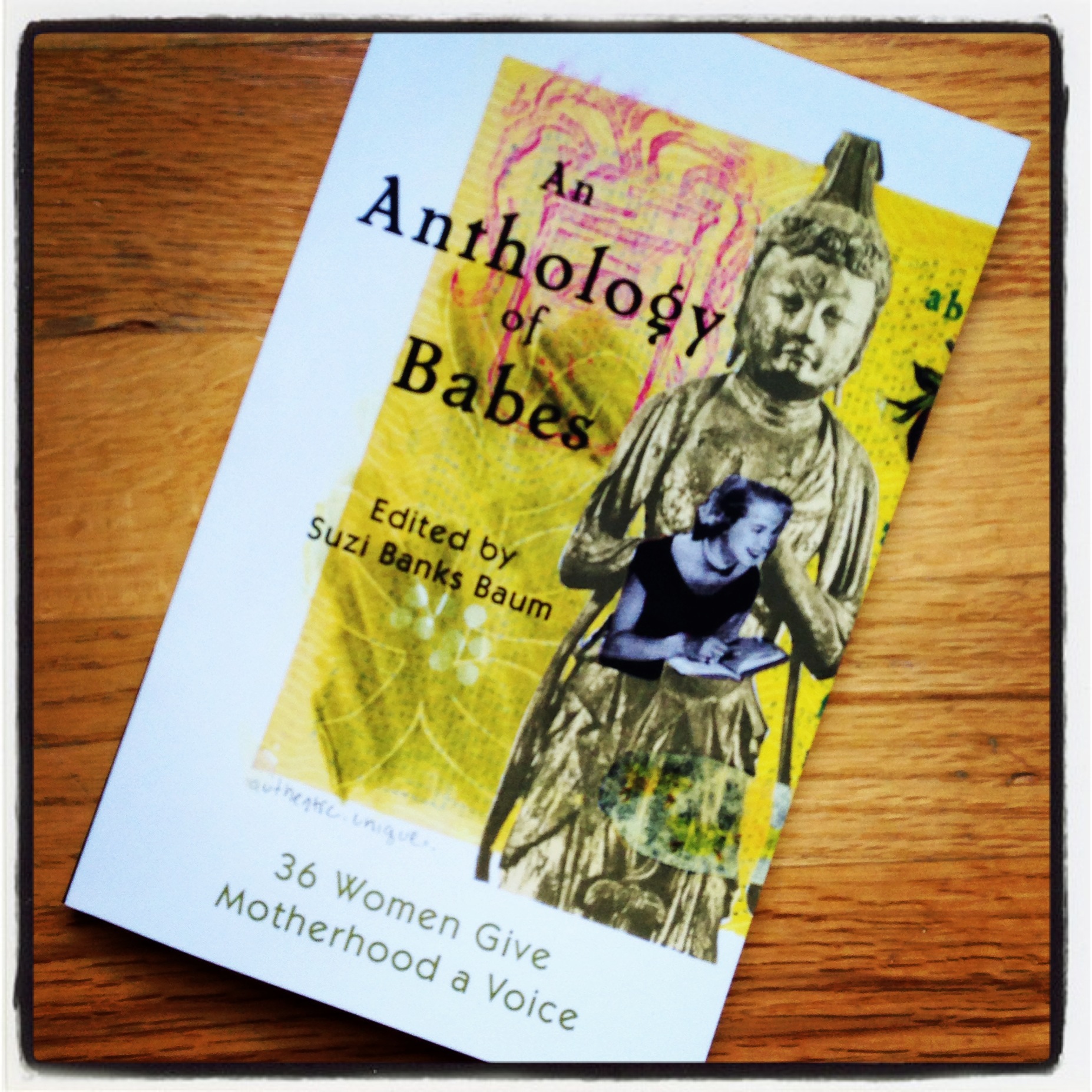
I’m thrilled and honored to be the first blog to publish this piece! Suzi Banks Baum, writer, artist, and blogger, recently released a book that belongs in the hands of every creative mother: An Anthology of Babes: 36 Women Give Motherhood a Voice. (Suzi’s wisdom also appears in my e-book The Creative Mother’s Guide: Six Creative Practices for the Early Years, so you may have already met her in those pages — or here at Studio Mothers.) In the piece below, Suzi shares the journey that resulted in her book, addressing the doubts, obstacles, and beauty that accompany the creation of anything worthwhile. Savor Suzi’s words, and please consider supporting her work by acquiring a copy of the book.


An Anthology of Babes

Vulnerability is the birthplace of love, belonging, joy, courage, empathy and creativity. It is the source of hope, empathy, accountability, and authenticity. To put our art, our writing, our photographs, our ideas out into the world with no assurance of acceptance or appreciation — that’s also vulnerability.”
—Brené Brown, Daring Greatly

Vulnerable is exactly how I felt when I invited 35 women to jump into the freezing-cold waters of public opinion and share themselves and their perspectives on living lives pumped full with creativity in Anthology of Babes: 36 Women Give Motherhood a Voice. At that point I knew wanted to put my words and images out in to the world, but publishing a book? Being that public terrified me. So, I figured I’d rather have some co-conspirators.

Years before, I had started writing my own stories about how I spent my days as a mother, what caught my attention internally, and how I righted the boat of my serenity over and over again with small creative acts. I wrote never thinking anyone but a few close friends would read these stories. I was just writing. But in April 2009, I dared to title the writing Laundry Line Divine: A Wild Soul Book for Mothers. At a writing conference, I spoke to a literary agent about the work, wondering if there was interest in the world beyond my sphere for a book about how I raised myself as I raised my children. (Please note elevator pitch in the last sentence. “Can I describe my book in 10 words or fewer?”)

Standing before a literary agent is much like any other moment in life when you are Dorothy at the feet of the Wizard. “Is there anything in your bag for me?” “Could there be another human aside from my best friends who might be interested in my writing?” Standing there, knees clattering (and go ahead, tell me I was supposed to own my brilliance, stand for all mothers, flirt with the agent, shine shine shine), palms slick with sweat, lips dry, eyes blurring, I learned I was to go home and build my author platform. “Come back when you’ve built that,” said the agent.

An author platform is not something you need wood for. For an author platform you need a website and something to say. Then, just like the newsboys out on the corner hawking the latest headlines, hopefully someone will stop and read your words. Perhaps they will follow your blog and become part of what I have come to understand is my “tribe.”

With help, I built the website. I studied social media, which until that point I barely knew. Read more

Your Creative Intentions: The Monday Post ~ June 24, 2013

Frida Kahlo quote

Commit, or recommit, to a regular creativity practice. Regularity — a daily practice, if possible — is key to staying in touch with how you make meaning.

What are your plans for creative practice this week? Given the specifics of your schedule, decide on a realistic intention or practice plan — and ink that time in your calendar. The scheduling part is important, because as you know, if you try to “fit it in” around the edges, it generally won’t happen. An intention as simple as “I will write for 20 minutes every morning after breakfast” or “I will sketch a new still life on Wednesday evening” is what it’s all about. If appropriate, use time estimates to containerize your task, which can make a daunting project feel more accessible.

Share your intentions or goals as a comment to this post, and let us know how things went with your creative plans for last week, if you posted to last week’s Monday Post. We use a broad brush in defining creativity, so don’t be shy. We also often include well-being practices that support creativity, such as exercise and journaling.

Putting your intentions on “paper” helps you get clear on what you want to do — and sharing those intentions with this community leverages the motivation of an accountability group. Join us!

:::::::

If you’re an artist or writer with little ones, The Creative Mother’s Guide: Six Creative Practices for the Early Years is the essential survival guide written just for you. Concrete strategies for becoming more creative without adding stress and guilt. Filled with the wisdom of 13 insightful creative mothers; written by a certified creativity coach and mother of five. “Highly recommended.” ~Eric Maisel. 35 pages/$11.98. Available for download here.

Meme of the Week

Osho_quote_meme

Happy Friday.

:::::

Your Creative Intentions: The Monday Post ~ June 17, 2013

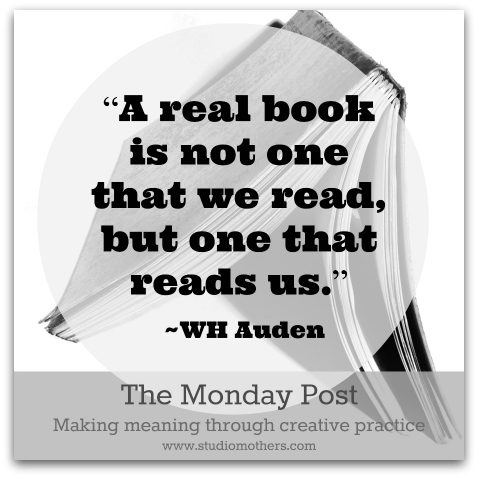
WH Auden quote

Commit, or recommit, to a regular creativity practice. Regularity — a daily practice, if possible — is key to staying in touch with how you make meaning.

What are your plans for creative practice this week? Given the specifics of your schedule, decide on a realistic intention or practice plan — and ink that time in your calendar. The scheduling part is important, because as you know, if you try to “fit it in” around the edges, it generally won’t happen. An intention as simple as “I will write for 20 minutes every morning after breakfast” or “I will sketch a new still life on Wednesday evening” is what it’s all about. If appropriate, use time estimates to containerize your task, which can make a daunting project feel more accessible.

Share your intentions or goals as a comment to this post, and let us know how things went with your creative plans for last week, if you posted to last week’s Monday Post. We use a broad brush in defining creativity, so don’t be shy. We also often include well-being practices that support creativity, such as exercise and journaling.

Putting your intentions on “paper” helps you get clear on what you want to do — and sharing those intentions with this community leverages the motivation of an accountability group. Join us!

:::::::

If you’re an artist or writer with little ones, The Creative Mother’s Guide: Six Creative Practices for the Early Years is the essential survival guide written just for you. Concrete strategies for becoming more creative without adding stress and guilt. Filled with the wisdom of 13 insightful creative mothers; written by a certified creativity coach and mother of five. “Highly recommended.” ~Eric Maisel. 35 pages/$11.98. Available for download here.

Meme of the Week

Nail Gaiman

Happy Friday.

:::::

Your Creative Intentions: The Monday Post ~ June 10, 2013

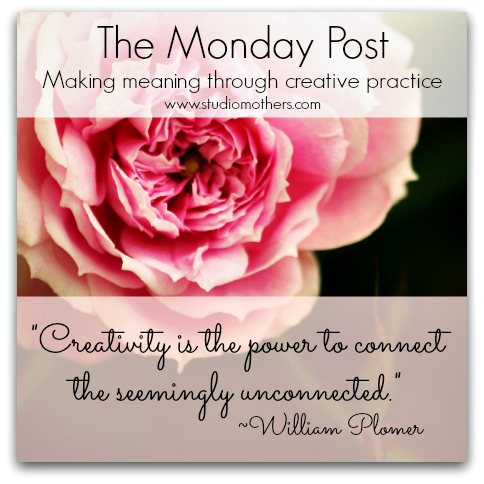
William Plover quote

Commit, or recommit, to a regular creativity practice. Regularity — a daily practice, if possible — is key to staying in touch with how you make meaning.

What are your plans for creative practice this week? Given the specifics of your schedule, decide on a realistic intention or practice plan — and ink that time in your calendar. The scheduling part is important, because as you know, if you try to “fit it in” around the edges, it generally won’t happen. An intention as simple as “I will write for 20 minutes every morning after breakfast” or “I will sketch a new still life on Wednesday evening” is what it’s all about. If appropriate, use time estimates to containerize your task, which can make a daunting project feel more accessible.

Share your intentions or goals as a comment to this post, and let us know how things went with your creative plans for last week, if you posted to last week’s Monday Post. We use a broad brush in defining creativity, so don’t be shy. We also often include well-being practices that support creativity, such as exercise and journaling.

Putting your intentions on “paper” helps you get clear on what you want to do — and sharing those intentions with this community leverages the motivation of an accountability group. Join us!

:::::::

If you’re an artist or writer with little ones, The Creative Mother’s Guide: Six Creative Practices for the Early Years is the essential survival guide written just for you. Concrete strategies for becoming more creative without adding stress and guilt. Filled with the wisdom of 13 insightful creative mothers; written by a certified creativity coach and mother of five. “Highly recommended.” ~Eric Maisel. 35 pages/$11.98. Available for download here.

Meme of the Week

Steal Like an Artist

Happy Friday.

:::::

Your Creative Intentions: The Monday Post ~ June 3, 2013

Miles Davis quote

Commit, or recommit, to a regular creativity practice. Regularity — a daily practice, if possible — is key to staying in touch with how you make meaning.

What are your plans for creative practice this week? Given the specifics of your schedule, decide on a realistic intention or practice plan — and ink that time in your calendar. The scheduling part is important, because as you know, if you try to “fit it in” around the edges, it generally won’t happen. An intention as simple as “I will write for 20 minutes every morning after breakfast” or “I will sketch a new still life on Wednesday evening” is what it’s all about. If appropriate, use time estimates to containerize your task, which can make a daunting project feel more accessible.

Share your intentions or goals as a comment to this post, and let us know how things went with your creative plans for last week, if you posted to last week’s Monday Post. We use a broad brush in defining creativity, so don’t be shy. We also often include well-being practices that support creativity, such as exercise and journaling.

Putting your intentions on “paper” helps you get clear on what you want to do — and sharing those intentions with this community leverages the motivation of an accountability group. Join us!

:::::::

If you’re an artist or writer with little ones, The Creative Mother’s Guide: Six Creative Practices for the Early Years is the essential survival guide written just for you. Concrete strategies for becoming more creative without adding stress and guilt. Filled with the wisdom of 13 insightful creative mothers; written by a certified creativity coach and mother of five. “Highly recommended.” ~Eric Maisel. 35 pages/$11.98. Available for download here.

Meme of the Week

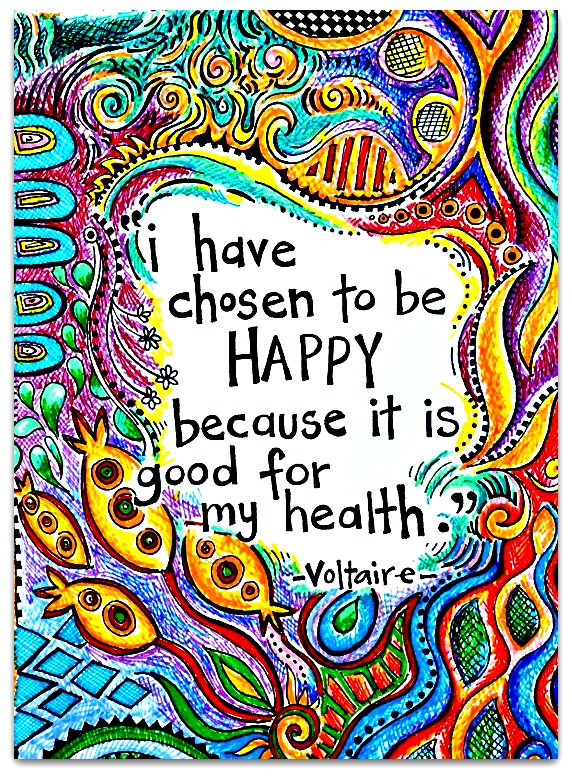
Voltaire quote

Happy Friday.

:::::