Meme of the Week
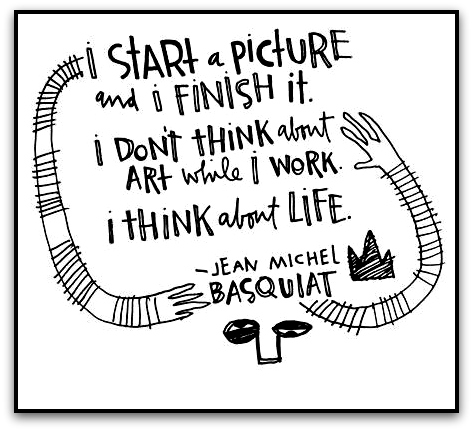
Happy Friday.
:::::
Sep 20
Sep 18
If you follow our Monday Post comments, you know that I’ve been out of my daily writing groove. I’ve even had the itch to do some drawing, but recently have been making the choice to focus on editorial client work. The work is coming out my ears and as my husband lost his job last week, it’s hard for me to not fill every waking moment with billable hours. (Totally unsustainable and ill-advised, natch.)
But then Liam, my kindergartener, came home with an assignment — an assignment for me. His teacher is assembling an ABC book created by class parents. She needed a few parents to take an extra letter, so what the hell, I took two. First I signed up for N, because I immediately thought of “nest.” I love making nests, whether two- or three-dimensional. Then I went ahead and signed up for A, telling myself that I’d have to come up with something slightly less obvious than “apple.” I should also confess that I LOVE Liam’s teacher, and wanted to impress her didn’t want to embarrass myself with a sub-par effort.
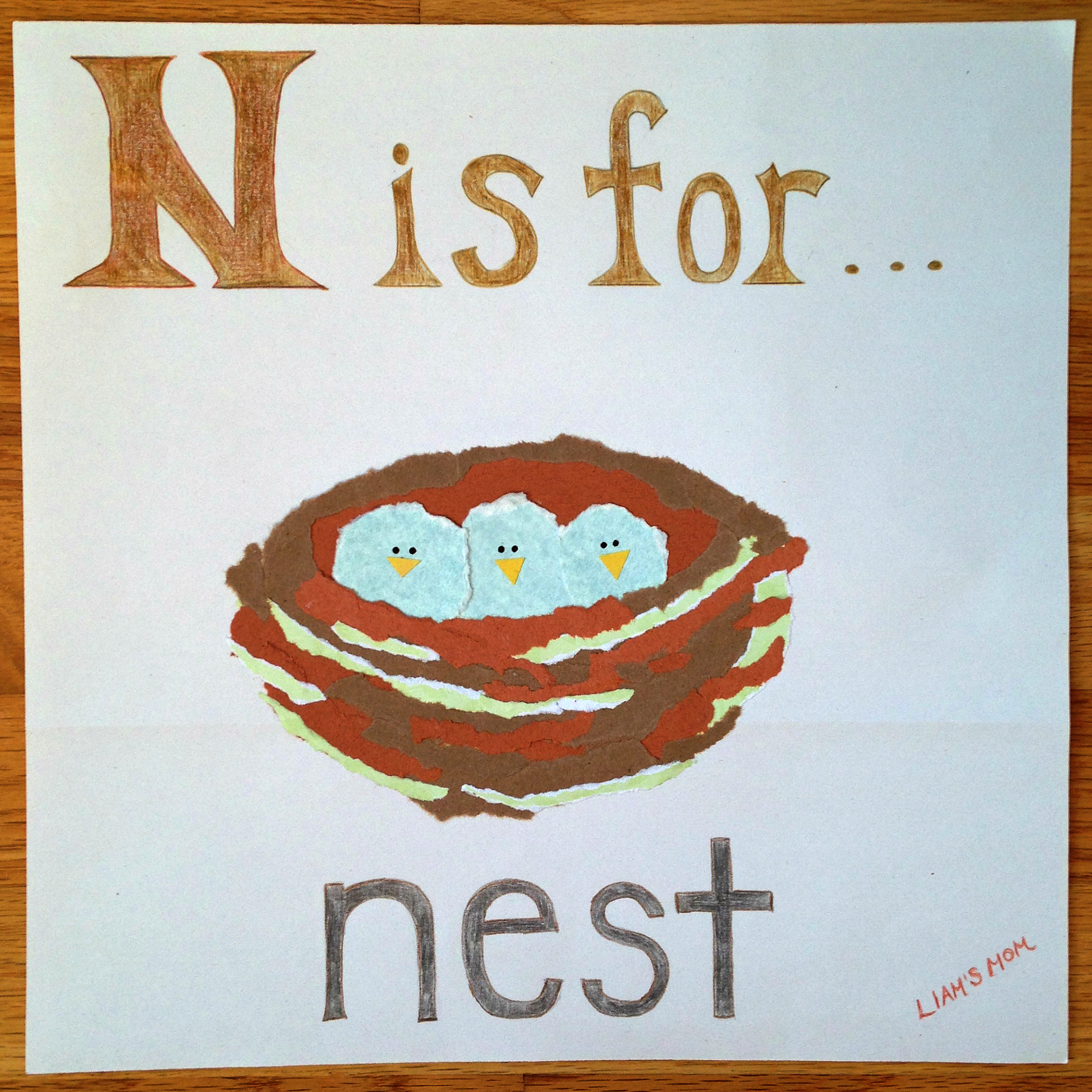 So last night after dinner, I left my laptop in my office and got started. Liam supervised. I told myself not to get too carried away: “Don’t even think about looking at typography,” I told myself. “Just freehand it.” After thinking through my basic approach, I improvised.
Of course, I ended up completely immersed. It’s just so darned fun to play with colored pencils and paper for a couple of hours. Does it matter that my lettering looks totally amateur? Or that the colors on the A sheet don’t work that well? No. Doesn’t matter at all. I had a great time and Liam was pleased.
 In “N is for nest,” I really wanted the baby birds to look cute. Please tell me I succeeded! If I’d let myself have more time, I would have tucked the nest into a the crook of a tree branch, but it is what it is.
The photograph of “A is for autumn” didn’t come out that well (the colors are actually more red than pink), but you get the idea.
The moral of this story is: When a creative bone comes your way, grab it and run. Then get back to work.
Sep 16
Commit to a regular creativity practice. Regularity — a daily practice, if possible — is key to staying in touch with how you make meaning.
What are your plans for creative practice this week? Given the specifics of your schedule, decide on a realistic intention or practice plan — and ink that time in your calendar. The scheduling part is important, because as you know, if you try to “fit it in” around the edges, it generally won’t happen. An intention as simple as “I will write for 20 minutes every morning after breakfast” or “I will sketch a new still life on Wednesday evening” is what it’s all about. If appropriate, use time estimates to containerize your task, which can make a daunting project feel more accessible.
Share your intentions or goals as a comment to this post, and let us know how things went with your creative plans for last week, if you posted to last week’s Monday Post. We use a broad brush in defining creativity, so don’t be shy. We also often include well-being practices that support creativity, such as exercise and journaling.
Putting your intentions on “paper” helps you get clear on what you want to do — and sharing those intentions with this community leverages the motivation of an accountability group. Join us!
:::::::
 If you’re an artist or writer with little ones, The Creative Mother’s Guide: Six Creative Practices for the Early Years is the essential survival guide written just for you. Concrete strategies for becoming more creative without adding stress and guilt. Filled with the wisdom of 13 insightful creative mothers; written by a certified creativity coach and mother of five. “Highly recommended.” ~Eric Maisel. 35 pages/$11.98. Available for download here.
Sep 13
Sep 9

Commit to a regular creativity practice. Regularity — a daily practice, if possible — is key to staying in touch with how you make meaning.
What are your plans for creative practice this week? Given the specifics of your schedule, decide on a realistic intention or practice plan — and ink that time in your calendar. The scheduling part is important, because as you know, if you try to “fit it in” around the edges, it generally won’t happen. An intention as simple as “I will write for 20 minutes every morning after breakfast” or “I will sketch a new still life on Wednesday evening” is what it’s all about. If appropriate, use time estimates to containerize your task, which can make a daunting project feel more accessible.
Share your intentions or goals as a comment to this post, and let us know how things went with your creative plans for last week, if you posted to last week’s Monday Post. We use a broad brush in defining creativity, so don’t be shy. We also often include well-being practices that support creativity, such as exercise and journaling.
Putting your intentions on “paper” helps you get clear on what you want to do — and sharing those intentions with this community leverages the motivation of an accountability group. Join us!
:::::::
If you’re an artist or writer with little ones, The Creative Mother’s Guide: Six Creative Practices for the Early Years is the essential survival guide written just for you. Concrete strategies for becoming more creative without adding stress and guilt. Filled with the wisdom of 13 insightful creative mothers; written by a certified creativity coach and mother of five. “Highly recommended.” ~Eric Maisel. 35 pages/$11.98. Available for download here.
Sep 6
Sep 2
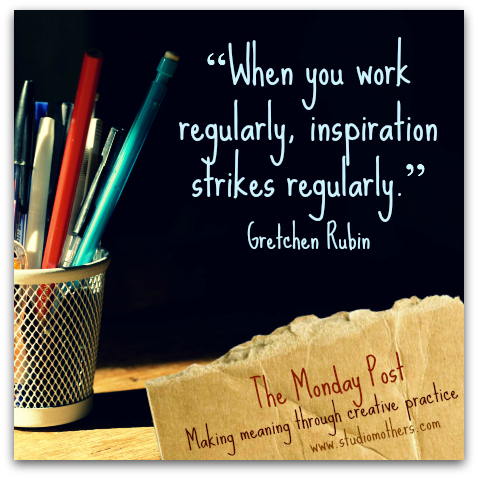
Commit to a regular creativity practice. Regularity — a daily practice, if possible — is key to staying in touch with how you make meaning.
What are your plans for creative practice this week? Given the specifics of your schedule, decide on a realistic intention or practice plan — and ink that time in your calendar. The scheduling part is important, because as you know, if you try to “fit it in” around the edges, it generally won’t happen. An intention as simple as “I will write for 20 minutes every morning after breakfast” or “I will sketch a new still life on Wednesday evening” is what it’s all about. If appropriate, use time estimates to containerize your task, which can make a daunting project feel more accessible.
Share your intentions or goals as a comment to this post, and let us know how things went with your creative plans for last week, if you posted to last week’s Monday Post. We use a broad brush in defining creativity, so don’t be shy. We also often include well-being practices that support creativity, such as exercise and journaling.
Putting your intentions on “paper” helps you get clear on what you want to do — and sharing those intentions with this community leverages the motivation of an accountability group. Join us!
:::::::
If you’re an artist or writer with little ones, The Creative Mother’s Guide: Six Creative Practices for the Early Years is the essential survival guide written just for you. Concrete strategies for becoming more creative without adding stress and guilt. Filled with the wisdom of 13 insightful creative mothers; written by a certified creativity coach and mother of five. “Highly recommended.” ~Eric Maisel. 35 pages/$11.98. Available for download here.
Aug 30
Aug 26
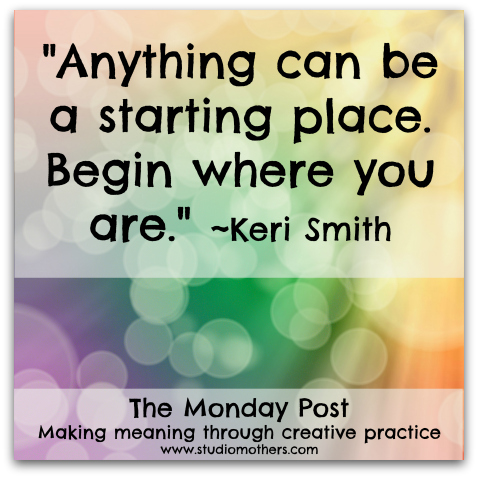
Commit to a regular creativity practice. Regularity — a daily practice, if possible — is key to staying in touch with how you make meaning.
What are your plans for creative practice this week? Given the specifics of your schedule, decide on a realistic intention or practice plan — and ink that time in your calendar. The scheduling part is important, because as you know, if you try to “fit it in” around the edges, it generally won’t happen. An intention as simple as “I will write for 20 minutes every morning after breakfast” or “I will sketch a new still life on Wednesday evening” is what it’s all about. If appropriate, use time estimates to containerize your task, which can make a daunting project feel more accessible.
Share your intentions or goals as a comment to this post, and let us know how things went with your creative plans for last week, if you posted to last week’s Monday Post. We use a broad brush in defining creativity, so don’t be shy. We also often include well-being practices that support creativity, such as exercise and journaling.
Putting your intentions on “paper” helps you get clear on what you want to do — and sharing those intentions with this community leverages the motivation of an accountability group. Join us!
:::::::
If you’re an artist or writer with little ones, The Creative Mother’s Guide: Six Creative Practices for the Early Years is the essential survival guide written just for you. Concrete strategies for becoming more creative without adding stress and guilt. Filled with the wisdom of 13 insightful creative mothers; written by a certified creativity coach and mother of five. “Highly recommended.” ~Eric Maisel. 35 pages/$11.98. Available for download here.
Aug 23
Aug 19

Commit to a regular creativity practice. Regularity — a daily practice, if possible — is key to staying in touch with how you make meaning.
What are your plans for creative practice this week? Given the specifics of your schedule, decide on a realistic intention or practice plan — and ink that time in your calendar. The scheduling part is important, because as you know, if you try to “fit it in” around the edges, it generally won’t happen. An intention as simple as “I will write for 20 minutes every morning after breakfast” or “I will sketch a new still life on Wednesday evening” is what it’s all about. If appropriate, use time estimates to containerize your task, which can make a daunting project feel more accessible.
Share your intentions or goals as a comment to this post, and let us know how things went with your creative plans for last week, if you posted to last week’s Monday Post. We use a broad brush in defining creativity, so don’t be shy. We also often include well-being practices that support creativity, such as exercise and journaling.
Putting your intentions on “paper” helps you get clear on what you want to do — and sharing those intentions with this community leverages the motivation of an accountability group. Join us!
:::::::
If you’re an artist or writer with little ones, The Creative Mother’s Guide: Six Creative Practices for the Early Years is the essential survival guide written just for you. Concrete strategies for becoming more creative without adding stress and guilt. Filled with the wisdom of 13 insightful creative mothers; written by a certified creativity coach and mother of five. “Highly recommended.” ~Eric Maisel. 35 pages/$11.98. Available for download here.
Aug 16










 Studio Mothers: Life & Art