Skip to content

Posts from the ‘Miranda’ Category

Miranda: The onus of happiness

I just stopped crying. The pile of wet tissues is still right here beside me. In part I’m hormonal, on account of having a baby two weeks ago, but the main reason for weeping is that one of my husband’s remote employees just lost his 3-month-old daughter. Apparently she got tangled up in her blankets during the night, and when her mother checked on her in the morning, she was dead.

We can all imagine what this family is going through, while at the same time we have no real understanding of what that bottomless grief really feels like (unless we’ve been there ourselves, which I have not). I hold my own infant and can’t help but delve into the pain that this family is experiencing.

Such horrific loss finds unhappy company in a larger context, even though it’s overwhelming to extrapolate this pain on a global level. There is so much grief and tragedy around us, every day, parents losing children, children losing parents. The astronomic death tolls in China and Myanmar are growing exponentially. Thousands suffer and die in Iraq–on the battle field and beyond. Our local and national news are filled with grisly tales of the awful things that people do to each other.

The enormity of pain around us is enough to make one shut down, which is of course what many people do. (As a kid, I refused to read books that I knew contained a tragedy or unhappy ending; I stayed away from Where the Red Fern Grows and at all costs avoided watching Bambi.) For those who manage to stay engaged, what kind of change can one person accomplish, after you’ve written out all the checks you can write, signed all the petitions that matter to you, held signs at the side of the road? How can we who are fortunate reconcile the trivialities of our own lives against others’ desperate realities? Sit around watching TV and gloss over the pain of parents in China who lost their governmentally mandated only child?

I recall that Christa once explained how writing horror fiction is one way that she copes with demons, and I imagine that applies to not just the demons in her mind, but the real demons around us. (Correct me on this point as needed, Christa.) I think this kind of therapy-through-art (even if it’s subconscious) is important, but I’m not sure what it looks like for me yet. I’m not brave enough to write about the things that most disturb me (kids in pain or parents losing children, for example); it hurts too much.

While I can’t wrap my arms around a starving, terrified orphan in Myanmar and provide her with food and shelter, perhaps my obligation is to wrap my arms around my own children and love them as well as I possibly can–and then some. Push beyond my previous standards and comfort zone. The fact that my life is not touched by tragedy means that I need to step up and make the absolute most of every moment. Of course, tragedy will likely come my way one day too–it seems to be inevitable–but while I have it so “good,” I have the urge to make up for the “bad” in the lives of others through my own mindful living, like some kind of karmic carbon-credit system. Is this ridiculous?

Maybe this means being the best mother I can be, the best wife, the best artist. Not “best” by some external measure, but best in terms of what I know to be true–following the inner voice that really does have all the answers if I shut up enough to hear it. How can I whine about not having enough writing time in the face of a family who just lost a child? It’s nonsense. There is time. Write. Create something meaningful that may heal someone else’s heart, even just a little bit. Understand creativity at a different level. Share the burden of others’ pain by feeling it and turning it into something good, something mindful, something full of joy. Something that matters.

Miranda: That finishing touch

As mentioned in an earlier post, I subscribe to the weekly newsletter of Canadian painter Robert Genn. While Genn writes about painting, his thoughts usually apply to any creative pursuit, including writing. This week’s newsletter is about art that is “overworked”–which relates to how to decide when something is “finished.” Genn’s newsletter is reprinted here in full, by permission.

Yesterday, Rich Woy of Ocala, Florida asked, “How do you know when a painting is overworked? Are there boundaries or clues? Is this judgment left to the artist or the critic?”

Thanks, Rich. Good question. Funnily, at dinner last night a subscriber happened to mention that I habitually overworked the word “overworked.” I had to explain myself.

For sure, it’s a term among artists. “Too many notes,” said the Emperor-composer Joseph II to Wolfgang Amadeus Mozart. Similar thing comes up in painting. Too many strokes. Having said that, you have to know that tight photo-realism is not necessarily overworked. A close-up look at evolved realism can show understated brushwork and strokes in appropriate places. Overworked mainly applies to expressive, impressionist and broad-treatment works where freshness and surface quality are denied.

Overworking takes place when you lose control. As you fail in facility and freshness, you try to save the day with fiddle and fuss. The passage looks laboured.

Overworking happens when you’re overtired, distracted, suffering from desire deficit, and particularly when you’re not paying enough attention to reference material or personal creative vision. More crudely, it happens when you don’t know what you’re doing. The clue comes when you see you’ve gone too far. Work doesn’t look as good as it might. “A painting,” says Harley Brown, “is always finished before the artist thinks it is.”

While the general public may not be so sensitive to overworking, and sophisticated critics may be looking at other criteria, to the actively creative eye, overworking is easily spotted and often spoils the look of otherwise fine work. Artists have ruses, however. The bad areas can sometimes be obfuscated by nearby passages of bravura or other visual distractions, but smoke and mirrors doesn’t always hide the true measure of the artist. The main antidote is to scrape off and start over.

The overwork boundary often lies in the grey zone between the intuitive mode and controlled rendering. The fine art is in watching yourself in the act of intuiting. As Ted Smuskiewicz says, “You learn to leave your strokes alone.”

Best regards,

Robert

PS: “Great is the art of beginning, but greater is the art of ending.” (Henry Wadsworth Longfellow)

Esoterica: The most powerful antidote to overworking is a habitual, timely pause. Work periods need to be laced with both brief and long ones. Lean back, stand back, walk around, move the work to another easel. In my much-celebrated case of Attention Deficit Disorder, long pauses are difficult, so I work on more than one at a time. As Quebec plein air painter Sylvio Gagnon says, “The best way to finish a painting is to start a new one.” In any case, you need to neutralize indecision. “When you’ve just done it, you’re not sure. But when you’ve sat with it for a couple of hours and you don’t want to do anything more to it, that’s a great feeling.” (Damien Hirst)

Online Inspiration: Creative Every Day

Periodically, we post reviews of online sources of inspiration: websites and blogs that encourage creativity and connect creative souls. If you’d like to suggest a favorite site for a future profile, please e-mail your pick to creativereality@live.com.

Creative Every DaySome of you may have noticed the Creative Every Day icon in our sidebar. This site was created by Leah Piken Kolidas, an artist and blogger. Part of the site is dedicated to the Creative Every Day 2008 challenge, which encourages daily creativity regardless of media or creative outlet.  Leah writes:

“Here are the basics first! Creative Every Day 2008 is a new challenge I’ve started to help infuse my life and lives of others with daily creativity….Creativity is meant in the broadest sense, so it doesn’t have to be something art related. Your creative acts could be in cooking, taking pictures, knitting, doodling, writing, dancing, decorating, or making art in the form of collage, paint, or clay or whatever!”

Every time I visit this site, I am impressed by the wealth of what others are creating. I like Leah’s broad application of creativity, because it helps me to be more mindful of what creativity really means. All of those “other” creative outlets serve to bolster my “real” art, if I let the edges blur together. For me, blending creativity into the mundane parts of domesticity that I can’t escape (cooking, cleaning, driving, etc.) make me feel less like a drone and more like a creative person who lives in the moment, taking in the beauty even if it’s just lying quietly in a bowl of perfect tangerines.

Miranda: Infant versus internet…a losing proposition?

storkAn article in this morning’s Boston Globe has added to my anxiety about managing work, creativity, and a new baby. Last time I had a newborn (three years ago) I didn’t work as much as I do now, and I wasn’t quite as plugged into the internet. Even so, I felt guilty about the amount of time I spent nursing while typing with one hand, eyes glued to my computer screen instead of my beautiful baby.

I tried to tell myself that it’s not much different than staring at the pages of a book, but it is. When I’m reading and my kids talk to me, I hear them. When I’m staring at my laptop–either working, being creative, or goofing off–the machine seems to cast this hypnotic spell that enables me to tune out the rest of the world. Sometimes the kids have to jump up and down to get my attention.

Obviously, I’m not alone. The Globe article, entitled “Connection Failure?” discusses mothers of newborns who are glued to their computers much of the day. The article raises several concerns: time spent on the web is associated with depression; mothers of newborns may be satisfied enough with their virtual connections that they stop trying to get out and establish tangible relationships; and worse, that Mom may end up more connected to her computer than she is to her infant. Pretty much a lose-lose situation for baby:

Mothers have always multitasked, from foraging with babies strapped to their backs to sewing, engaging an older child, or even cooking while nursing. Is Internet use any different?

“If you observe women who, let’s say, knit, their gaze is moving back and forth from the baby to knitting,” Rich said. “The Internet demands a lot more attention. You’re receiving and sometimes sending communication, so there’s sustained concentration away from the baby.”

Habitual Internet use while nursing, especially if the baby’s awake and seeking the mother’s eyes, concerns Rich. “It can be a real rejection for the baby, for whom you fill his or her world,” he said.

Ouch. For me, this time around–with so much on my plate, including a nonfiction book in progress (and four other children), I’m worried. I don’t want my new baby (or any of my kids, for that matter) to think of me as inseparable from my laptop. I know that my goal needs to be boundaries, but I’m not sure what that looks like. I have childcare in my home three days a week for my toddler, but I imagine that for the first four months, my childcare provider won’t be doing much with the baby aside from changing the occasional diaper. This means a lot of nursing during work time/creative time, as in, nursing while staring at the computer.

How have the rest of you navigated this mine field? How bad is the guilt? (Like we need one more thing to feel guilty about.) Does your family threaten to cut the cord on your computer? When you’re sleep deprived and you want to keep up with your blog reading while feeding the baby, what do you do? If holding your baby while typing your novel is the only way to finish your book, do you bite the bullet and hope for the best?

New literary journal: Wild Apples

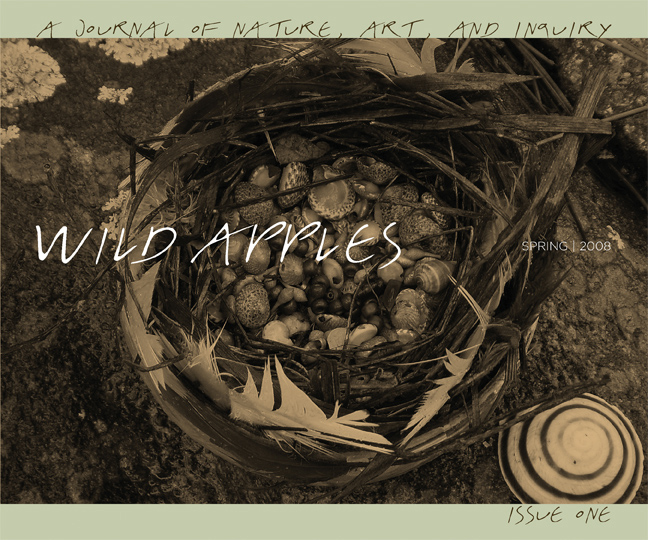
wildapplesWild Apples is a new literary/arts magazine being published by a group of amazing women–two of whom (artist Linda Hoffman and poet Susan Edwards Richmond) I interviewed for my book on creativity and motherhood.

Taking its name and inspiration from Henry David Thoreau’s essay “Wild Apples,” this twice-yearly arts and literary publication combines poetry and prose with the work of visual artists and photographers. Wild Apples brings together the work of artists and writers who are connected by the common threads of care for the environment, engagement in social concerns, and commitment to the arts and the ways they shape our world.

If you’re a writer, poet, artist, or photographer, check out the submission guidelines. Collaborative work is encouraged. More information is available at the Wild Apples website.

Miranda: Want to up the ante with your goals? Put your money where your mouth is

stickk.comYou may have heard of the new website www.stickk.com, which has been making noteworthy media waves. The site’s concept is that users are motivated to stick to their stated goals by putting money–their own money–on their success. While wagering cash is not required, if you set up your “contract”  accordingly, missing your goal can mean that an organization you preselected (one that you find distasteful) gets your cash. The user interface is friendly and appealing. Here’s an excerpt from a Boston Globe piece:

A new website created by two Yale professors asks self-improvers – anyone from smokers who want to quit to runners trying to get in shape – to post their names and promises for everyone to see.

Those who slip get black marks. Some additionally opt to put up cash wagers and agree to forfeit their money to a charity they choose, preferably one they don’t like, if they don’t live up to their pledges.

“What we’re doing is raising the price of bad behavior,” said Dean Karlan, a 38-year-old Yale professor of economics and cofounder of the site.

Since its launch two months ago, stickK.com (stick, as in “carrot and stick,” and K, the legal shorthand for “contract”) has attracted some 13,000 registered users, 5,500 of whom have signed contracts.

Registration is free. Find out more at www.stickk.com.

I’ve already registered, although I’m not ready for a hardcore commitment like this just at the moment. In a few months, however, I’ll definitely be creating a contract or two. Loose baby weight? Check. Finish book? Check. Start training for marathon? Hmmmm……

Miranda: Another perspective on rejection

Those of you who receive the Glimmer Train newsletter may have seen this already, but for everyone else, here’s a reassuring take on rejection from Catherine Ryan Hyde, author of Pay it Forward among other novels. An excerpt from her article:

It might sound like dwelling on the negative if I say I received 122 short story rejections before my first acceptance. But, for writers just starting out, it’s important to hear. If you know I was rejected more than a thousand times while placing 50 stories, it might be hard for you to justify giving up after five printed slips….Just about every one of my rejected stories has gone on to be published. Without further revision. Some were rejected a handful of times. Others garnered over 50 rejections before finding a home.

Hyde offers several reassuring reasons for why submissions may be rejected. Her full article (it’s short) is online at Glimmer Train.

What’s your own personal quota on submitting before you “shelve” a piece? Five, ten, twenty–no limit? Personally, if a short story I wrote isn’t accepted or doesn’t place in a contest, I look at it again, revise, and send it on out. I like the feeling of having stories in the queue somewhere–sure, the chances of publication or winning are usually small, but it’s a numbers game. You certainly can’t sell or win if you’re not submitting. If you believe in what you wrote, keep it out there.

Miranda: What to paint (or write or make) next

paintbrushesI subscribe to the weekly newsletter of Canadian painter Robert Genn. While Genn writes about painting, I often find that his thoughts apply to any creative pursuit, including writing. This week’s newsletter spoke to the dilemma of deciding which project to work on next–something that Christa recently experienced.

Genn’s newsletter is reprinted here in full, by permission.

Yesterday’s inbox included the short and sweet: ‘I’ve been painting seriously for the last fifteen years, and I now have trouble deciding what to paint. How do I decide?’ The email was signed ‘Diane W. Reitz, BFA.’

Thanks, Diane. Maybe the BFA after your name gives us a clue. Maybe you know too much. But don’t worry, it’s a common problem, BFA or not.

The creative life requires a steady progression of experimentation and discovery. While acquired wisdom is useful, your knowledge must work in tandem with the daily exercise of your curiosity. A life in art is more a working event than the application of prior knowledge. Further, as you paint, you are able to decide what to paint. Paintings come out of themselves.

Prime your pump–your work goes viral.

There’s a pile of tricks you can pull to prime the pump. Go to your earlier inspiration–drawings, reference photos, field notes. Recall the direction this material took you in the past, and then go looking for a new angle. Don’t waste time. Commit yourself to the most humble application of paint. Get it through your system and out onto your reviewing easel. Perhaps reward it with a quick framing. Consider again the possibilities and commit once more, perhaps to a larger size.

Don’t be precious. Try to think like Edison when he was trying different stuff that might do for filaments in light bulbs.

First thing you know you’ll feel refreshed and renewed rather than burdened with making a decision. Further, you will see a need for further refinement. Personal refinement of vision makes creativity worthwhile. What you do may not be unique in the greater world of art, but it’s the sweet ignorance of outcome that drives you on.

When artists see themselves inching forward with minor improvements, they begin a natural flow that becomes unstoppable. I formerly told artists who were unable to decide what to paint that they might not be cut out for the game. Then I realized that our very existence is based on ignorance of where we’re going. What’s important is having the fortitude and patience to dig around and try to find out. Actually, ‘having trouble deciding’ is a good part of the fun. Accept the fun.

Best regards,

Robert

Miranda: Writing between the cracks

I much enjoyed this piece at Literary Mama, written by Lily Dayton. She touches on many of the issues that we’ve discussed during the past few months. Here’s a brief excerpt from the opening:

I write between the cracks of my life, the narrow space I have left between potty training and ballet practice, laundry loads and dinner on the table by six. Because I am a stay-at-home mom, living on my husband’s post-doctoral stipend–which means we live month to month, riding on a wave of debt that always threatens to submerge us–I only have time to write when my children are sleeping or when we (rarely) have enough money to pay someone else for their care. So I write during naptime, after bedtime (eyes burning), occasionally while Savanna and Camille are outside making forts in the twisted cypress limbs (threat of distracted drivers and greasy-haired child molesters never far from my thoughts). But these cracks in the walls of my life, though hair-line, are long and deep. Within them, writing is the seam that holds everything together.

To read the article in its entirety, click here.

Miranda: Celebrate National Poetry Month

borzoiEnjoy reading poetry? Subscribe to a little bit of daily inspiration for the month of April, courtesy of Knopf’s Borzoi Reader:

“Nine years ago we began a Knopf tradition. To celebrate National Poetry Month, we sent a poem a day by e-mail for 30 days to anyone who asked to receive them. Now, with over 25,000 subscribers, we are proud to continue with a whole new series of daily poems. Each weekday, you will receive a poem from some of the best poets in the world including Mark Strand, Sharon Olds, and Laurie Sheck, as well as classics from Langston Hughes, Robert Burns and more.”

To subscribe, visit Knopf’s Poem-a-Day page. (Here’s hoping the editors at Knopf will read the e-mail I just sent them, pointing out that the current year is 2008, not 2007. Oops.) And thanks to Roland for sending me the link!

Miranda: Surf and turf

laptop2I imagine that most of us would admit to spending more time on the internet than we “should,” at least on occasion. Some months ago I turned off the automatic “check e-mail” schedule in Outlook, but really all that means is that I obsessively hit “send/receive” during any moment of down time or transition. And then there are all the websites and blogs I visit regularly. Some of them are related to creativity, but many aren’t. I have to keep an eye on the political news, and I’m on Facebook at least once a day. For reasons that I haven’t fully understood, I also visit celebrity/gossip websites, embarrassing as that is to admit.

Of course, surfing can be useful and inspiring. The internet helps us stay connected to the virtual creative network that is truly important to many creative women. Staying connected is a great way to remember that you ARE a creative person. Rubbing elbows, even virtual ones, with other creative types is often inspiring and motivating. (Hence our group affection for this blog.)

Sometimes I do get sick of my laptop, and set it aside for a day, but when I’m supposed to be working (as in, paying for childcare), I’m at my weakest. I know that most of the time I spend on the internet (and to some extent, e-mail) is pretty much a waste of time. I could definitely condense my daily surf round, and still keep up with everything I’m interested in. But I go back to certain sites repeatedly, throughout the day–clearly procrastinating. Especially these days, when I really do NOT feel like working. And it’s so inefficient to constantly interrupt myself to check e-mail or read another blog. Why not just get the work done, and THEN enjoy the R&R?

Lately I’ve been thinking of purchasing a wireless-free AlphaSmart Dana, because I like the idea of a machine that’s really an electronic typewriter. I simply don’t have the will power to turn off my internet connection while I’m working–be it “work work” or the creative stuff. But then I tell myself I shouldn’t be spending money when I could simply just hit the network button on the machine I already own.

How to balance the good of the internet with the bad of wasting time that could otherwise be spent on creativity? And while I’m procrastinating (ahem), what websites and blogs do you visit on a daily basis? (Feed the beast!)

Miranda: New leaves

new leafI gather that spring may actually be coming to New England. The vernal equinox was March 20, and even though it’s hard to believe, I trust that within the next month our season will actually shift. We’ll stop needing coats and scarves. The snow will finally melt. And then: the growing season. I dream every day of that pale green blush that suddenly appears on our bare branches, slowly erupting into dewy new foliage. It’s like magic, every year.

The prospect of warmer weather has framed my thoughts about many of our recent posts. There’s a struggle between the Little Engine that Could’s “I think I can…I think I can” and a mother’s reality of “You’ve got to be kidding me.” For some of us, myself included, quitting–even temporarily–has seemed like the option of choice, or perhaps inevitable.

I think I got caught up in my plans to finish my nonfiction book, and–as Bethany recently blogged–suffered from unrealistic expectations in terms of output and regularity of schedule. The bar was too high. That said, while it may be the path of least resistance, I don’t want to include quitting on my menu. I can’t. I think about it, but I know what will happen: I’ll go back to being miserable, cranky, self-absorbed, and resentful. Not only do I owe it to myself, but I owe it to my husband and children. I am a better person when I create. It doesn’t have to be monumental, but if does have to be regular enough that I can erase the question marks from my calendar.

So I’m stepping back, while stepping up. Each of us needs a strategy for NOT throwing in the towel. (Sure, we’ll all need to take a little break from time to time, but that should be a positive, proactive choice–not a painful, wistful resignation.)

Instead of a milestone goal for each week (such as “Finish Chapter 3”–a goal I’ve stated more times on the Monday Page than I care to admit) my goal is going to be to work on my book for 10 minutes every day. That’s it. You may know, as I do, that this is a great trick to play on yourself. You know you can commit to 10 minutes–ANY of us can do that–and so the prospect of sitting down to write is not so intimidating. On many days, I may really only have 10 minutes–but on many others (such as this afternoon) I might “accidentally” write for an hour. If I only write for 10 minutes, I am a big success. I’ll be keeping the creative flow going, and will be thinking about my work even when I’m not working, because it will be fresh. And if I stumble into a bonus, well then, brilliant.

Christa has on several occasions noted her success in shooting for a very low output, and being satisfied with that. It makes perfect sense. Why turn up your nose at a fleeting keyboard session, only to hold out for a “real” creative stint–that never happens? Much better to keep yourself going in minor, even microscopic–intervals. Brittany can also attest to the critical mass that suddenly appears after inching along for what feels like a very long time. I need to adjust myself to this paradigm, because in the near future I’m going to find myself back in Land of the Newborn–where long stretches of anything simply don’t exist.

In the vein of “we can do it,” I’d also like to celebrate a few successes on this blog, as detailed on the Monday Page: Brittany finished her novel and is deep in revisions (huge round of applause, Brittany); Jenn has written more than half of her contracted textbook; Lisa completed her contracted history book (awesome!); Lisa and myself both revised short stories and submitted them to contests; Bethany finished at least three chapters of her novel and is shopping material; and Christa finished at least three chapters of her new novel.

Pretty damn impressive. I never made the cheerleading squad, but if I could, I’d do something eye-catching to congratulate everyone. Hard to believe I’m quoting Dory for the second time in a week, but, “Just keep swimming…just keep swimming…”

Oh, and keep an eye out for spring, if you’re living in the glacial northeast.